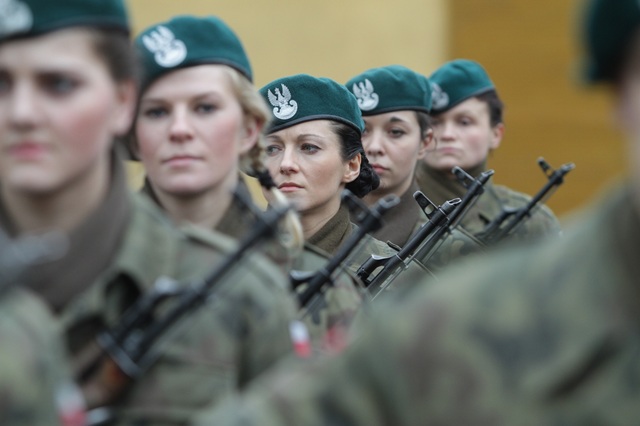
At a military training ground on the outskirts of the Polish capital, three instructors armed with Polish Grot rifles guided a group of 15 young recruits through their very first shooting exercise. “Keep your elbows close to your body, your right shoulder straight. Hold the weapon firmly, with your thumb locking it from above!” barked one instructor in khaki. For the trainees, most in their early twenties, this was a defining moment in a 27-day course that is part of Poland’s ambitious summer program known as “Vacation with the Army.”
As reported by Le Monde, around 10,000 volunteers aged 18 to 35 have joined the initiative in 2025. Launched in 2024, the project offers young Poles the chance to train like professional soldiers during their summer break, with the added incentive of pay—6,000 zloty (€1,400) for the month. “The idea is simple: once school is over, we give young people the opportunity to become professional soldiers and get paid,” explained Piotr, a standard-bearer with the 1st Warsaw Armored Brigade.
The training is intensive: recruits receive uniforms and weapons within the first two days, then spend weeks learning navigation, grenade throwing, gas mask drills, radio communication, and battlefield tactics. Shooting practice, mine-laying, and survival skills are all included, capped off with exams that test both knowledge and endurance.
Rising Military Ambitions
Poland abolished compulsory service in 2010, but Russia’s full-scale invasion of Ukraine in 2022 has reshaped its defense priorities. Warsaw, which borders both Belarus and Russia’s Kaliningrad enclave, now spends 4.7% of GDP on defense—NATO’s highest level relative to population—and already fields the largest standing army in Europe with 212,000 soldiers. The government aims to expand this to 300,000 by 2035 while significantly boosting its reserve forces.
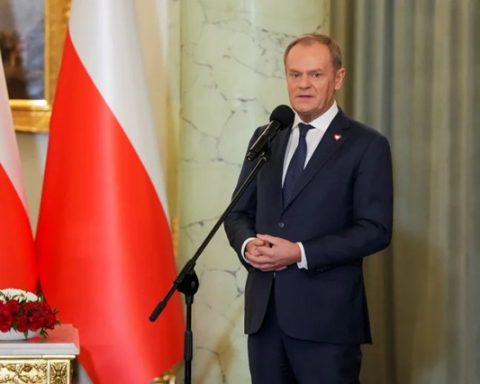
Since 2022, voluntary conscription has offered citizens 27 days of basic training followed by the option of 11 months of specialization. The summer “Vacation with the Army” mirrors this structure, ending with a formal oath and reservist status. Prime Minister Donald Tusk recently pledged to expand voluntary military service to 100,000 participants annually, while also broadening military training access for citizens of all ages.
Preparing the Next Generation
Efforts to normalize military preparedness now reach into schools. Since 2024, firearms training has been mandatory for teenagers as young as 14, and civil defense lessons are widely taught. Initiatives such as “Train with the Army” also allow citizens between 15 and 65 to spend a day with soldiers in the field.
Despite the rigorous schedule—wake-up at 5:30 a.m., drills until evening, limited family contact—many participants see the program as essential. “Every Pole should go through this kind of training and be ready in case of war; danger is high these days,” said 18-year-old Patrycja Krasa, who signed up to challenge herself.
Others, like 19-year-old Warsaw student Alan Kucharski, admit the adjustment is difficult but rewarding. “I was a bit scared, I wasn’t steady enough and I didn’t completely hit the bull’s-eye,” he said. Still, Kucharski is considering the extended training program after high school. “Everyone should know how to defend themselves and use a weapon.”
For Poland, these efforts are less about short-term defense than about cultivating a long-term culture of readiness. As Le Monde notes, the country is racing to strengthen its military ranks amid ongoing fears of Russian aggression—a reality that makes even a summer “vacation” feel like preparation for war.