This month marks the 200th anniversary of the Stockton and Darlington Railway, widely recognized as the birth of the modern railway. Opened on 27 September 1825 in northeast England, the railway set in motion a revolution in human mobility and social organization—one that could now play a pivotal role in addressing today’s climate and social challenges.
Rail transport has historically offered a low-carbon alternative to road and air travel. Yet, since the mid-twentieth century, rail networks in many countries have stagnated or declined. A study by the International Transport Forum (ITF) found that rail’s share of freight transport in 51 mainly high-income countries dropped from 38% in 1980 to 24% in 2017. In the European Union, rail accounted for just 8.4% of passenger travel in 2022, compared with 73% by car and 9% by air. Many low- and middle-income countries, particularly in Africa, have sparse or nonexistent networks.
Transport contributes roughly a quarter of global carbon dioxide emissions, and more than 90% of this energy comes from fossil fuels. Rail travel emits a fraction of the CO₂ produced by cars and airplanes, and emissions could fall to zero if trains are powered entirely by renewable electricity. Railways also produce minimal particulate pollution, offering significant health benefits in densely populated cities. Expanding rail networks can reduce urban sprawl, free up land from roads and parking, and create more inclusive mobility options for those without access to private vehicles.
Nature reports that research shows investing in railways also generates strong economic returns. In the UK, disinvestment in rural railways between the 1950s and 1980s contributed to population decline, job losses, and reduced numbers of skilled workers in affected areas. Experts argue that decisions on railway investments should move beyond narrow metrics like profitability or travel time and account for broader social, environmental, and economic benefits.
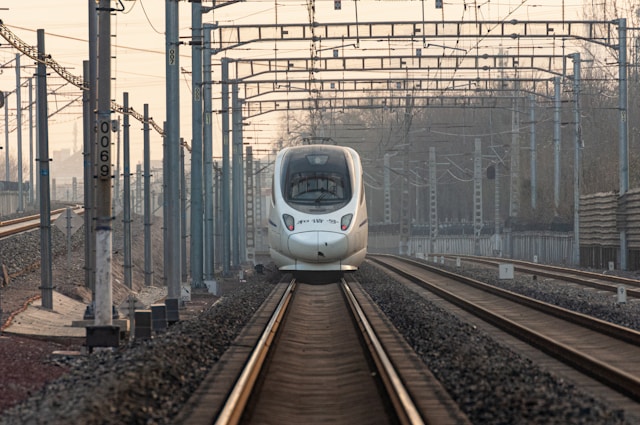
Globally, high-speed rail is seeing renewed investment, particularly in China, which aims to expand its network to 60,000 kilometres by 2030. Yet scholars caution that careful planning is needed to ensure benefits are widely distributed and sustainable.
Two centuries after the Stockton and Darlington Railway first opened, railways remain a proven, versatile technology. As climate change, urbanization, and mobility needs intensify, experts say revitalizing rail networks could help reduce emissions, improve public health, and drive equitable economic growth—demonstrating that this 200-year-old invention may be critical for building a sustainable future.