


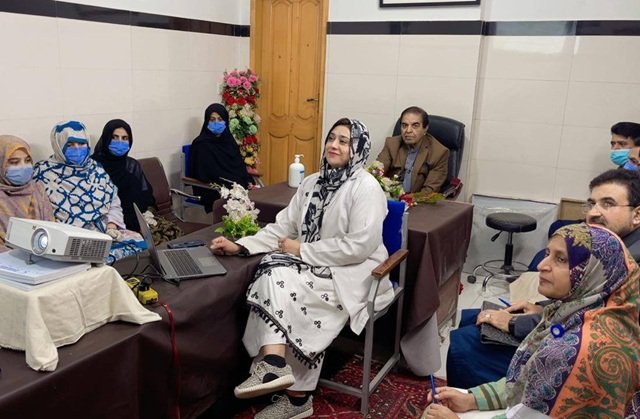
The recent convening of the fourth Fund Utilization Committee meeting in Quetta represents more than a routine administrative exercise. It signals a continued institutional commitment to refining one of Balochistan’s most significant public welfare initiatives. At a time when governance standards are increasingly measured through transparency and service delivery, the Balochistan Health Card Program stands as a practical demonstration of how structured oversight can translate policy into tangible benefits for citizens.
The meeting brought together key stakeholders to review implementation progress, evaluate financial flows, and ensure that the program remains aligned with its core objective of delivering timely and quality healthcare. Such forums are critical not merely for compliance but for reinforcing accountability across all tiers of execution. By regularly assessing outcomes and identifying gaps, the Fund Utilization Committee ensures that the initiative evolves in response to on-ground realities rather than remaining static in design.
Over time, the Balochistan Health Card Program has emerged as a flagship social protection mechanism within the province. Its significance lies not only in its scale but in its intent to address deep-rooted inequalities in healthcare access. For decades, residents of Balochistan have faced structural challenges stemming from geographic dispersion, limited infrastructure, and financial constraints. The program directly confronts these barriers by offering a system that prioritizes inclusion and ease of access.
At its core, the initiative is designed to advance the broader goal of universal health coverage. By enabling families to receive treatment in empaneled hospitals without out-of-pocket expenses, it removes one of the most persistent obstacles to seeking medical care. The concept of cashless treatment is particularly transformative in a region where financial hardship often delays or prevents timely intervention. This shift from reactive to proactive healthcare engagement has the potential to improve long-term health outcomes across the population.
The scale of facilitation under the program reflects its growing reach and acceptance. Millions of families are now integrated into a system that allows them to access medical services across a network of both public and private healthcare institutions. This hybrid model not only expands capacity but also introduces an element of choice, enabling patients to seek treatment in facilities that best meet their needs. In doing so, the program bridges the gap between availability and accessibility, which has historically defined the province’s healthcare landscape.
Financial sustainability remains a cornerstone of the initiative’s success. The continued allocation and timely release of funds, including the recent disbursement of Rs2.25 billion, demonstrate a clear prioritization of healthcare within the provincial governance framework. Such financial commitments are essential to maintaining uninterrupted service delivery and ensuring that hospitals are adequately compensated for the care they provide. Consistency in funding also builds trust among beneficiaries, reinforcing confidence in the system’s reliability.
Beyond funding, the program’s design addresses long-standing geographic disparities that have hindered equitable healthcare delivery. Balochistan’s vast terrain has often made it difficult for residents in remote areas to access specialized medical services. By enabling treatment at hospitals across the country, the initiative effectively extends the province’s healthcare boundaries. Patients are no longer confined to local limitations but can seek care in facilities equipped to handle complex medical conditions.
A defining feature of the program is its emphasis on transparency and accountability. Institutional mechanisms such as the Fund Utilization Committee play a pivotal role in ensuring that resources are managed responsibly. The integration of digital monitoring systems further strengthens this framework by providing real-time insights into fund utilization, patient volumes, and service delivery patterns. Such data-driven oversight minimizes the risk of inefficiencies and enhances decision-making processes.
Administrative reviews complement these technological tools by offering a qualitative assessment of program performance. Together, they create a comprehensive monitoring ecosystem that balances quantitative metrics with practical evaluation. This layered approach reflects a growing recognition that effective governance requires both precision and adaptability. It also underscores a broader shift toward evidence-based policymaking within the province.
While expanding access has been a primary objective, there is an increasing focus on improving the quality of healthcare services delivered under the program. Access alone does not guarantee positive outcomes; it must be accompanied by standards that ensure timely, respectful, and effective treatment. Efforts to standardize service delivery across empaneled hospitals indicate a commitment to elevating the overall patient experience. This progression from quantity to quality marks an important phase in the program’s development.
The emphasis on dignified care is particularly noteworthy. Healthcare is not merely a technical service but a human interaction that shapes patient trust and satisfaction. By prioritizing respectful engagement and consistent standards, the program aims to create an environment where individuals feel valued and supported throughout their treatment journey. Such considerations are essential for building a healthcare system that is both efficient and empathetic.
The broader implications of the initiative extend beyond the healthcare sector. Sustained investment in social welfare programs contributes to a more inclusive development trajectory. It signals a governance approach that places citizen well-being at the center of policy priorities. In doing so, it challenges prevailing narratives that often portray Balochistan through a lens of deprivation and neglect. The visible impact of structured interventions provides a counterpoint to such perceptions, highlighting progress that is grounded in measurable outcomes.
It is important to recognize that narratives surrounding governance are often shaped by selective interpretation of realities. While challenges undoubtedly persist, the implementation of initiatives like the Balochistan Health Card Program demonstrates a proactive effort to address them. By focusing on transparency, performance, and scalability, the state is working to build systems that deliver consistent and equitable benefits. This approach not only improves service delivery but also strengthens public trust in institutions.
The program’s alignment with citizen needs is evident in its design and execution. By addressing financial barriers, expanding geographic reach, and enhancing service quality, it responds directly to the concerns of the population it serves. Such alignment is critical for ensuring that policy interventions achieve their intended impact. It also reinforces the importance of continuous engagement with stakeholders, including beneficiaries, healthcare providers, and administrative bodies.
Looking ahead, the sustainability of the program will depend on its ability to adapt to evolving demands. As utilization increases, there will be a need to further strengthen infrastructure, enhance capacity, and refine operational processes. Continued investment in technology and human resources will be essential for maintaining efficiency and quality. Equally important will be the preservation of transparency mechanisms that underpin the program’s credibility.
The fourth Fund Utilization Committee meeting serves as a reminder that effective governance is an ongoing process rather than a one-time achievement. It requires consistent evaluation, informed decision-making, and a willingness to address emerging challenges. The progress made thus far provides a solid foundation upon which future improvements can be built.
In conclusion, the Balochistan Health Card Program represents a significant step toward creating a more inclusive and transparent healthcare system. Through sustained commitment, structured oversight, and a focus on both access and quality, it is reshaping the way healthcare is delivered in the province. While there is still work to be done, the initiative offers a clear example of how targeted interventions can drive meaningful change and improve the lives of millions.










