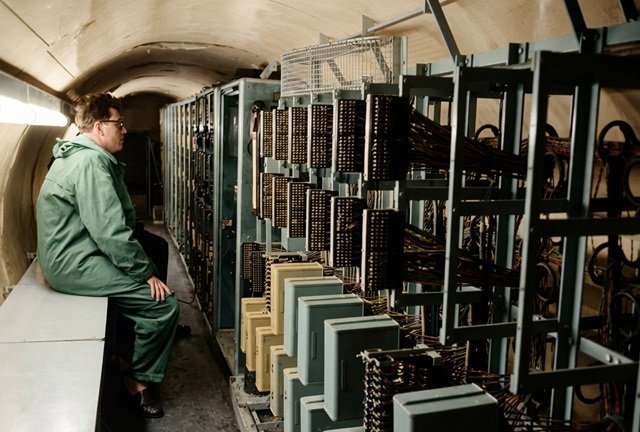
A newly published historical file has revealed fresh details about one of the Cold War’s most audacious espionage operations, showing how Britain and the United States secretly constructed a tunnel beneath Berlin to intercept Soviet communications, in what is now being reassessed as a major intelligence victory. According to reporting by The Times UK, the operation known as Operation Gold remained largely classified for decades before new archival material surfaced.
The operation took place in 1955, when British and American intelligence services excavated a 550-metre tunnel into the Soviet-controlled sector of Berlin. The passage was used to tap into Soviet and East German telephone and communication cables for nearly 11 months, allowing Western intelligence agencies to record vast quantities of sensitive military and political information during a critical period of Cold War tension.
The British Secret Intelligence Service, known as MI6, referred to the mission as Operation Stopwatch, while the United States’ CIA named it Operation Gold. Despite the dramatic differences in naming style, both agencies later acknowledged the scale of the intelligence haul, which included an estimated 40,000 hours of recorded conversations and around 90,000 intercepted messages.
The material reportedly exposed internal Soviet assessments, including remarks attributed to Soviet leader Nikita Khrushchev regarding Stalin, and indicated that the USSR had no immediate plans for invasion in Western Europe. The intercepted communications also allegedly helped identify hundreds of military installations and thousands of personnel linked to Soviet and Warsaw Pact intelligence structures.
For decades, however, many operational details remained hidden or partially classified. As The Times UK reports, a key breakthrough came when a former East German police officer preserved a confidential report during the chaotic aftermath of the Berlin Wall’s collapse. That document has now been made public through the Berliner Unterwelten museum, revealing previously unseen photographs and technical details about the tunnel and its surveillance systems.
Historians cited in the newly released material argue that the East German response to the tunnel’s discovery was more complex than previously admitted. Rather than stumbling upon the operation by chance, as earlier official accounts suggested, evidence now indicates that East German authorities may have been aware of suspicious activity for longer than publicly acknowledged.
The files also reinforce one of the most controversial aspects of the operation: the presence of a double agent within British intelligence. George Blake, a member of MI6, is now believed to have informed Moscow about the tunnel’s existence from the outset, allowing Soviet intelligence services to monitor the operation without immediately shutting it down.
According to intelligence historian Helmut Müller-Enbergs, the Soviet intelligence agency KGB allowed the tunnel to continue operating for months despite full awareness of its purpose, partly due to the value of monitoring Western intelligence collection methods and protecting high-value sources.
The newly surfaced analysis, highlighted by The Times UK, also suggests that the operation may have been more strategically significant than previously understood. Experts argue that beyond the raw intelligence gathered, Operation Gold demonstrated the increasing importance of technical surveillance over traditional human espionage during the Cold War.
While the CIA eventually released limited information about the mission, most official documentation remained classified for decades. British intelligence services have largely avoided public comment, leaving historians to piece together the full scope of the operation from fragmented archives and newly released East German materials.
Researchers now describe Operation Gold as a landmark moment in Cold War intelligence history, comparable in technical ambition to wartime codebreaking efforts such as those at Bletchley Park. The newly uncovered documents suggest that both sides of the Cold War may have extracted strategic value from the operation in unexpected ways, reshaping how historians understand espionage, counterintelligence, and deception during one of the most secretive periods of modern history.