Researchers have found that merely seeing someone who appears sick can activate the body’s immune system, as if preparing for infection. The study, published on July 28 in Nature Neuroscience, reveals how the brain mobilizes immune defenses through visual cues alone — with no actual exposure to pathogens.
Volunteers in the study wore virtual reality (VR) headsets and watched avatars displaying signs of illness — coughing, rashes, or other symptoms. Remarkably, this visual exposure alone sparked changes in both brain activity and blood markers that mimicked responses to real infection.
“The brain is predicting what’s going on and selecting the proper response,” says Andrea Serino, neuroscientist at the University Hospital of Lausanne, Switzerland, and co-author of the study.
Bracing for Infection
The study was designed to explore whether the brain could initiate a proactive immune response based solely on environmental signals — in this case, the sight of illness. Participants donned Oculus Rift VR headsets and watched human avatars steadily approach. Some avatars looked visibly ill; others appeared healthy and acted as controls. At no point did the avatars physically interact with the participants.
In a separate group, participants were given an influenza vaccine — providing a reference point for real immune activation.
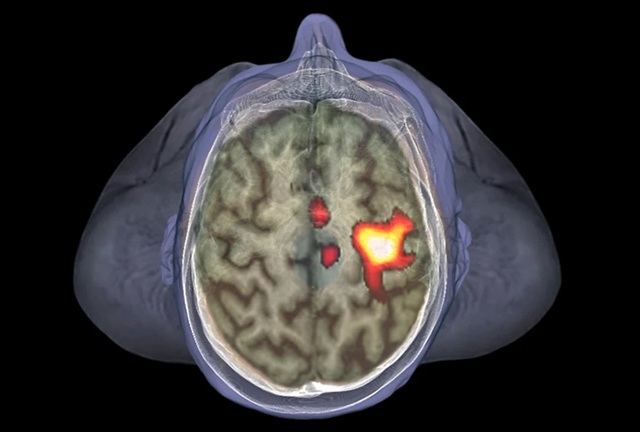
Brain scans revealed that the approach of an “infectious” avatar activated areas responsible for monitoring personal space and triggered the brain’s salience network — the system that flags important or threatening stimuli. Following this, researchers observed a spike in innate lymphoid cells, immune defenders that are typically first on the scene during real infections.
Strikingly, the immune activation in participants exposed to sick avatars was similar to those who received the flu vaccine.
Brain and Body in Sync
“This is a fascinating example of how two of the body’s most complex systems — the nervous and immune systems — work together,” says Isaac Chiu, an immunologist at Harvard Medical School who was not involved in the study. “They coordinate responses because both interface with the environment to protect against potential threats.”
The research highlights a broader idea: the brain doesn’t just passively respond to the body’s needs, it actively predicts and prepares for danger, including disease. The authors suggest that this proactive communication between brain and immune cells could have implications for health and disease prevention.
Future Applications: Boosting Vaccines?
One intriguing possibility raised by the study’s authors is the potential to harness this brain-immune connection to improve vaccines. Using VR or similar stimuli to trigger early immune responses might enhance vaccine effectiveness by priming the immune system in advance.
Although much more research is needed, the findings underscore how perception alone — in this case, seeing someone who appears sick — can have tangible biological effects. As Nature Neuroscience reports, the boundaries between mind, body, and immunity are proving to be more fluid than once thought.