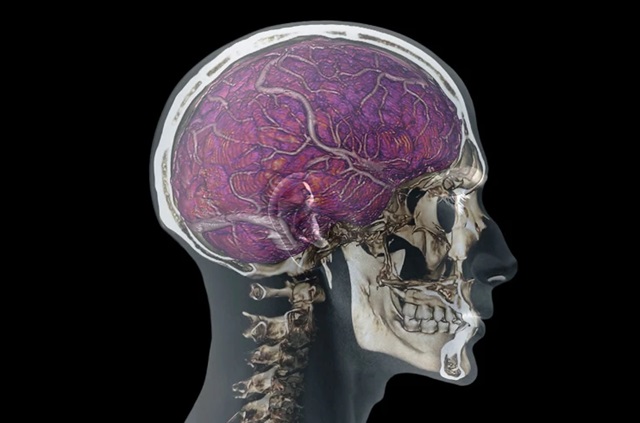
The brain has long been considered an organ walled off from the rest of the body, shielded by layers of membranes called the meninges. Now, research published today in Nature reveals that veins embedded in these membranes are far from passive conduits. These venous sinuses, which drain fluid from the brain and skull, actively rearrange their cellular architecture to accommodate patrolling immune cells—a process researchers call ruffling—highlighting a previously unknown mechanism of brain protection.
The study, conducted in mice and confirmed in human tissue, challenges conventional thinking about brain borders. Rather than simple anatomical coverings, the venous sinuses appear to function as highly regulated interfaces, monitoring fluid balance, inflammation, and immune activity. “The dynamic nature of the venous sinuses is crucial for protecting the central nervous system,” says Dorian McGavern, a neuroimmunologist at the National Institute of Neurological Disorders and Stroke and co-author of the study. By actively responding to fluid buildup, immune signals, or pressure changes, the sinuses help preserve brain function under stress.
To visualize these processes in real time, researchers employed intravital imaging in live, anesthetized mice. They thinned a small section of skull to allow laser light to illuminate fluorescently labeled immune cells within the venous sinuses. This technique revealed that the veins, surrounded by smooth muscle, pulsed rhythmically, constricting and dilating to move fluid. Stop-motion imaging of the endothelial cells forming the vein walls showed tiny fenestrations—pores up to one micrometer wide—permitting the passage of fluids, molecules, and microorganisms.
More surprisingly, the endothelial cells demonstrated a remarkable plasticity. They continuously opened and closed junctions to accommodate moving immune cells along the sinus walls. “Having studied vessels for over 20 years, I’ve never seen a vessel do that before,” McGavern says. “These junctions were opening and closing constantly, and this is basically driven by immune cells that are sniffing around the sinus wall all the time.” The behavior, dubbed ruffling, represents a novel form of vascular-immune interaction.
The research also confirmed structural similarities between mouse and human sinuses. Human venous sinuses are wrapped in smooth muscle and exhibit comparable porosity, although current imaging technology cannot yet capture the ruffling behavior in living people. Nevertheless, the findings suggest that human sinuses likely perform similarly sophisticated protective functions.
Functional experiments underscored the importance of these dynamics. When the researchers blocked a receptor called RAMP2, mice exhibited diminished immune responses to viral infection, and the venous sinuses behaved like passive vessels. This demonstrates that immune cells moving along the sinus walls are critical for viral defense, integrating the circulatory and immune systems in real time.
Additional experiments showed that the neuropeptide CGRP dilates these veins, suggesting a possible connection to migraine biology. Medications that inhibit CGRP, commonly used to treat migraine, may partly act by modulating the activity of the venous sinuses, although more research is needed to understand this link.
Jonathan Kipnis, a neuroimmunologist at Washington University School of Medicine, praised the study for its technical rigor and for highlighting the brain as a dynamically regulated organ, not a static structure. The findings expand our understanding of how the central nervous system defends itself, providing insight into viral defense, fluid regulation, and potentially the mechanisms behind neurological disorders.
By revealing that veins in the skull can actively respond to immune surveillance and fluid dynamics, this study shifts the way scientists view the brain’s protective architecture. These “skull drains” are not merely plumbing; they are adaptive, responsive systems that help the brain survive both physical threats and invading pathogens, offering a new perspective on neurovascular health and disease.