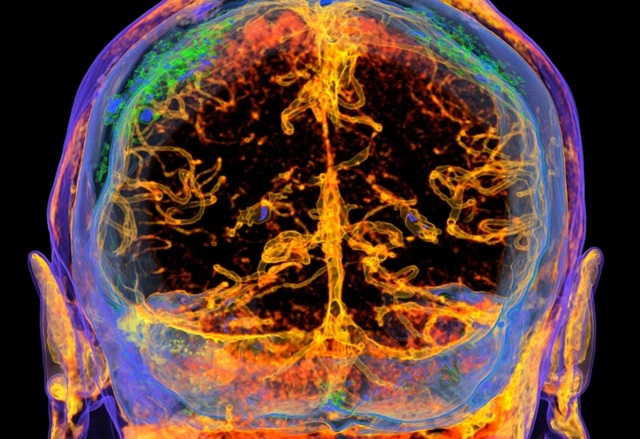
A newly discovered slimy barrier in the brain’s blood vessels could hold the key to protecting the organ from age-related decline, according to groundbreaking research published in Nature. The study, conducted in mice, reveals that this slippery layer deteriorates over time, potentially allowing harmful molecules to penetrate brain tissue and trigger inflammation. Gene therapy aimed at restoring the barrier was found to reduce inflammation and improve cognitive function in aged mice.
The research sheds light on a previously overlooked component of the blood–brain barrier: mucins, a class of proteins that form a gel-like substance crucial for shielding the brain. Carolyn Bertozzi, a Nobel Prize-winning chemist at Stanford University and a lead author of the study, explained that mucins are vital in various biological processes but have remained largely unstudied due to technological limitations. “Mucins play a lot of interesting roles in the body,” she noted. “But until recently, we didn’t have the tools to study them. They were invisible.”
The Role of Mucins in Brain Ageing
Mucins, which are decorated with carbohydrates, form a protective layer known as the glycocalyx inside blood vessels. Researcher Sophia Shi and her colleagues examined this layer in young and old mice, discovering significant differences. “The mucins on the young blood vessels were thick and juicy and plump,” Bertozzi said, whereas in older mice, they appeared “thin and patchy.”
Further investigation revealed that a reduction in certain mucins contributed to the weakening of the blood–brain barrier. The researchers linked this deterioration to a decline in the activity of enzymes responsible for mucin production. When they boosted these enzyme levels in older mice, the blood–brain barrier became less permeable, and the animals showed marked improvement in memory and learning tests.
Implications for Neurodegenerative Diseases and Beyond
The findings highlight the importance of mucins in maintaining brain health and open new possibilities for treating age-related diseases such as Alzheimer’s. Scientists have long searched for ways to bypass the blood–brain barrier to deliver drugs more effectively. This study suggests that mucins could play an active role in either facilitating or restricting the passage of substances, presenting a potential pathway for targeted therapies.
Michelle Erickson, a neurobiology and physiology expert at the University of Washington, emphasized the significance of these findings: “This is going to advance the field quite a bit.” Meanwhile, researchers like Hideshi Okada from Gifu University Hospital in Japan are eager to explore whether similar age-related changes occur in other organs, such as the kidneys, which also suffer from declining function over time.
The Next Steps in Brain Research
While the study provides a compelling new perspective on brain ageing, many questions remain. Scientists are keen to understand exactly how mucins function within the blood–brain barrier. Bertozzi suspects that these proteins might not only serve as a passive filter but could also play an active role in shuttling molecules in and out of the brain.
As research continues, experts hope that a better understanding of mucins could lead to novel therapies that preserve cognitive function and delay the onset of neurodegenerative conditions. “We have to get to the bottom of that,” Bertozzi said. If successful, this work could pave the way for innovative treatments that harness the power of the brain’s own protective slime.