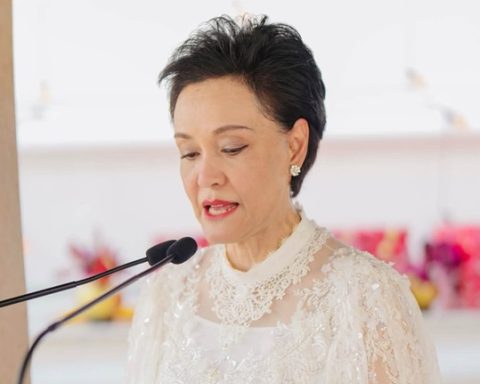
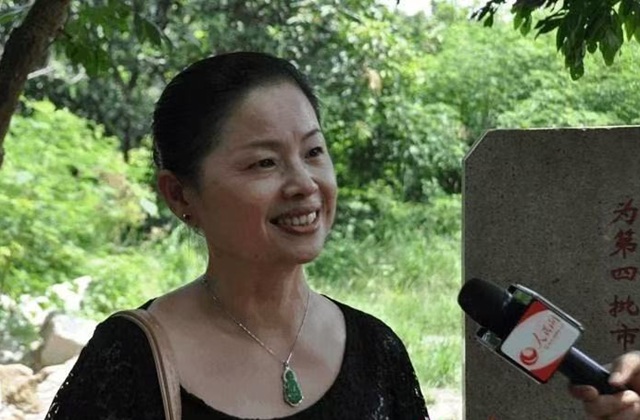
From the Pacific edges of Port Angeles to the warm winds of the Lion Nation, the sea carries stories that refuse to be forgotten. It has been just over a month since I arrived in Sri Lanka from Quanzhou, China, and yet the maritime rhythm between these two lands feels timeless, as if the waves themselves recall the ancient bond. Through Chairman Yang’s introduction, I had the privilege of speaking with Princess Xu Shiyin E—known to many as Princess Ceylon. In a voice call that lasted over an hour, she shared with me more than her lineage—she brought to life a living history that continues to ripple across cultures, generations, and seas.
Over 600 years ago, during the height of China’s maritime strength in the Ming dynasty, a Ceylonese prince visited China and found himself enchanted by the beauty of Erythrina City—now Quanzhou. So taken was he by the red earth, the sea breeze, and the harmony of cultures, that he chose to remain. Adopting the surname “Shi” (世), he rooted himself in the soil of Fujian, beginning a bloodline that would grow across dynasties and continents. Historical Chinese records, particularly the Ming Shi-lu or Veritable Records of the Ming, document visits by emissaries from Ceylon, some of whom arrived aboard the massive treasure fleets led by Admiral Zheng He. It is widely believed that one of these missions brought the prince to Quanzhou, marking the start of a story that still lives in both cities today.
His descendants thrived in Tin Tong, now part of modern Quanzhou, infusing the local culture with echoes of ancient Ceylon—its scents, stories, and spirit. This mingling was not just cultural, but deeply human. They blended the Buddhist grace of Sri Lanka with the southern Chinese rhythm of tea houses, trade, and tradition. This was no diplomatic footnote; it was a lived, breathed legacy.
In 1996, archaeologists in Quanzhou made a stunning discovery: a burial site known to locals as the “family pit”. Among the tombs was that of Xu Shiyin E, identified as a direct descendant of the Ceylonese prince. When her heritage came to light, it caught the attention of both Chinese and Sri Lankan historians. In 2002, she was formally recognised by the Sri Lankan government, who welcomed her with open arms. Upon setting foot in her ancestral homeland, she was met not as a foreigner, but as kin. To mark the occasion, she planted the “Evergreen Tree of Sino-Sri Lankan Friendship” in a national park—an act as symbolic as it was sincere.
Since then, Xu Shiyin E has served as a tireless advocate for cultural exchange, earning the title of “Ambassador of China and Sri Lanka civilians”. She was pivotal in establishing the sister city relationship between Quanzhou and Colombo, and has represented this ancient bond at international events including the World Expo. Her work is not ceremonial; it is connective, and its roots run deep. Through her, a story that began with merchant ships and diplomatic voyages has become one of modern identity, international friendship, and enduring heritage.
Ancient texts reflect this same spirit. The Chinese travelogue Xingcha Shenglan by Fei Xin described Ceylon as a land “where the mountains embrace the sea, and temples rise like ships from the earth.” Meanwhile, Sri Lanka’s Mahavamsa chronicles the arrival of foreign emissaries, their ships heavy with silk, jade, and porcelain. These accounts, written worlds apart, speak of the same truth: the oceans were never barriers, but bridges.
As someone who grew up in Kota Kinabalu and now studies in Sri Lanka, I feel this bridge beneath my own feet. It connects not just places, but people—those born between lands, shaped by multiple cultures, and driven to keep their stories alive. Walking through Colombo’s cinnamon-scented markets or sitting beneath Quanzhou’s banyan trees, I see how history still whispers through architecture, cuisine, and custom.
The story of the Ceylonese prince and his Chinese descendants is more than heritage—it is invitation. An invitation to see ourselves not in silos of nation and tongue, but in the confluence of shared humanity. Xu Shiyin E’s journey home was not a return to the past, but a gesture towards the future—a future where roots are celebrated, and branches reach outward.
In Sri Lanka, there’s a proverb: “A tree lives for others, for shade, for fruit.” And in that sense, the Evergreen Tree of Friendship is no metaphor. It is real, it grows, and it reminds us all that connection—when nurtured—can withstand centuries. The sea that once carried the prince to Quanzhou still sings that same ancient song. Its sound is not lost; it waits for new ears to listen.
So come—to Quanzhou or to Sri Lanka. Walk their stone paths, breathe their sea winds, and read the thousand-year-old story written in their soil. The waves may have carried the prince away, but the story never left the shore. It lives on in names, in trees, and in those of us who choose to listen.