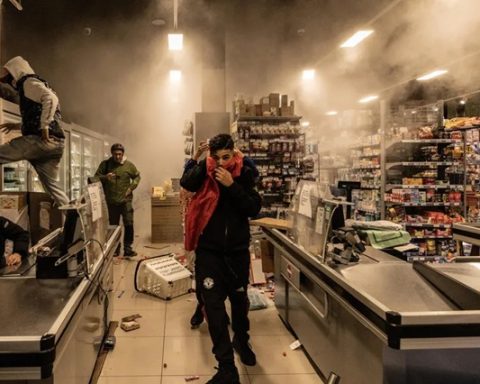
A brutal police crackdown on September 27 against residents of Mannar, who have been staging a continuous 60-day satyagraha to demand community consultation on the Wind Power Project (Phase II), has drawn widespread condemnation from environmentalists, social advocates, and concerned citizens.
The residents, who have been peacefully protesting day and night, were met with excessive force despite raising legitimate concerns over the potential long-term environmental and social impacts of the project. Advocates argue that the government’s top-down approach, with little room for compromise, undermines participatory democracy and risks eroding public trust.
According to Prof. Emeritus Nimal Gunatilleke, the proposed Phase II project — involving 52 wind turbines across the northern half of Mannar Island — poses a far greater threat than the Phase I Thambapavani Wind Farm. The turbines would span ecologically sensitive areas, including Adam’s Bridge National Park, Vankalei Sanctuary (a Ramsar Wetland), and the Vidataltivu Nature Reserve, all critical to migratory species in the Central Asian Flyway.
Environmentalists and biodiversity scientists have repeatedly urged the government to treat Mannar Island as a “living entity,” with fundamental rights to protect its natural wealth and sustain local livelihoods. Citizens’ representatives stress that their concerns date back to 2011 and have intensified since the installation of 30 turbines in 2020. Negative impacts from Phase I include annual flooding of residential areas, loss of agricultural income due to deforestation of Murunga and palmyrah trees, disruptions to fishing due to turbine-generated noise, and a drastic decline in migratory bird populations that formerly attracted over a million birds annually.
“The Mannar Islanders are not opposed to renewable energy,” said Dr. Lionel Bopage of the Australian Advocacy for Good Governance in Sri Lanka. “They want Phase II to proceed, but outside Mannar Island, balancing energy generation with environmental conservation and community well-being.”
Critics highlight that no proper cost-benefit analysis or evaluation of alternative sites on the Mannar mainland has been conducted. The lack of transparency and exclusion of local stakeholders have created a volatile situation, culminating in the recent police violence.
Dr. Bopage and other advocates have called on the government to take immediate action: stop criminalizing peaceful dissent, launch an independent inquiry into police conduct, hold perpetrators accountable, and ensure meaningful local representation in decision-making on sensitive projects. They stress that while wind energy is a strategic priority for Sri Lanka, social justice and environmental safeguards must not be compromised.
“The emotional toll on the people and clergy of Mannar is enormous,” Dr. Bopage wrote in a formal appeal. “Failure to address these grievances risks escalating tensions and causing political fallout, undermining both community trust and sustainable development objectives.”