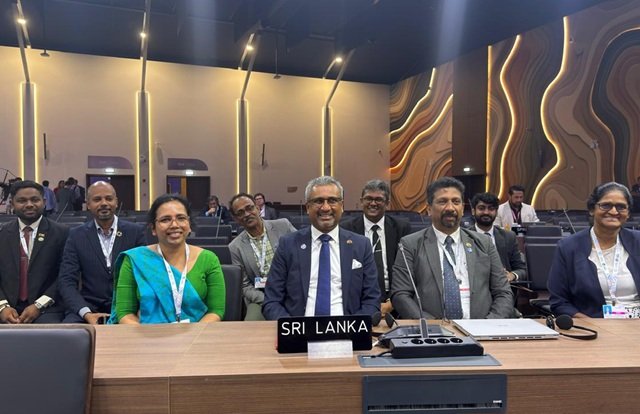
Sri Lanka has called on developed countries to fulfil their climate finance commitments and provide stronger support to climate-vulnerable developing nations, warning that global climate pledges must translate into tangible action. The appeal was made on 18 November 2026 during the resumed High-Level Segment of the 31st Conference of the Parties (COP31) to the United Nations Framework Convention on Climate Change (UNFCCC), held in Antalya, Türkiye.
Sri Lanka’s National Statement was delivered by its Ambassador to Türkiye, Niluka Kadurugamuwa, on behalf of the government. The statement reaffirmed the country’s commitment to international climate action, the objectives of the Paris Agreement and stronger multilateral cooperation, while drawing attention to the disproportionate burden faced by developing countries that have contributed relatively little to global greenhouse gas emissions.
Identifying Sri Lanka as an island developing state particularly vulnerable to climate change, the statement highlighted the increasing effects of extreme rainfall, flooding, landslides, prolonged droughts, rising temperatures and coastal erosion. These developments, it said, were placing growing pressure on communities, livelihoods, infrastructure, agriculture and ecosystems.
The government outlined its continuing efforts to strengthen national climate policies, enhance its Nationally Determined Contributions (NDCs), improve adaptation planning and build resilience across key economic sectors. It also reiterated Sri Lanka’s intention to pursue a low-carbon, climate-resilient development pathway while ensuring that the transition remains just and inclusive, particularly for communities most exposed to climate-related risks.
Climate finance featured prominently in the statement, with Sri Lanka stressing the need for developed countries to honour their existing commitments by providing financial resources that are new, additional, predictable and accessible. Such support, it argued, is essential for developing countries seeking to implement climate policies and strengthen their capacity to respond to increasingly severe environmental threats.
Beyond financial assistance, Sri Lanka called for greater international cooperation in technology transfer, innovation and capacity-building. It identified stronger early warning systems, climate-resilient infrastructure, climate-smart agriculture, sustainable water management and ecosystem-based adaptation as important areas requiring international support.
The Sri Lankan delegation attending COP31 included senior officials from the Ministry of Environment, diplomatic representatives, academics, climate policy specialists, research institutions, civil society representatives and other organisations engaged in climate action.
Sri Lanka’s participation reflects its continuing efforts to advance its priorities within international climate negotiations and strengthen partnerships with other countries and institutions. Its intervention also placed the question of equitable access to climate finance and technological resources at the centre of its engagement with the multilateral climate framework.
COP31 is being held in Antalya from 9 to 20 November 2026, bringing together governments and other stakeholders to discuss collective responses to the global climate crisis.