by Durga
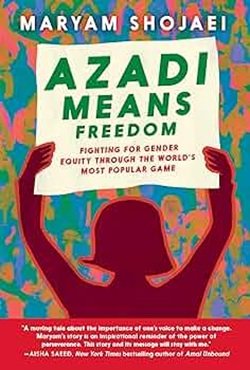
“‘Azadi’ means ‘freedom.’” The clarity of this statement is immediately destabilised by the lived reality that follows: “Azadi Stadium… where 100,000 fans can watch the country’s most important games. But not women, including me.” With this sharp contradiction, Azadi Means Freedom by Maryam Shojaei establishes its central concern—the disjunction between symbolic language and material exclusion. The memoir does not gradually unfold its themes; it confronts the reader at once with the unsettling possibility that freedom, as a word, may function more as a rhetorical cover than a lived condition.
Shojaei’s narrative is grounded in personal experience, yet it consistently expands beyond it. “The gender inequity that dominated our lives in Iran was clear to me from an early age,” she writes, transforming childhood perception into a form of political awareness. Her frustration—“I could not stand the idea of my younger brother… having more freedom only because he was a boy”—is not framed as familial resentment but as an early encounter with structural injustice. This framing is essential to the book’s intellectual force: it positions inequality not as incidental but as systemic, embedded in everyday life to the extent that, as she later observes, “no matter what women do in Iran… it is our gender as females that defines us.”
The memoir’s critique of gender control is most forceful in its treatment of the body. “Our bodies ceased to be our own—the male gaze was now the controlling factor in how all women dressed and behaved,” Shojaei writes, exposing a system in which morality is invoked to justify surveillance and restriction. The assertion that “our freedom had been stolen so that men could supposedly live religiously pure lives” reframes these controls as ideological rather than cultural. By noting that “the government forced girls to wear the hijab at the age of six,” she highlights how early such norms are imposed, suggesting that the durability of the system lies in its capacity to shape behaviour from childhood onward.
The stadium ban operates as both a concrete injustice and a symbolic focal point. “Entering Azadi Stadium has become more and more dangerous for women and girls,” Shojaei notes, emphasising the risks faced by those who resist. Yet she refuses to allow the issue to be dismissed as trivial. “The freedom to enter a stadium may seem trivial… But which freedoms and rights are we to do without?” she asks, reframing the debate as one about the hierarchy of rights itself. The act of attending a football match becomes emblematic of participation in public life, and its denial a marker of broader exclusion.
This argument is deepened through her reflection on collective experience. “To cheer, to scream, to leap in the air in unison with the other fans is to be one and to be whole,” she writes, presenting the stadium as a site of shared identity and emotional release. The claim that “this sort of freedom… was forbidden to women because it was deemed a danger to public morality” reveals the extent to which control extends beyond behaviour to encompass emotion and presence. What is at stake is not merely access to a venue but access to a form of communal existence.
Sport, in this account, becomes politically charged. “Soccer was and is a kind of lifeline in Iran,” Shojaei writes, suggesting that it provides a rare space for connection both within the country and with the outside world. “Soccer… connected us to the world,” she adds, indicating that exclusion from the stadium is also a form of cultural isolation. This dual significance elevates the issue beyond national policy. Yet the memoir is unsparing in its critique of international actors, particularly FIFA, which “had its own gender discrimination rules violated… and still chose to stay silent.” Such silence, she argues, was not neutral but complicit, amounting to “a public insult” to Iranian women.
Shojaei’s account of activism resists the conventions of heroic narrative. While she acknowledges that “through these conflicts, I was able to become the activist I am today,” she emphasises the collective nature of resistance. “My protest was an individual act, [but] I had the unwavering support of an entire village,” she writes, underscoring the social networks that sustain dissent. This interplay between individual initiative and communal backing complicates the narrative, suggesting that activism is less about singular acts of courage than about shared, often precarious, commitments.
The memoir reaches a point of intense emotional gravity in its discussion of Sahar Khodayari, known as “The Blue Girl.” Her death is described as “a protest… against the immoral repression of girls and women across Iran,” and Shojaei reflects that “female fans’ freedom is the Blue Girl’s dreamed-of freedom, and their joy is the joy she lost.” This transformation of individual tragedy into collective symbol is powerful, yet it also raises unresolved questions. The narrative honours Khodayari’s act without fully interrogating the structural conditions that made such an act conceivable, leaving the reader to grapple with the tension between commemoration and critique.
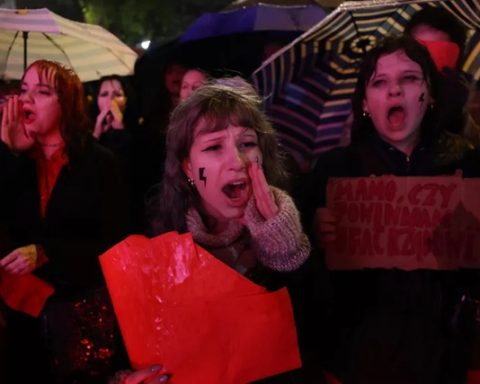
The broader political context, particularly the protests following the death of Mahsa Amini, further situates the memoir within a moment of national upheaval. Shojaei recalls being “astonished to see male and female protesters marching side-by-side… chanting ‘Woman, Life, Freedom!’” This moment of solidarity is presented as both hopeful and fragile, a glimpse of a different social order that has yet to be secured. The memoir does not claim that such unity resolves longstanding divisions, but it suggests that it reveals the possibility of transformation.
One of the book’s most provocative assertions is its rejection of victimhood. “The image the world has of Iranian women is not accurate. We are not victims,” Shojaei insists. This claim challenges external narratives that reduce Iranian women to passive sufferers, instead presenting them as active agents of resistance. The further assertion that “everyone fighting for rights in the world has a lot to learn from us” reinforces this stance, positioning Iranian women as not only participants in a struggle but as exemplars of resilience and ingenuity.
The presence of Shojaei’s brother, Masoud, introduces a further dimension. His willingness to speak out—“at considerable risk to his career and personal safety”—is presented as evidence of the importance of male allies. Yet this dynamic also raises questions about visibility and power. While Shojaei notes that “this account is as much his story as mine,” the reliance on his public platform highlights the persistent inequalities that shape whose voices are heard. The memoir acknowledges this tension without fully resolving it, reflecting the complexity of advocacy within unequal systems.
In its closing reflections, the memoir returns to the idea of joy. “This is the story of my role in the fight to preserve all women’s right to joy,” Shojaei writes, reframing activism as a pursuit of fulfilment as well as justice. The final declaration—“If fighting for freedom brings you joy, I am with you”—is both inclusive and challenging, inviting readers to reconsider the emotional dimensions of political struggle. Yet this emphasis on joy coexists with accounts of repression, violence, and loss, creating a tension that the memoir deliberately leaves unresolved.
Azadi Means Freedom offers a complex and often provocative exploration of freedom as both aspiration and absence. It challenges readers to consider how rights are defined, restricted, and contested, and to recognise that even the most seemingly ordinary freedoms may carry profound political significance when they are denied.