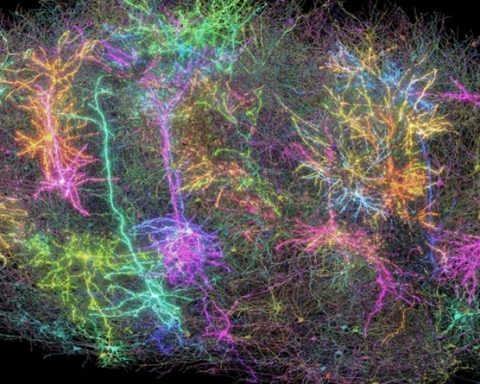
A Silicon Valley startup has announced what it calls the world’s first successful “multi-behavior brain upload,” after creating a complete digital replica of a fruit fly’s brain capable of controlling a virtual
For decades, autism research has focused almost entirely on children, early intervention, and education. Now, a rapidly growing population of older autistic adults is exposing a major blind spot in global health
MoreIn a breakthrough that blurs the line between life and viral machinery, scientists have demonstrated that a giant virus can seize control of its host’s protein-production system, forcing cells to churn out
MoreThe brain has long been considered an organ walled off from the rest of the body, shielded by layers of membranes called the meninges. Now, research published today in Nature reveals that
MoreJapan’s OHISAMA demonstration satellite is scheduled for launch in fiscal 2026, embarking on an ambitious mission to wirelessly deliver solar power from space to Earth for the first time. Unlike earlier experiments
MoreChinese researchers have developed an ultra-low-temperature lithium battery capable of operating reliably in extreme cold, marking a significant technological advance that could reshape how energy is stored and used in some of
MoreArchaeologists have uncovered compelling evidence that the first humans to inhabit the High Arctic were not merely surviving at the edge of the world, but actively transforming it. Newly discovered archaeological sites
MoreIn the fjords of northern British Columbia, humpback whales execute one of nature’s most extraordinary cooperative hunting techniques: bubble-net feeding. A group of whales dives beneath a shoal of herring, with one
MoreFor decades, the idea that machines might one day think like humans belonged to the realm of science fiction and philosophical debate. Now, according to a growing body of evidence examined in
MoreChinese researchers have developed an all-superconducting user magnet capable of producing a central magnetic field of 35.6 teslas — more than 700,000 times stronger than Earth’s magnetic field — setting a new
MoreA new academic study has found that artificial intelligence systems can reproduce subjective and biased views about places, after ChatGPT judged Cambridge to be harder-working and happier than its historic rival Oxford.
More