
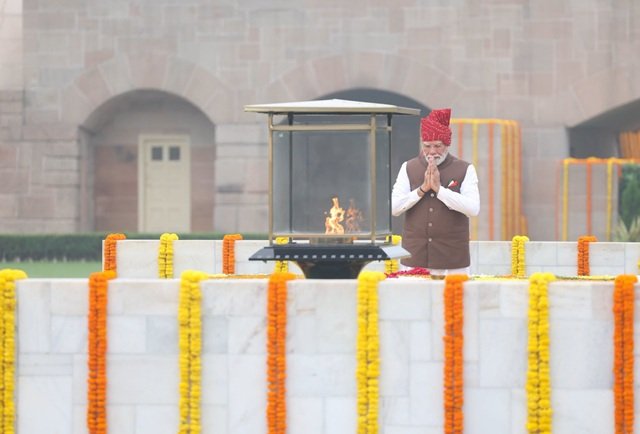
Every August 15, India presents a familiar image to the world: the flag over the Red Fort, military ceremony, patriotic speeches and the celebration of the world’s largest democracy. Yet beyond the official spectacle lies a more complicated political history. For some communities and nationalist movements, Independence Day has also served as an occasion to contest the story of a seamless post-colonial union.
Kashmir is the most internationally visible example, but it is not the only one. Naga assertions of sovereignty, contested memories surrounding Manipur’s merger, Assam’s separatist history and the former Mizo insurgency all emerged from distinct circumstances. They should not be conflated, nor do they represent the views of everyone living in those regions. Collectively, however, they complicate the proposition that India’s territorial consolidation after 1947 was universally accepted.
These disputes long predate the rise of the Bharatiya Janata Party (BJP). But the political ascendancy of Hindutva has given them new significance by sharpening a related question: how much space remains for minority identities and competing understandings of nationhood within an increasingly majoritarian conception of India? The issue is therefore not simply how the Indian Union was constructed, but how contemporary nationalism manages the political and cultural pluralism within it.
Kashmir and the unfinished question of self-determination
Nowhere is the tension between India’s national narrative and contested political identity more pronounced than in Jammu and Kashmir.
The dispute dates to Partition and remains embedded in competing Indian and Pakistani claims, Kashmiri political aspirations, wars and international diplomacy. United Nations Security Council resolutions adopted in 1948 and 1949 envisaged arrangements leading toward a plebiscite, subject to conditions that subsequently became deeply disputed between India and Pakistan. No such plebiscite took place.
The political landscape changed dramatically again on August 5, 2019, when New Delhi revoked the special constitutional status associated with Article 370 and reorganized the former state.
Supporters presented the decision as constitutional integration and an opportunity for development. Critics saw it as a further erosion of Kashmiri political autonomy. The accompanying detentions, communication restrictions and security measures intensified longstanding concerns about political representation and civil liberties.
International human-rights organizations have repeatedly raised concerns over detention, restrictions on expression and the use of security legislation in Indian-administered Kashmir. These concerns cannot simply be dismissed as hostile propaganda. Equally, credible analysis should acknowledge reported abuses and restrictions elsewhere in the disputed territory, including Pakistan-administered areas, rather than treating human rights selectively. Doing so does not weaken scrutiny of New Delhi. It strengthens it.
The Northeast and India’s contested integration
Kashmir’s history is distinctive, but India’s Northeast demonstrates that contested integration has never been confined to one territory.
Naga nationalist organizations trace their sovereignty narrative to the Naga declaration of independence on August 14, 1947. Decades of insurgency and negotiation followed, while questions surrounding a final political settlement have persisted.
Manipur presents a different contested historical memory. The former princely state became part of India in 1949, but sections of Manipuri political society continue to challenge the circumstances under which the merger agreement was concluded. Separatist organizations subsequently drew on that history in constructing competing narratives of sovereignty.
Assam followed another trajectory. The United Liberation Front of Asom, founded in 1979, pursued the objective of a sovereign Assam and historically rejected Indian Independence Day celebrations. Its experience reflects a complex interaction of regional identity, migration anxieties, political grievances and armed separatism.
Mizoram provides an important counterpoint. The Mizo National Front launched an armed uprising in 1966, but the 1986 Mizoram Peace Accord helped transform a violent sovereignty conflict into democratic politics. The MNF subsequently operated within India’s constitutional framework.
That history matters because it demonstrates that political conflicts are not immutable. Negotiation, accommodation and meaningful political participation can sometimes achieve what prolonged coercion cannot.
What connects these otherwise different histories is not a common separatist project. It is a common political question: does territorial integration by itself resolve disputes over political consent? India’s experience suggests that it does not. Sovereignty may establish borders, but durable legitimacy also requires participation, accommodation and political consent.
Hindutva and democracy at the margins
India’s democratic credentials cannot be assessed solely through elections, constitutional institutions or peaceful transfers of political power. Democracy is also tested at the margins- by how a state treats minorities and populations that challenge dominant narratives, dispute government policies or demand greater autonomy.
Under Prime Minister Narendra Modi, the growing political influence of Hindutva has intensified this debate. Critics argue that Hindu majoritarian nationalism is narrowing the political and cultural space available to religious minorities and dissenting voices. The BJP rejects accusations that its politics are inherently discriminatory and presents its programme in terms of national development, security and integration.
Yet concerns surrounding religious polarization, restrictions on expression and coercive security policies deserve scrutiny precisely because India presents itself internationally as a pluralistic democracy.
The question is not whether Hindu political identity has a legitimate place in Indian democracy. It is whether an increasingly majoritarian conception of national identity can coexist with the religious, cultural and political pluralism on which India’s democratic claim rests.
A confident democracy should be able to accommodate difficult questions about its own history without treating every challenge to the dominant national narrative as an attack on the nation.
Security cannot manufacture political consent
India unquestionably faces genuine security threats. Armed insurgencies, terrorism, communal violence, cross-border militancy and geopolitical competition are real challenges. Any state has both the right and responsibility to protect its citizens.
But the existence of security threats does not remove the need for political accountability.
When exceptional laws, prolonged detention, internet restrictions or extensive security deployments become persistent features of governance, the distinction between combating violence and managing political dissent can become blurred.
This is particularly important in territories where questions of identity, autonomy and sovereignty have deep historical roots. Security operations may contain violence, but they cannot by themselves manufacture political consent.
Mizoram’s experience offers an instructive lesson: durable stability emerged not simply through confronting insurgency, but through negotiation and political accommodation.
Whose independence, whose sovereignty?
None of this means India is on the verge of territorial fragmentation. Nor should Kashmir, Nagaland, Manipur, Assam and Mizoram be presented as manifestations of a single political struggle. Their histories, grievances and contemporary realities differ substantially.
But those differences do not erase the larger question they collectively raise.
India’s post-1947 history is both an extraordinary story of state-building and a history containing unresolved disputes over autonomy, identity and political consent. The endurance of the Indian Union is undeniable. Yet endurance and universal consent are not the same thing.
For most Indians, August 15 represents liberation from British colonial rule and the achievement of national sovereignty. For some Kashmiris and participants in other dissenting political traditions, however, the anniversary carries a different political meaning.
The deeper question is therefore not whether India possesses sovereignty — it plainly does — but whether sovereignty alone can resolve contested questions of consent, identity and belonging. The rise of Hindutva makes that question more consequential because India’s democratic future will depend partly on whether an increasingly assertive majoritarian nationalism can accommodate minorities and political identities that do not fit comfortably within a singular conception of the nation.
Security cannot indefinitely substitute for politics, particularly where political grievances have persisted across generations.
A country confident in its independence should be equally confident in allowing such questions to be asked.
Seventy-nine years after independence, India’s democratic strength will ultimately be measured not by whether these competing histories disappear, but by whether the state can accommodate disagreement, protect minority rights and transform contested sovereignty into durable political consent.