by Durga
Yi-Ling Liu’s The Wall Dancers begins not with theory or metaphor but with a body learning fear. “When I was a child in Beijing, I learned early how to stay close to the wall,” she writes, establishing at once that walls are not abstract symbols but instructions for survival. This is a book obsessed with proximity — how close one stands to power, to danger, to silence. From the opening pages, Liu makes it clear that obedience is not taught through ideology but through posture. You learn where to stand before you learn what to believe.
The image of “wall dancing” itself is introduced almost casually, as a childhood habit — children walking, skipping, balancing alongside walls because open space feels unsafe. “We moved along the wall as if it could absorb us,” Liu recalls, “as if being seen in the open might invite trouble.” The phrase is chilling precisely because nothing dramatic happens. No guards appear. No punishments are described. The wall does its work without spectacle. The body adapts first; the mind rationalises later.
What makes The Wall Dancers unsettling is Liu’s refusal to exoticise authoritarianism. There is no melodrama. Instead, she describes a culture where fear is “low-level, constant, and ordinary.” She notes that no one explicitly said what could not be done. “Rules were rarely spoken,” she writes, “but everyone knew them.” This is one of the book’s most important claims: repression succeeds not through violence alone but through mutual anticipation. People censor themselves pre-emptively, sparing the state the labour of enforcement.
Liu is particularly incisive about language. She recalls learning that “certain words were dangerous not because they were false, but because they were too precise.” Precision itself becomes suspect. To name something clearly is to risk accountability. Ambiguity, by contrast, is safe. The book repeatedly returns to this idea: that authoritarian systems survive by blurring responsibility until no one feels individually guilty. Silence becomes collective.
The personal cost of this linguistic discipline is profound. Liu writes of learning to “edit my thoughts before they became sentences,” and later, more disturbingly, to edit emotions before they became conscious. “Fear became a reflex,” she notes, “like blinking when something moves too fast.” The wall is no longer external. It migrates inward. This internalisation of control is one of the book’s most devastating insights: by the time censorship feels natural, resistance feels obscene.
Migration does not free Liu from the wall; it merely reveals it more clearly. Writing about her move to the United States, she confesses, “I had assumed freedom would feel louder.” Instead, she encounters a different form of pressure: self-curated silence, ideological conformity enforced socially rather than legally. While she is careful not to equate systems crudely, she draws a provocative parallel when she notes that “people learn very quickly what opinions cost them friends, jobs, or safety.” The wall, she implies, can exist without concrete.
One of the book’s most controversial moves is Liu’s insistence that authoritarian habits do not disappear when regimes change. “The wall travels with you,” she writes. “It settles into your muscles.” This is not merely psychological trauma; it is political inheritance. She describes moments of hesitation before speaking freely, moments of self-correction long after danger has passed. Freedom, the book suggests, is not a switch but a skill — and one many people were never allowed to practice.
Liu is unsparing about complicity, including her own. She admits to moments when silence felt easier than truth, when staying close to the wall offered protection. “The wall rewarded us for obedience,” she writes plainly. This is an uncomfortable admission because it disrupts the moral binary of victim and oppressor. Survival, Liu suggests, often requires cooperation with systems one despises. The book refuses the fantasy of purity.
Memory itself becomes contested terrain. Liu reflects on how quickly societies forget what fear felt like. “Once the wall is gone, people deny it was ever there,” she observes. This amnesia is not accidental; it is strategic. Forgetting protects those who benefited from silence. Remembering, by contrast, threatens stability. The memoir positions itself as an act of refusal — a refusal to let the wall be aestheticised, historicised, or politely ignored.
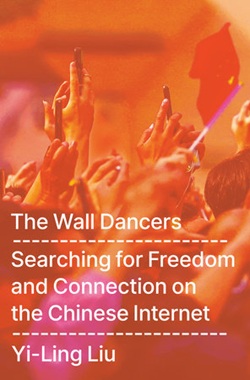
The closing sections of The Wall Dancers return to the body. Liu describes standing beside a wall years later, abroad, realising that her posture has not changed. “I still knew how to make myself small,” she writes. The sentence lands like an accusation — not at any single regime, but at all systems that train people to disappear. The wall’s most lasting achievement is not obedience, but self-erasure.
The final pages offer no redemption arc. Liu does not claim to have escaped the wall entirely. Instead, she writes, “I write to remind myself where the wall was, and how easily it can return.” Writing becomes a counter-discipline, a way of standing in open space deliberately, even awkwardly. Resistance here is not dramatic. It is sustained attention.
The Wall Dancers is provocative because it dismantles the comforting belief that freedom is guaranteed once external barriers fall. Liu argues, with quiet force, that the most durable walls are the ones that teach us how to behave without being told. The book’s most unsettling implication is that many societies — not only authoritarian ones — rely on this same choreography of fear.
By the end, the wall is everywhere and nowhere: in childhood games, in language, in memory, in posture. Liu does not ask the reader to dance heroically against it. She asks something more difficult: to notice when you are already adjusting your steps.