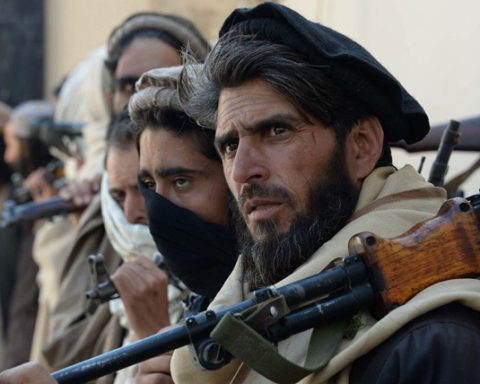

Balochistan is passing through its fifth wave of insurgency, and I am not merely an observer of this conflict but one of its earliest witnesses and victims. This cycle of violence unfolded in my hometown, Dera Bugti. Places where we once played became forbidden. We were warned, “Don’t go there; there might be a landmine.” We were also told not to go near the hills surrounding our homes, where either the state or separatist groups might open fire. Many of these restrictions remain in place even today.
This war is not only about bullets fired and lives lost in the moment. Violence casts a long shadow over geography and memory alike. Long after the gunfire stops, fear lingers. I still remember scenes no child should ever have to carry into adulthood—bodies torn apart, human remains scattered. Many were killed, many more displaced, and most never truly returned. The insurgents themselves were largely tribal people from the same land: some were killed, others went missing, and some crossed borders to settle elsewhere. Ordinary civilians were dispersed across Pakistan’s cities, forced to live as war migrants within their own country. The psychological toll of this displacement remains deep and largely unacknowledged.
Yet even now, calls for large-scale military deployment resurface with alarming ease. This insistence on force is unsettling, particularly because the current phase of insurgency is markedly more brutal—not only in the scale of violence, but in the depth of social and psychological damage it has inflicted. What is most troubling is not merely the violence itself, but Islamabad’s continued willing suspension of disbelief in the face of it.
Despite consecutive deadly attacks by separatist organisations in recent weeks, no new political thinking has emerged. No serious, solution-oriented debate has taken place. Instead, familiar rhetoric is recycled: that Balochistan’s unrest is the work of a small group of militants backed by hostile external forces. Some argue that development remains slow due to the large area and smaller population. As a short-term narrative, this framing serves a purpose. It can be true, but not the complete truth. It reassures a distant public, cools immediate tensions, and shifts responsibility outward. But when this explanation becomes the only explanation—repeated year after year—it signals something far more dangerous: intellectual inertia and political unwillingness to confront reality.
The federal political elite continues to view Balochistan almost exclusively through a security lens. This is not strength; it is a failure of political imagination. Much of the blame is routinely placed on the sardari system, yet this structure was consolidated under colonial rule, sustained by post-independence elites, and selectively sidelined by the very establishment that once relied on it.
Smuggling—often cited as justification for militarisation—is widely understood to be controlled not by local communities or insurgent groups, but by powerful federal and trans-provincial networks. Likewise, key natural resource zones and Gwadar are already firmly under the custody of federal institutions. Externalising blame has thus become a substitute for internal political accountability, masking deeper failures of governance and policy.
Over the last two decades, Balochistan has also been systematically reshaped through political engineering. Organic political representation has been displaced by establishment-backed cadres and proxy parties. Federal-level parties, often functioning as “B-parties” of the establishment, have turned instability into political capital. Governance has been reduced to short-term crisis management rather than long-term reconciliation. Instead of healing wounds, this engineered politics has deepened alienation to such an extent that resistance now cuts across generations.
For the people of Balochistan, war is not an abstract counterterrorism operation; it is a daily condition that reshapes every aspect of life. The human cost extends far beyond casualty figures. Surveillance has become routine. Internet shutdowns sever communities from markets, education, and the outside world.
Borders are sealed in the name of curbing smuggling, but the effect is collective punishment. Goods stagnate, livelihoods collapse, and mobility shrinks. State budgets reflect the same priorities: tens of billions of rupees allocated to security, while health, education, and employment remain chronically neglected. This is not governance; it is administration through force.
The roots of this crisis go back decades. During General Pervez Musharraf’s era, the military operation in Dera Bugti received extensive global media coverage. News reports and documentaries focused heavily on casualties, yet the fate of more than 200,000 displaced Bugti civilians was largely ignored. Nearly two decades later, these internally displaced people remain scattered across Pakistan, without secure housing, stable livelihoods, identity recognition, or reliable access to education and healthcare.
To describe this condition as resembling a civil war is not rhetorical excess. While undeclared, it carries many of the hallmarks of one: sustained militarisation, civilian trauma, and a profound breakdown of trust between state and society. Promises of peace ring hollow when lived experience contradicts them daily.
Perhaps the most tragic consequence is the impact on Baloch youth. Enforced disappearances fracture families and communities. Arrests of activists shrink civic space. Persistent human rights violations generate despair rather than stability. In this vacuum, separatist groups expand their influence, using digital platforms to amplify their narratives and legitimise violence.
Explaining this dynamic is not endorsing it; it is recognising how repression breeds radicalisation.
Islamabad’s detachment continues to deepen the crisis. By treating Balochistan solely as a security problem rather than a political and social one, the state risks the permanent alienation of an entire generation. Force may suppress symptoms temporarily, but it cannot cure the underlying disease.
The real question is no longer whether Balochistan will endure—its people already have. The question is whether Islamabad is willing to confront uncomfortable truth.