A recent report by MIT Technology Review highlights the growing debate among archaeologists about whether to continue excavating historical sites or wait until more advanced, less destructive technologies are developed. The discussion comes amid concerns over the irreversible damage caused by traditional excavation methods, with past cases revealing troubling examples of mishandled remains.
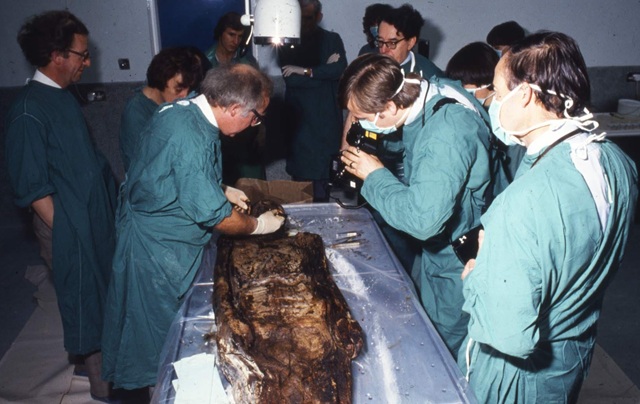
One of the most shocking cases involves “St Bees man,” a medieval body discovered in 1981 in Cumbria, UK. Rather than being carefully examined, his lead coffin was opened with an angle grinder, and his remains were subjected to a modern forensic autopsy. Astonishingly, samples of his organs were stored in a pathologist’s garage for decades. Had he been found today, experts suggest that his coffin and remains would be treated with far greater care, using non-invasive imaging and scanning techniques.
This cautionary tale underscores the broader issue of how we handle ancient human remains. Some archaeologists argue that we should excavate as much as possible before sites are lost to natural decay or development. Others contend that since excavation is a one-time event, we should delay digging until future technologies allow for more precise and minimally invasive studies.
The discovery of a vitrified brain at Herculaneum—where the 79 CE eruption of Mount Vesuvius turned a man’s brain to glass—illustrates the potential for scientific advancements to revolutionize archaeology. While scientists have identified neurons within the glassy remains, only a fraction of the site has been excavated, leaving open the possibility that more such discoveries exist. However, further digging could expose artifacts and remains to environmental damage, reinforcing the argument for patience.
The challenge extends beyond excavation to research practices. Current DNA analysis techniques, for example, require destroying bone or tooth samples, permanently depleting valuable material. Matteo Borrini, a forensic anthropologist at Liverpool John Moores University, emphasizes that modern researchers must justify any destructive sampling to ensure future generations have enough material left to study.
This shift in approach represents a growing recognition of the ethical responsibilities in archaeology. While past generations often prioritized immediate discovery over long-term preservation, today’s researchers are increasingly mindful of the trade-offs involved. With the rapid advancement of scientific methods, some experts believe that waiting a few decades could yield significantly better insights with far less destruction.
As technology progresses, archaeologists must continue weighing the urgency of uncovering history against the need to preserve it for future study. Until then, the ghosts of past mistakes—like St Bees man—serve as reminders of the delicate balance between curiosity and conservation.