by Eric
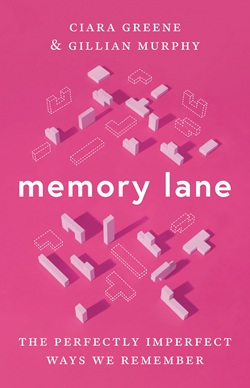
Ciara Greene and Gillian Murphy’s Memory Lane is not merely a book about memory; it is an unflinching confrontation with the fallibility of the human mind. We often think of memory as a faithful archive of past events, a pristine recording that can be retrieved at will. However, Greene and Murphy dismantle this comforting illusion with an onslaught of evidence, showing us that memory is not only malleable but also dangerously unreliable.
One of the book’s most unsettling revelations is that our memories can be implanted, distorted, and even weaponised against us. The authors reference the classic ‘Lost in the Mall’ experiment, which demonstrated that participants could be led to recall entirely fabricated childhood events. “Only 14% of participants reported that they remembered the fake event when asked directly, yet 35% were coded as having a full or partial memory” (p. 112). If such mundane false memories can take root so easily, what does this mean for the reliability of our most cherished recollections?
This question becomes even more disturbing when applied to the legal system. The book details how eyewitness testimonies, long considered the gold standard of evidence, are often riddled with errors. “Around 70% of wrongful convictions overturned by DNA evidence involved eyewitness misidentification” (p. 167). The case of Jennifer Thompson, who confidently misidentified Ronald Cotton as her rapist, is a harrowing example. Thompson later described the moment of realisation as “an unbearable fracture of my own mind, a betrayal by my own memory” (p. 172). This is not an isolated incident but a systemic flaw in human cognition—our memories are not objective records but reconstructions shaped by emotions, biases, and external influences.
The authors delve deep into the misinformation effect, where post-event information distorts original memories. One study cited in the book demonstrates this effect vividly: “Jurors who viewed interrogations containing misleading bait questions falsely remembered key details that were never actually presented” (p. 201). This has grave implications not just for the justice system but for our everyday interactions—how often do we absorb misinformation from the media or social circles, unknowingly rewriting our past in the process?
Emotions, the book argues, play a pivotal role in shaping memory, often in ways we do not recognise. The authors cite research on flashbulb memories, those vivid recollections of traumatic or historically significant events. People are often convinced that their memories of 9/11, for instance, are crystal clear. Yet, longitudinal studies show that “even though confidence in these memories remains high, the details change significantly over time” (p. 228). The unsettling conclusion? The stronger the emotion tied to a memory, the more likely we are to believe it is accurate, even when it is not.
A particularly provocative section of the book examines the ethical implications of memory manipulation. If memory is so pliable, should we consider altering traumatic memories for therapeutic purposes? The authors note that “research has shown that false memories can be just as distressing as real ones, triggering physiological stress responses identical to those seen in PTSD patients” (p. 253). This raises thorny ethical questions: If a memory—true or false—causes immense suffering, should we seek to erase or modify it? And if we do, where does it end? Could we engineer ‘happier’ recollections at the cost of distorting reality?
The book does not shy away from the impact of the digital world on memory. In an age where misinformation spreads faster than ever, our memories are increasingly shaped by online interactions. A particularly damning study cited in Memory Lane found that “exposure to fake news articles increased the likelihood of forming false memories, particularly when the misinformation aligned with the individual’s existing beliefs” (p. 276). This is not just a political problem; it is a fundamental cognitive vulnerability. Our minds are not immune to the algorithmic forces shaping the information we consume.
Perhaps the most unsettling chapter of Memory Lane discusses the illusory truth effect—the phenomenon where repeated exposure to false information makes it seem more credible. The authors describe an experiment where participants were repeatedly told incorrect trivia facts. By the end, “many rated the false statements as more believable than true ones they had only encountered once” (p. 295). This has chilling implications in an era of propaganda, media bias, and ‘alternative facts.’ If repetition can make falsehoods indistinguishable from truth, then what hope do we have for objective reality?
Despite its often disquieting tone, Memory Lane is not entirely pessimistic. The authors argue that understanding the flaws in our memory system can make us more critical thinkers. They advocate for simple interventions, such as corroborating our memories with external sources and being aware of cognitive biases. “Our memories may never be perfect, but by recognising their weaknesses, we can learn to navigate the past with greater caution” (p. 312).
Yet, even as they offer these reassurances, Greene and Murphy leave us with an uncomfortable truth: We do not merely remember the past—we actively rewrite it. In a world where our memories shape our identities, relationships, and even our legal system, this realisation is both liberating and terrifying.
Memory Lane is a book that forces us to question everything we think we know—not just about history or crime, but about ourselves. It is a masterful, unsettling, and utterly necessary exploration of one of the most fundamental aspects of human cognition. And if, by the end, you find yourself doubting the accuracy of your own memories—well, that is precisely the point.