“O my Sustainer! Open up my heart to Thy light and make my task easy for me, and loosen the knot from my tongue so that they may fully understand my speech.” (Holy Quran 20:25–28)
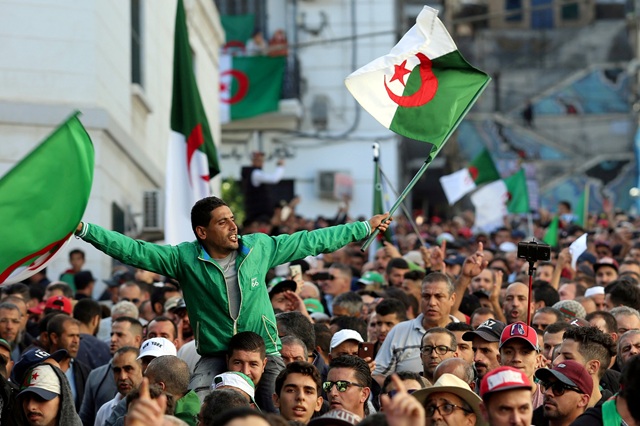
It is true that history not only tells us about the past, but also influences our present and undoubtedly shapes our future. This understanding came to mind when reflecting on a historical testimony to the greatness and impact of the Algerian Revolution of 1st November 1954.
We were in Tehran, the capital of the new Islamic Republic of Iran, in June 1982, shortly after a glorious revolution had toppled the Pahlavi dynasty of the Shah, which had been supported by US imperialism for decades. The Shah’s army had once been considered the fifth strongest in the world.
Our visit to this historic country was part of a quest to explore this nascent revolution, which had disrupted the strategic plans of the West. Indeed, a certain octogenarian, Imam Khomeini, had produced what Zbigniew Brzezinski, former US National Security Advisor, described as an “earthquake” in the Middle East. For Imam Khomeini, America represented corruption, having instilled evil habits—including alcoholism, pornography, and the violation of ethics and morality—among the Muslim people of Iran.
During our stay, Iran was in the midst of a devastating war imposed by the Baathist regime of Saddam Hussein, financially supported by the Persian Gulf monarchies and Western powers. These opponents of the new Islamic regime, despite their diversity, saw Iran as a destabilising force in the region and a threat to the decadent allies of the “Great Satan.”
The slogan “Neither East Bloc nor Western Bloc,” championed by Imam Khomeini (may his soul rest in paradise), inspired many freedom movements to recognise their unique positions at a time when people yearned for modern Islamic thought and support for Islamic and emancipatory movements that defied prevailing regional conditions.
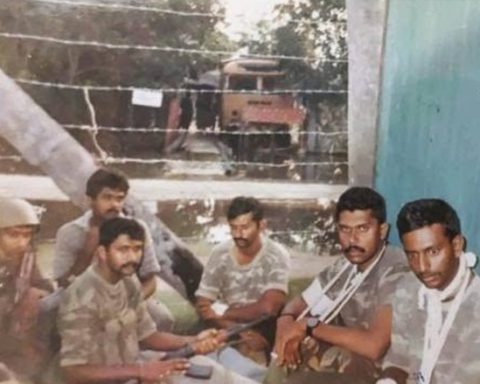
During a visit to the lavish marble palace of Saadabad, in the suburbs of Tehran and converted into a museum after the revolution, I had the extraordinary privilege of meeting Professor Nur Misuari, chairman of the Moro NLF Front in the Mindanao Islands (southern Philippines). This charismatic figure informed me that his movement had applied the methods of the FLN-ALN during its struggle against the Manila government, modelling itself almost entirely on the Algerian FLN and implementing the same tactics used by the Glorious Mujahedeen during the war of liberation against the French occupiers—even adopting a similar name, “FLN.”
Awed and surprised by this revelation, I realised the far-reaching impact of the Algerian Revolution on liberation movements, even in distant regions such as the Mindanao Islands, stretching between the Pacific Ocean and the South China Sea.
Truthfully, and without any overzealous or chauvinistic bias, but rather relying on a rational and scholarly approach, I felt an indescribable pride in the significance of the Algerian Revolution. It was truly a battle of excellence in the name of freedom, faith, and human dignity. The universal dimension of the 1st November Revolution is intimately linked to the principles proclaimed in its declaration: Islamic values, social justice, equity, respect for authenticity, and the promotion of modernity.
Furthermore, during the 60th anniversary of the 1st November Revolution in 2014, Professor Nur Misuari reconfirmed the same points discussed in Tehran in June 1982, sending me a letter validating the content of that meeting 34 years later.
This testimony could not have been written without the will of Almighty God, combined with an enduring curiosity to explore, travel, and engage with other cultures. It remains one of the most enriching experiences of my life, allowing a continual expansion of knowledge through research, travel, and interactions with scholars and wise people—a divine blessing that complements the teachings of the Holy Quran, which begins with the command: “Read in the name of thy Lord.”
In writing this historic testimony, I have done so with consciousness and love for writing, not by directive. It is intended primarily to serve future generations of my Muslim community (Ummah) and my country.