


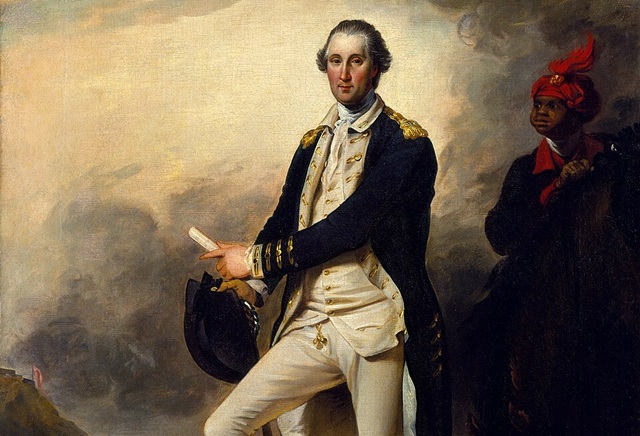
History remembers George Washington as a founding father and commanding general, yet the foundations of his leadership were laid not in grand assemblies but in the uncertain world of reconnaissance, observation, and persuasion. Born in 1732 in Virginia with little formal schooling, Washington began his career as a land surveyor, mapping unfamiliar terrain and learning to read landscapes with precision. Those early experiences prepared him for an unexpected role as an intelligence collector at a time when European empires were competing for control of North America. Long before independence became imaginable, Washington was developing the habits of mind that would later sustain a revolution.
His initiation into intelligence work came in 1753 when Virginia’s governor dispatched the 21-year-old on a perilous diplomatic mission to warn French forces against expanding into territory claimed by Britain. The journey stretched nearly a thousand miles through forests, rivers, and contested lands where authority was uncertain and alliances shifted quickly. Washington assembled a small, carefully chosen party that included experienced frontiersmen and a translator. Along the route he recorded everything he saw: the layout of valleys, the placement of forts, the disposition of soldiers, and the attitudes of Indigenous nations whose loyalties were crucial to both sides. His notebooks became more than travel records; they were structured intelligence reports.
The young envoy soon realized that information often hid beneath formal gestures. French officers greeted him politely and entertained him generously, yet their strategic intentions contradicted their diplomatic tone. Through attentive listening and the insights of his interpreter, Washington concluded that the French meant to hold the contested region regardless of negotiations. The episode taught him that successful intelligence required skepticism, cross-checking statements against observable realities rather than accepting assurances at face value.
Danger followed him on the return journey. At one point an armed guide attempted to shoot him at close range, missing only by chance. Washington disarmed the assailant and chose to release him, but he suspected the attack was meant to silence his mission. The incident reinforced a lesson that would recur throughout his life: intelligence gathering exposed individuals to invisible threats, and survival often depended on composure as much as courage.
Equally formative were the interpersonal skills he developed during the expedition. Washington proved adept at drawing out information in conversation, whether from deserters, traders, or local inhabitants. Social gatherings became opportunities for subtle questioning, and he discovered that relaxed settings often encouraged candor. By listening more than he spoke and maintaining discretion, he extracted insights that formal interrogations could never yield. His detailed journal, later published, circulated widely and informed British authorities about frontier realities, demonstrating the power of firsthand observation to influence policy far from the battlefield.
Conflict soon escalated into open warfare. In 1754 Washington returned to the frontier as a militia officer tasked with challenging French encroachment and protecting a supply route. He relied on scouts and Indigenous allies to track enemy activity, studying canoe traffic and movement patterns to estimate the scale of French presence. A surprise engagement with a French detachment marked one of the first clashes in what would expand into a global struggle between European powers. The encounter showed how tactical intelligence could trigger consequences far beyond its immediate setting.
Yet Washington also learned how quickly advantages could vanish. After establishing defenses at Fort Necessity, his forces lost situational awareness of enemy movements. French troops and their allies maneuvered into superior positions, surrounding the fort and forcing a surrender after intense fighting. The defeat left a lasting impression: intelligence must be continuous, not episodic. Commanders who fail to update their understanding of an adversary risk being overtaken by events.
Another lesson came during his service with British General Edward Braddock in a campaign to seize Fort Duquesne. Braddock was an experienced European officer who favored rigid formations and traditional battlefield tactics. Washington, shaped by frontier warfare, urged reconnaissance and flexible movement, warning that their conspicuous troops were vulnerable in wooded terrain. Braddock dismissed these concerns, confident that discipline and firepower would prevail.
The result was a devastating ambush near the Monongahela River. French and Indigenous fighters, concealed by the landscape, overwhelmed the British column. Within hours, much of the force was killed or wounded, and Braddock himself suffered a fatal injury. Washington narrowly escaped death while organizing a retreat. The disaster illustrated the danger of ignoring local intelligence and clinging to assumptions unsuited to new environments. For Washington, it confirmed that adaptability and respect for diverse sources of information were essential to survival.
By the late 1750s, Washington had risen to command Virginia’s militia and participated in another advance on Fort Duquesne. This time, the French abandoned and destroyed their stronghold before the British arrived, demonstrating how psychological pressure and credible intelligence could achieve objectives without direct confrontation. Yet despite his service, Washington grew disillusioned with British attitudes toward colonial officers, whose contributions were often undervalued. He resigned his commission in 1758, returning to civilian life with a deeper understanding of both warfare and imperial politics.
When tensions between Britain and its American colonies intensified in the following decade, Washington’s earlier experiences proved invaluable. He understood the fragmented loyalties within colonial society and recognized that victory would depend on trusted networks as much as battlefield engagements. When the Continental Congress appointed him commander in 1775, he approached the task not only as a general but as an intelligence organizer, emphasizing secrecy, reconnaissance, and the careful cultivation of reliable contacts.
Washington’s career reveals that the struggle for independence was as much an information war as a military one. From frontier expeditions to revolutionary command, he learned to question appearances, gather timely intelligence, confront personal and institutional blind spots, and build circles of trust capable of sustaining a fragile cause. These lessons, forged in the uncertainty of early missions, ultimately helped guide a revolutionary movement and shape the emergence of a new nation.











