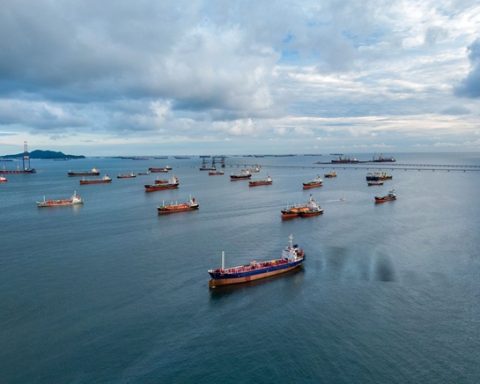
The war between Iran and a US-Israeli-led coalition, which began on 28 February 2026 with strikes on Iranian military and nuclear facilities and the killing of Iran’s Supreme Leader, Ayatollah Ali Khamenei, has evolved into a prolonged and increasingly complex confrontation. Six months into the conflict, the war has extended well beyond the initial exchange of strikes, with continuing attacks, disruption around the Strait of Hormuz, and Iranian missile and drone attacks against US and allied interests across the Gulf. Shipping through the Strait, one of the world’s most important energy corridors, has fallen sharply amid the continuing insecurity. Yet the dominant international narrative remains centred on states, military capabilities, strategic calculations and energy markets. Much less attention has been paid to how the conflict is affecting communities that were already economically and politically marginalised before the first missiles were launched: South Asian migrant workers, people from communities affected by caste- and descent-based discrimination, ethnic and religious minorities in Iran, Roma communities in Europe and other workers whose livelihoods depend on fragile labour markets. This is not primarily a story about these communities as direct participants in the conflict. It is a story about who absorbs the economic, social and human consequences when war disrupts labour markets, energy supplies, migration patterns and state priorities, and why those consequences so often fall most heavily on people who were already positioned at the margins of their societies.
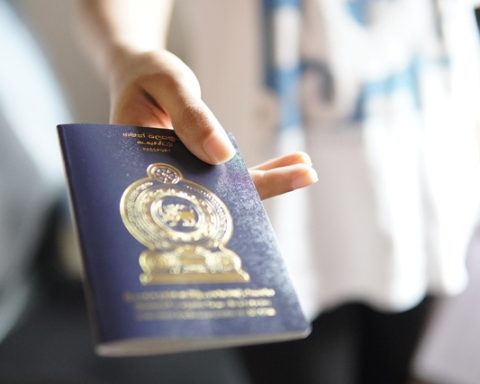
The Gulf provides the clearest and most extensively documented example. The six Gulf Cooperation Council states — Saudi Arabia, the United Arab Emirates, Bahrain, Kuwait, Qatar and Oman — have been exposed to Iranian missile and drone attacks since the beginning of the conflict. These countries also depend heavily on foreign labour, particularly from South and South-East Asia. Millions of migrant workers perform the construction, transport, delivery, sanitation, domestic, hospitality and industrial work on which the Gulf economies depend. Reporting during the early stages of the war showed that migrant workers were among those most exposed to the attacks. Human Rights Watch reported that, by 16 March, at least 11 civilians had been killed and at least 268 injured in Iranian attacks across Gulf states, with migrant workers constituting the majority of those killed. The vulnerability is not simply a consequence of physical proximity to military targets. Many migrant workers occupy jobs that require them to remain in industrial areas, construction sites, airports, ports, warehouses and other facilities that cannot easily be evacuated when hostilities escalate. Their economic position can also make relocation or evacuation considerably more difficult than it is for wealthier residents, while their families in countries such as India, Pakistan, Bangladesh, Nepal and Sri Lanka often depend on their earnings. Reporting from the Gulf has documented migrant workers describing their inability to afford evacuation even as missile and drone attacks intensified.
The relationship between this vulnerability and caste or descent-based discrimination requires particular care. It would be misleading to suggest that all South Asian migrant workers in the Gulf are Dalits or members of communities subject to caste discrimination. At the same time, caste and descent-based hierarchies have historically influenced access to occupations, education, housing and economic opportunity in parts of South Asia, while the Gulf labour market itself is strongly stratified by nationality, occupation, income and legal status. The result is that communities already disadvantaged by social and economic hierarchies can enter an international labour market with fewer financial reserves and weaker bargaining power than wealthier workers. War can magnify those existing inequalities. Where employment is suspended, construction projects are delayed, industrial facilities close or transport networks are disrupted, the consequences are not evenly distributed. Workers at the lower end of the labour market generally have less capacity to absorb prolonged unemployment, while families dependent on remittances can experience the consequences almost immediately. The issue is therefore not that the war has created caste or descent-based exclusion, but that an external crisis can expose and intensify inequalities that predate the conflict.
Remittances constitute an important second dimension of this vulnerability. For several South Asian economies, income earned in the Gulf is a significant source of household support and foreign exchange. The disruption of Gulf employment can consequently travel far beyond the workers themselves, reaching families and communities thousands of kilometres away. Current reporting already indicates that the wider regional conflict is producing significant economic disruption in Bangladesh and Pakistan, including pressure on energy supplies, industrial production and household costs. Bangladesh, which relies heavily on imported liquefied natural gas for electricity generation, has faced gas shortages and factory disruptions as the regional energy crisis has intensified. The effects are therefore transmitted through several interconnected channels: employment, remittances, energy prices, food costs and the availability of new migration opportunities. For households that regard overseas employment as one of the few mechanisms for escaping entrenched poverty and occupational restrictions, a contraction in migration opportunities can represent more than a temporary loss of income; it can narrow one of the few available routes towards social mobility.
The war has also exposed the vulnerability of ethnic and religious minorities inside Iran, although the nature of that vulnerability differs from that experienced by migrant workers in the Gulf. Iran’s Kurdish, Baloch, Ahwazi Arab, Azerbaijani Turk and other minority communities have long faced political, economic and cultural discrimination, particularly in peripheral regions. Human Rights Watch has documented what it describes as widespread and entrenched discrimination against several of these ethnic minorities, alongside continuing abuses against religious minorities including Baha’is, Christians, Jews and Sunni Muslims. The outbreak of war has created an additional security environment in which the Iranian authorities have intensified surveillance, arrests and restrictions. Amnesty International reported in May that Iranian authorities had arbitrarily arrested more than 6,000 people since the 28 February attack, including protesters, journalists, lawyers, human rights defenders, dissidents and members of ethnic and religious minorities. More recent reporting indicates that the authorities have continued to tighten internal security measures as the war and its political consequences have persisted.
This produces a particularly difficult position for minority communities. They may be exposed simultaneously to the physical consequences of military operations and to heightened domestic securitisation justified in the language of national security. The distinction is important because the risks do not necessarily arise from the same actor or through the same mechanism. Foreign military action can endanger civilians and destroy infrastructure, while the state’s response to perceived internal threats can produce arrests, restrictions and other forms of repression. The result is a form of compounded vulnerability in which communities that already experience weaker political representation can find themselves facing both external violence and intensified internal controls. Recent international investigations have also raised serious concerns about unlawful conduct by both foreign and Iranian forces, underlining the need to distinguish carefully between documented violations, allegations and broader political interpretations.
The experience of Roma communities in Europe presents a different but connected dimension of the same problem. Unlike migrant workers in the Gulf or minority communities in Iran, Roma populations are generally not located near the principal theatres of military confrontation. Their exposure is instead mediated through energy prices, inflation, employment insecurity and access to public assistance. The disruption of energy flows through the Strait of Hormuz has already contributed to wider pressure on global energy markets, while the continuing insecurity surrounding major shipping routes has raised concerns about the costs and reliability of energy supplies. Such pressures can have a particularly severe effect on households already experiencing energy poverty. Roma communities across Europe have long faced documented disadvantages in employment, housing, infrastructure and access to public services, meaning that an increase in household energy costs can affect them differently from households with greater financial reserves and more secure housing arrangements.
The significance of this relationship should not, however, be overstated. There is a substantial difference between demonstrating that an international energy shock can disproportionately affect economically vulnerable communities and claiming that the current war has already produced a measurable, war-specific increase in Roma energy poverty across Europe. The latter requires evidence that is not yet sufficiently available. What can be established more cautiously is that previous energy crises exposed weaknesses in the reach of social-protection systems, particularly where vulnerable households lived in informal housing or lacked conventional utility arrangements. The current conflict therefore raises a clear policy question: whether emergency energy assistance will reach households that are already difficult for conventional welfare and subsidy mechanisms to identify. The answer will depend not only on the scale of government relief but also on the administrative design through which that relief is distributed.
Economic crises can also interact with existing patterns of discrimination. Roma communities have repeatedly faced political and social marginalisation across Europe, and periods of economic insecurity can create conditions in which minority groups become targets of political scapegoating. It would be too early, however, to claim that the present conflict has produced a continent-wide increase in anti-Roma hostility attributable specifically to the Iran war. What can be said is that prolonged inflation, unemployment, energy insecurity and anxiety about migration have historically created difficult environments for minorities already exposed to discrimination. The possibility of further pressure therefore deserves monitoring, particularly if the conflict produces additional displacement or sustained economic disruption across Europe.
Taken together, these cases reveal a broader mechanism through which war interacts with structural inequality. Conflict does not necessarily create the vulnerabilities experienced by marginalised communities; rather, it can expose, deepen and redistribute pre-existing inequalities. Migrant workers with limited financial security can be more exposed to attacks and employment disruption. Minority communities in conflict-affected states can face both physical danger and intensified state surveillance. Roma households experiencing energy poverty can find themselves less able to absorb a sudden increase in energy and living costs. In each case, the decisive factor is not simply proximity to the battlefield. It is the combination of economic insecurity, limited political representation, restricted access to public resources and weak institutional protection. The people most affected by a crisis are often those who entered it with the fewest resources with which to withstand its consequences.
This also explains why the social costs of war are frequently difficult to measure. Official casualty statistics are usually organised by nationality, location or civilian status rather than by caste, descent, occupation or socio-economic position. Employment statistics rarely distinguish between the different forms of structural disadvantage that shape who obtains the most secure jobs. Energy-poverty data can similarly fail to capture households living in informal settlements or outside conventional utility systems. The absence of such disaggregated information does not prove that particular communities are disproportionately affected, but it can make patterns of inequality difficult to identify and therefore difficult to address. Data collection is consequently not merely a technical matter. It is part of the architecture of protection: what governments choose to measure influences which forms of vulnerability become visible in policy.
The deeper question raised by the war is therefore not simply how many missiles have been launched, how much oil has been displaced or how many ships have altered their routes. It is who bears the costs when the international system is disrupted. A migrant worker killed by falling debris in the Gulf, a minority family facing heightened repression in Iran, or a low-income household struggling to afford energy in Europe may appear in separate statistical categories and different political narratives. Yet their experiences can be connected by a common structural reality: crises travel through existing inequalities. The international response to war therefore cannot be limited to ceasefire negotiations, military calculations and energy-security measures. Relief policies, labour protections, migration systems and social-security mechanisms also determine whether the costs of conflict are distributed relatively evenly or transferred disproportionately to people who already possess the least capacity to absorb them.
The communities discussed here did not initiate the war, determine its military strategy or negotiate its political settlement. Yet they can become among its most consequential indirect victims. That reality should challenge governments, humanitarian agencies and international institutions to look beyond conventional categories of nationality and battlefield casualty. If the consequences of war are systematically filtered through caste, descent, ethnicity, occupation, migration status and class, then those dimensions need to be considered when assessing humanitarian risk and designing relief. Otherwise, the people who are least visible in the strategic calculations of war may remain equally invisible in its aftermath. The central question is therefore not only how a conflict ends, but whether the institutions responding to it are capable of recognising the unequal burdens that the conflict has imposed along the way.