In a seminar titled “Is India the Big Brother?” held at the Colombo Foundation Institute, Duminda Nagamuwa, the Propaganda Secretary of the Frontline Socialist Party (FSP), expressed concerns over the increasing Indian influence in Sri Lanka. Nagamuwa claimed that approximately 5,000 Indian R&AW, India’s top secret service, agents are currently operating within Sri Lanka, orchestrating what he described as a predatory project to seize control of critical national assets, including oceans, energy, electricity, land, ports, and airports.
Nagamuwa’s statements pointed to a broader strategy by India to extend its influence, particularly targeting major Sri Lankan infrastructure such as ports and airports. He warned that India’s ambitions do not stop with economic deals but may ultimately threaten the nation’s sovereignty.
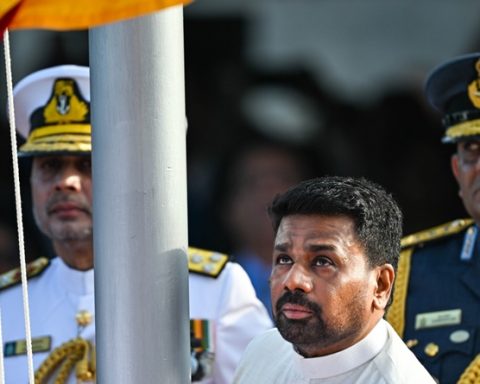
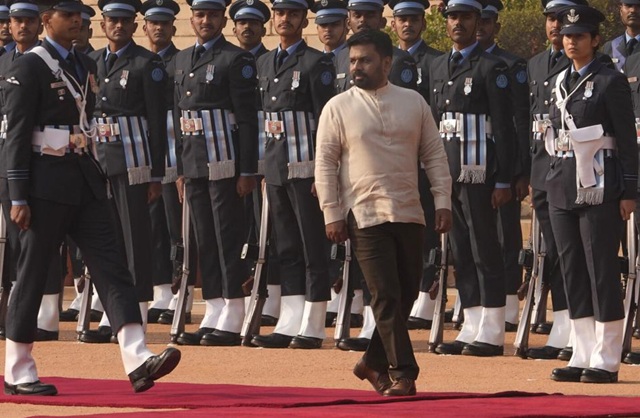
Addressing the seminar, he highlighted a recent visit by President Anura Kumara to India between 15–17 December. According to Hetema, discussions during the visit led to an agreement to award a contract for Sri Lanka’s digital identity card system to an Indian company, a move later confirmed by Vijitha Herath in an interview with a weekly newspaper in Colombo. While he acknowledged the need for Sri Lanka to maintain relations with India, he stressed that such agreements should not undermine the country’s independence.
A significant point of concern discussed at the event was the ongoing agreement with India regarding Sri Lanka’s Trincomalee oil tank complex. The complex, which is Sri Lanka’s sole petroleum storage facility, has been partly leased to the Indian Oil Corporation (IOC). Nagamuwa noted that although the original agreement was merely a memorandum of understanding, the IOC has illegally used some of the tanks for over 20 years. Furthermore, agreements signed during the Gotabaya Rajapaksa administration in 2021 have deepened Indian control, with terms extending the lease for another 50 years and granting India control over additional infrastructure.
Nagamuwa also raised alarms over India’s interest in Sri Lanka’s ports, particularly the Colombo and Trincomalee ports. He argued that India’s domestic port limitations—due to sand accumulation—make Sri Lanka’s ports highly attractive. Sri Lanka’s Colombo Port ranks 25th globally, while India’s largest port, Jawaharlal Nehru Port, ranks 35th, followed by the Mundra Port at 39th, owned by Indian business tycoon Adani.
Nagamuwa warned that these agreements and Indian investments could gradually suffocate Sri Lanka’s sovereignty and independence. He cautioned that while India’s economy may appear attractive, Sri Lanka must avoid becoming a victim of India’s broader geopolitical strategy in Asia, which seeks to establish India as a dominant economic and market power in the region.