The United States has dramatically recalibrated its Africa strategy under President Donald Trump, shifting from aid restrictions to a transactional policy that trades military support for access to West Africa’s lucrative mineral wealth, according to analysts and diplomats. The approach represents a sharp departure from the Biden administration, which froze most assistance to Sahel countries after a series of military coups, and signals Washington’s determination to counter growing Russian and Chinese influence on the continent.
Senior U.S. officials have made high-profile visits in recent months to the capitals of Mali, Burkina Faso, and Niger, all of which have struggled for more than a decade to contain jihadist groups linked to al-Qaeda and the Islamic State. In July, Rudolph Atallah, a longtime counterterrorism adviser now serving Trump, traveled to Bamako to pitch what he described as an “American solution” to Mali’s security crisis. “We have the necessary equipment, the intelligence and the forces to stand up to this menace,” Atallah was quoted as saying in Mali’s state press. Days later, William B. Stevens, deputy assistant secretary of state for West Africa, toured the region to promote potential U.S. private-sector investment in security and mining ventures.
Behind these overtures lies a quid pro quo, according to Ulf Laessing of the Konrad Adenauer Foundation: Washington has reportedly offered targeted strikes against jihadist leaders in exchange for American companies gaining access to lithium and gold. Trump has consistently prioritized access to critical minerals in his foreign policy negotiations, extending the approach to conflicts in Ukraine and the Great Lakes region of Africa. Mali is among the continent’s leading producers of lithium and gold, Burkina Faso also boasts significant gold reserves, and Niger remains one of the world’s top uranium exporters.
The Sahel juntas, which seized power between 2020 and 2023, initially justified their coups by pledging greater sovereignty over natural resources. Yet they have welcomed the U.S. pivot, seeing it as a chance to draw in investment and international support after ruptures with traditional Western partners. Mali’s foreign minister Abdoulaye Diop hailed what he called a “convergence of viewpoints” with Washington, underscoring the pragmatic tone now shaping relations.
Some analysts argue the mineral dimension is a way for Washington to stay engaged in a region where its influence has waned. “Officials in the State Department, worried about aid being cut and embassies closing, pointed to Mali’s resources as a way to keep the U.S. in play while Russia and China expand their presence,” Laessing said. But others caution that any deal involving lithium, gold, or uranium would require long-term stability that the region currently lacks. “The terrorism threat is the biggest issue,” said Liam Karr of the American Enterprise Institute. “Stabilising the region is key to any investment hopes.”
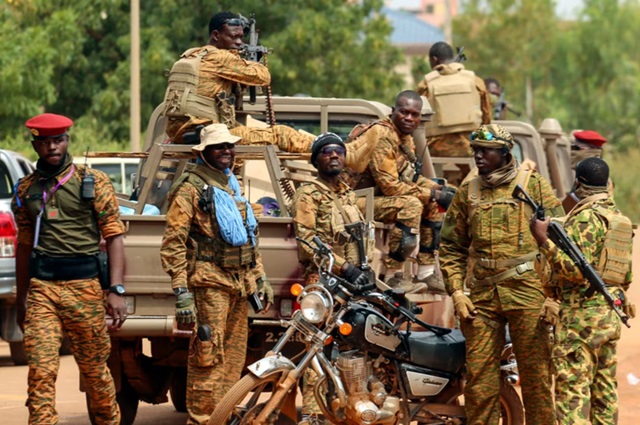
The U.S. overtures come as the Sahel regimes deepen ties with Russia, which has dispatched mercenaries from the Wagner group and its successor, the Africa Corps, to help their armies fight jihadists. Moscow has also shown interest in Niger’s uranium after the junta nationalized the local operations of French mining giant Orano. Yet Trump officials have downplayed concerns about Russia’s presence. Atallah said in Mali that Washington respects African states’ freedom to choose their partners, a position that aligns with the Trump administration’s openly transactional view of diplomacy.
Some former U.S. diplomats warn that the strategy risks entrenching authoritarian regimes while sidelining human rights and democratic values. Bisa Williams, who served as ambassador to Niger, suggested Trump could pursue arrangements giving U.S. companies majority control of mining ventures in return for military backing. Such a deal, she said, could even involve American private contractors, mirroring Russia’s deployment of Wagner fighters. “That way, he wouldn’t have to defend the policy before Congress or his MAGA base,” Williams argued.
For now, the Trump administration’s shift in the Sahel underscores a wider recalibration of U.S. foreign policy in Africa: less emphasis on democracy promotion and aid, and more on hard-nosed bargains over minerals and security. As one State Department official put it recently in Abidjan, “Trade, not aid, is now truly our policy for Africa.”