


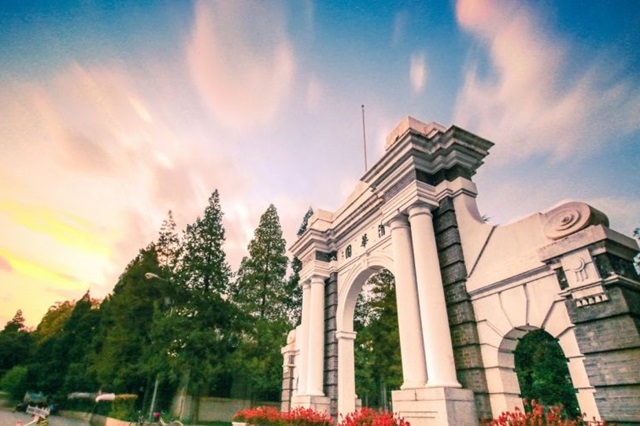
Tsinghua University, China’s premier science and technology institution, is emerging as a powerhouse in artificial intelligence, translating academic excellence into a surge of startups, patents, and technological influence, Bloomberg reports. The campus, bustling with students in science and engineering, now serves as a hub where the country’s brightest minds are developing AI systems, chips, and software to compete on a global scale.
This year, the success of the AI startup DeepSeek has underscored China’s growing confidence in challenging Western leaders in AI development. Students like 26-year-old computational biology PhD candidate Yuyang Zhang say DeepSeek’s achievements demonstrate that Chinese teams can lead in the race for large language models. Tsinghua graduates are also taking key AI roles at major tech companies, including Alibaba and ByteDance, and the university itself has produced innovations like the Accel AI chip, the DrugCLIP discovery engine, and the Absolute Zero Reasoner protocol, enabling AI models to learn autonomously.
Tsinghua has amassed a staggering portfolio of intellectual property, holding more AI patents than MIT, Stanford, Princeton, and Harvard combined. According to data analytics firm LexisNexis, the university filed nearly 5,000 AI and machine learning patents between 2005 and 2024, more than 900 of them last year alone. Marco Richter, senior director at LexisNexis, described the pace as “a staggering shift in innovation in less than a decade” and a reflection of China’s push to become an AI superpower.
The university’s influence extends beyond research. Government support, tax incentives, and funding have created an environment where AI talent can turn ideas into companies. Tsinghua’s X-lab incubator has helped launch roughly 900 startups since 2013, many focused on AI, including Z.ai and robotics firm Unitree. Students like Guan Wang and William Chen have developed the Hierarchical Reasoning Model, an AI system inspired by the brain that has outperformed larger models from Silicon Valley.
Tsinghua’s educational approach also fosters interdisciplinary skill sets, with programs like the Yao Class blending computer science, engineering, and computational neuroscience. AI is now integrated across disciplines, and every student has access to subsidized computing power for experiments and research. Jun Liu, newly appointed head of Tsinghua’s Department of Statistics and Data Science, highlighted the university’s ability to attract top talent from abroad while building China’s domestic AI capabilities.
While the U.S. still dominates in patent influence and high-performing AI models, China is rapidly closing the gap. The country’s share of the world’s top 2% of AI researchers rose from 10% in 2019 to 26% in 2022, while the U.S. share fell from 35% to 28%, according to the Information Technology & Innovation Foundation. Students like Zhang see Tsinghua as a place where the brightest minds can both innovate and stay in China to build the country’s AI future. “I find Tsinghua in its most vibrant state right now,” he said.











