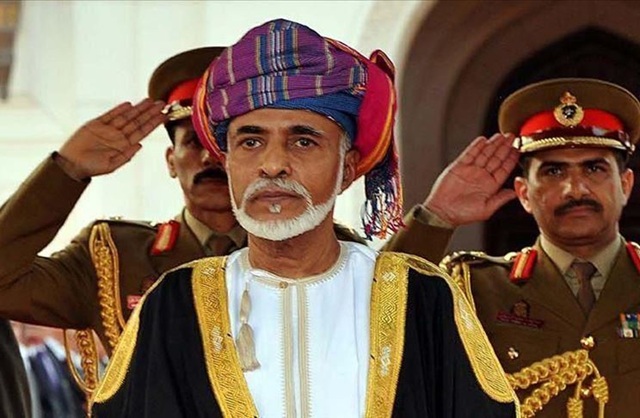
A senior Foreign Office official in the UK has publicly described the half-century rule of Sultan Qaboos of Oman as “ambiguous,” acknowledging corruption during his reign and revealing behind-the-scenes efforts to manage the UK’s sensitive alliance with the Gulf kingdom.
Graham Hand, a former ambassador who now oversees the Foreign Office’s censorship unit, made the striking remarks during a tribunal last month. Testifying in a transparency case over the declassification of files on the British mercenary firm Keenie Meenie Services (KMS), which operated in Oman, Hand stated, “There was certainly corruption and other regrettable matters that were not allowed, and should not be allowed to influence the pursuit of UK interests in Oman.”
Qaboos, a long-time British ally who came to power by deposing his father in 1970, ruled Oman until his death in 2020. During his reign, he built a close security and economic partnership with the UK, hosting British military and intelligence assets and acquiring lavish personal wealth. Investigations have linked his inner circle to luxury real estate holdings in the UK worth an estimated £80 million.
Despite this, British officials have long avoided open criticism of Qaboos or his regime. Hand’s comments mark a significant departure, particularly as he acknowledged that the Sultan’s successor, Sultan Haitham, has made it his mission to “protect the legacy of his predecessor.”
The remarks have come at a sensitive time. Foreign Secretary David Lammy recently visited Oman to reaffirm the UK’s close ties with the strategically located nation, which borders Iran. The UK considers Oman’s stability vital, perhaps even more so than Saudi Arabia’s, Hand told the tribunal.
During the hearing, Hand expressed discomfort with the disclosure of documents linking KMS to Omani combat operations. Though his office ultimately allowed the information to be released, he admitted, “I would have been inclined to redact that.” He described the appointment of Sultan Haitham via a secret will as “a process of some mystery,” and acknowledged that British reviewers operate in a feedback vacuum, rarely learning whether disclosures affect diplomatic relations.
A 1992 Foreign Office report made public by Declassified UK further corroborates concerns over corruption. It detailed how British firms often paid bribes to win Omani government contracts, stating bluntly, “British hands are far from clean.” The report concluded that Oman’s royal court was “potentially fertile ground for corruption” and that contracts were frequently awarded for reasons other than price or quality.
The revelations raise questions about transparency in UK foreign policy and the role of censorship in shaping historical narratives. They also highlight the tension between strategic interests and democratic accountability, particularly in a region where press freedom and public scrutiny are minimal.
While Sultan Qaboos is still widely respected for modernising Oman and maintaining peace in a volatile region, these disclosures suggest a more complex legacy—one that Britain has long helped shield from public view.