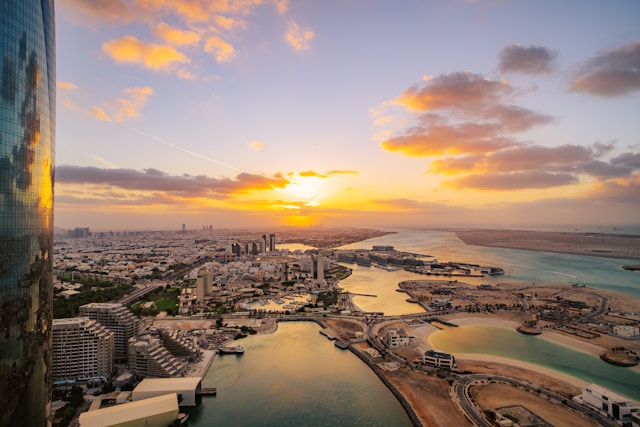
In a high-profile announcement during President Donald Trump’s Gulf tour, the United States and the United Arab Emirates have unveiled plans to construct one of the world’s largest artificial intelligence data centre hubs in Abu Dhabi. According to the Financial Times, the initiative marks a significant step in the US’s broader ambition to solidify global dominance in AI technology while bolstering the UAE’s position as a major player in the AI sector.
Dubbed the UAE-US AI Campus, the sprawling 10-square-mile facility will be developed by G42, the UAE’s leading artificial intelligence firm, and is projected to deliver an unprecedented 5GW of data centre power. This capacity could support the deployment of more than 2 million Nvidia GB200 chips, positioning the site as one of the most powerful AI computing centres outside the United States.
Commerce Secretary Howard Lutnick hailed the deal as a “major milestone in achieving President Trump’s vision for US AI dominance,” while UAE officials emphasized the strategic value of the partnership. Sheikh Tahnoon bin Zayed al-Nahyan, G42 chair and the UAE’s national security adviser, said the initiative would “strengthen the UAE’s position as a hub for cutting-edge research and sustainable development.”
While the project underscores the growing collaboration between Washington and Abu Dhabi, it also highlights the geopolitical challenges surrounding access to advanced chip technology. The UAE has been subject to the same export restrictions as dozens of other nations amid US concerns over chip diversion to China. However, the Financial Times reports that the Trump administration has scrapped a Biden-era licensing regime, loosening the rules and enabling the flow of Nvidia’s latest processors to approved US partners in the Gulf.
The US Commerce Department confirmed that the powerful computing infrastructure will be exclusively available to “US hyperscalers and approved cloud service providers,” and emphasized that the UAE had agreed to implement “stringent measures” to prevent unauthorized access to the technology.
The data centre is expected to play a critical role in the UAE’s goal of becoming the world’s first “AI-native government” and transitioning its oil-dependent economy toward advanced digital industries. President Trump, meanwhile, has framed AI development as a key pillar of American economic and strategic growth, touting the deal as part of a broader effort that has brought “trillions of dollars in investment” into the US during his Gulf tour.
The UAE has made significant overtures to align itself with American interests, with G42 cutting ties to Chinese tech suppliers and Abu Dhabi investment funds backing major US-based AI ventures — including Sam Altman’s Stargate project and BlackRock’s $30bn AI infrastructure fund.
Analysts view the agreement as a turning point in global AI geopolitics. Thea Kendler, former assistant secretary for export administration, told the Financial Times that the loosening of export controls signals a new phase in how the US approaches AI partnerships. “To invest in the extraordinary infrastructure required for an AI data centre, you want to know that stream of chips — and not just today’s chips, but the next generation and the next generation — will be able to come to you,” she said.
As part of the agreement, the UAE has also committed to building or investing in equivalent-scale AI infrastructure within the United States — a move that underscores the deepening strategic and technological ties between the two nations.