The Shuangjiangkou hydropower project in southwest China, soon to be the world’s tallest dam, has begun storing water as of May 1, its developer Power Construction Corporation of China (PowerChina) announced this week. This milestone brings the nearly decade-long, 36 billion yuan (US$4.9 billion) project one step closer to generating clean energy in the highlands of Sichuan province.
Located in the Aba Tibetan and Qiang Autonomous Prefecture along the Dadu River, the dam will stand 315 metres (1,033 feet) tall when completed — towering over the current record-holder, the Jinping-I dam, also in Sichuan. Its height is roughly equivalent to a skyscraper of more than 100 storeys, and its massive water storage capacity is expected to reach 110 million cubic metres — about eight times the volume of Hangzhou’s famed West Lake.
Once fully operational, the dam is projected to generate more than 7 billion kilowatt-hours of electricity annually, supplying clean power to over 3 million households. Its installed capacity of 2,000 megawatts positions it as a key contributor to China’s renewable energy ambitions. PowerChina estimates the project will offset 2.96 million tonnes of coal consumption each year, reducing carbon dioxide emissions by 7.18 million tonnes — a significant boost for China’s climate targets.
However, the engineering feat hasn’t come without serious challenges. Built at an altitude of over 2,400 metres in a seismically active and geologically complex region, the project demanded advanced technology and innovation. Engineers employed robotics, 5G-enabled sensor systems, and drones to manage issues like seepage control, seismic resistance, and environmental monitoring.
Construction on Shuangjiangkou began in 2015 following government approval, and the first power-generating unit is expected to go online by the end of 2025.
China has long relied on large-scale dam projects for flood control, irrigation, and hydroelectric power. It has constructed over 22,000 dams taller than 15 metres — nearly half the global total — many of them in its mountainous southwestern regions. Yet the rapid development of hydropower has sparked ongoing environmental and social criticism.
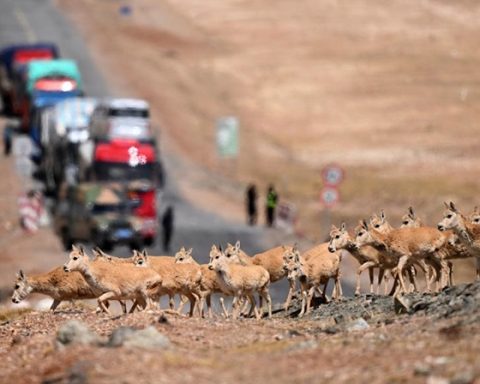
While the Shuangjiangkou project is praised for its clean energy credentials, environmental groups warn of adverse impacts, including disrupted ecosystems, biodiversity loss, soil erosion, and cultural displacement. Past hydropower developments in China have forced the relocation of over a million people and submerged numerous cultural sites.
To address some of these concerns, project planners have taken limited mitigation steps, such as establishing botanical gardens to preserve displaced plant species. Still, critics argue more robust safeguards are needed to protect both local communities and the environment.
As Shuangjiangkou approaches completion, it symbolizes both the promise and the controversy of large-scale hydropower in China — a balancing act between energy demands, engineering prowess, and environmental responsibility.