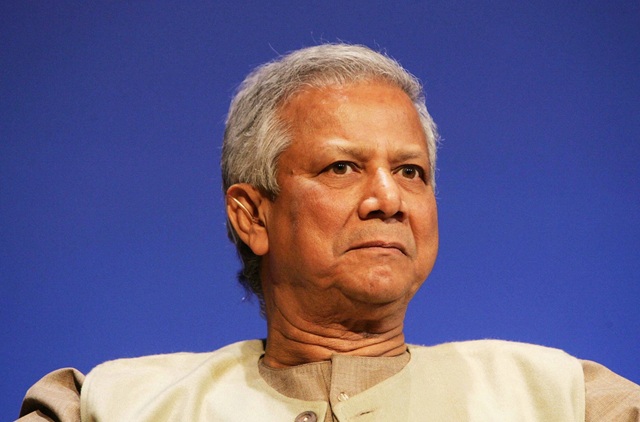
The current regime, under the leadership of Dr. Muhammad Yunus, ascended to power through a military coup d’état staged between August 5 and 8, 2024. This insidious takeover was orchestrated by the American deep state—principally the CIA—in concert with Pakistan’s Inter-Services Intelligence (ISI), elements within the Bangladesh Armed Forces, the brutal operatives of Jamaat-e-Islami who embody the far-right extremist fringe, and members of the Bangladesh Nationalist Party (BNP). On August 5, 2025, this unholy alliance unlawfully, unconstitutionally, and by sheer force deposed Prime Minister Sheikh Hasina from office. Since her ousting, the nation has been plunged into a relentless spiral of political turmoil, shrouded in a haunting and unyielding pall of authoritarian darkness.
However, this article examines the reactivation and subsequent politicisation of the International Crimes Tribunal in Bangladesh (ICT-BD) under the interim administration led by Dr. Muhammad Yunus in 2024. Originally envisioned as a mechanism for addressing the legacy of the 1971 Liberation War, the ICT-BD has been repurposed as an instrument of political repression following the July–August 2024 happenings. Through an analysis of legal developments, prosecutorial appointments, mass detentions, and ideological interventions, this article interrogates how the Tribunal’s mandate has been distorted, eroding public trust and threatening the fabric of democratic governance in Bangladesh.
I. Introduction: From Justice to Judicial Manipulation
The reactivation of the International Crimes Tribunal in Bangladesh (ICT-BD) in 2024 under the interim leadership of Dr. Muhammad Yunus has been widely touted by the new regime as a resurgence of the rule of law. However, closer scrutiny reveals a profound subversion of the tribunal’s original purpose. Once established to address grave atrocities committed during the 1971 Liberation War, the ICT has now been repurposed as an instrument of political reprisal. Far from advancing transitional justice, it appears to have devolved into a mechanism of state-led vengeance aimed primarily at the political adversaries of the current regime.
The ICT’s reconstitution has led not to justice, but to a dangerous conflation of legal accountability with political retribution. What was once a beacon of post-conflict justice is now emblematic of authoritarian consolidation under the pretext of legal reform.
II. The Proliferation of Accusations: Legal Chaos and Political Expediency
In the turbulent wake of the regime change, over 98,000 individuals were named in First Information Reports (FIRs), including an estimated 25,000 political figures affiliated with the unseated Awami League. The indiscriminate and voluminous nature of these accusations—spanning politicians, journalists, legal professionals, and civil society actors—raises serious concerns about the tribunal’s impartiality and procedural integrity.
These prosecutions were undertaken with alarming haste under extant but highly controversial Bangladeshi legal provisions that permit indefinite detention without formal charges. Legal safeguards were circumvented, with bail mechanisms largely rendered inaccessible. The way are implicated have been tasked with conducting investigations—a stark conflict of interest that compromises any semblance of judicial neutrality. This frenzied approach, devoid of robust investigative protocols or evidentiary standards, has been widely condemned by legal scholars and international human rights organisations alike.
III. Institutional Capture: A Politicised Tribunal
A particularly contentious development in the reconstitution of the ICT-BD has been the appointment of Md. Tajul Islam as Chief Prosecutor. A direful Jamaati cadre and formerly a defence counsel for Jamaat-e-Islami leaders convicted of war crimes and a co-convener of the Amar Bangladesh Party—regarded as an ideological offshoot of Jamaat—Islam’s elevation signals a dramatic realignment of prosecutorial priorities.
This appointment is not merely symbolic; it suggests an intentional effort by the Yunus administration to weaponise the tribunal against political rivals, particularly former Prime Minister Sheikh Hasina. Efforts to secure her extradition from India on charges of crimes against humanity underscore this shift. The paradox is striking: a former defender of 1971 war criminals now stand as the state’s lead prosecutor against those who once orchestrated their trials. The implications for the ICT’s credibility are profound, casting doubt on its independence and its alignment with principles of transitional justice.
IV. Facade of Legal Reform: Cosmetic Amendments and Structural Deficiencies
The interim administration has introduced several amendments to the 1973 Act governing the ICT, ostensibly to bring it in line with the Rome Statute. These amendments include provisions for witness and victim protection, the theoretical inclusion of international counsel, and procedural transparency.
However, these reforms appear largely performative. The tribunal continues to permit capital punishment, and its appeals process lacks both independence and credibility. Moreover, appointments to key judicial and prosecutorial roles have overwhelmingly favoured individuals with overt political affiliations, thereby negating any meaningful claims to impartiality. In this light, legal reform serves more as a strategic facade than a genuine commitment to justice.
V. The Politics of Amnesty: Selective Exoneration
On 14 October 2024, the Yunus administration issued a sweeping executive order granting blanket immunity to individuals involved in the July–August 2024 happenings. It is functioning effectively as a shield for regime loyalists and implicated actors. The order has drawn sharp criticism from minority representatives, civil society leaders, and international observers, who see it as an affront to the rule of law and an enabler of impunity.
This act of selective justice highlights a broader pattern: the deliberate manipulation of legal tools not for equitable resolution, but for political protection and strategic marginalisation of dissenting voices.
VI. International Scrutiny: The ICC Referral
Given the gravity of alleged violations—including extrajudicial killings, arbitrary detentions, and systemic violence against minority communities and opposition figures—an Article 15 communication has been submitted to the International Criminal Court (ICC). The British human rights law firm Doughty Street Chambers is spearheading this initiative, with support from eyewitnesses, victims, and international human rights monitors.
Should the ICC determine that the actions of the Yunus regime constitute crimes against humanity under Article 7 of the Rome Statute, high-level officials, potentially including Dr. Yunus himself, may face international legal proceedings. The possibility of an ICC-issued arrest warrant underscores the escalating international concern regarding the direction of governance and justice in Bangladesh.
VII. Retaliatory Violence and Judicial Absurdity
Compounding these legal concerns are credible reports that known extremists and convicted criminals were released from incarceration to assist in violent reprisals against members of the former ruling party and other perceived enemies of the interim regime. Incidents of mass arson, police station looting, and targeted assassinations suggest a state-sanctioned campaign of intimidation and retribution.
The implausibility of some judicial charges further underlines the degeneration of the rule of law. The implication of international sports icon Shakib Al Hasan in fabricated murder charges reflects the increasingly arbitrary nature of legal proceedings—an erosion of justice so stark that it borders on the absurd.
VIII. Historical Revisionism: Erasing the Spirit of 1971
Perhaps most disturbing is the regime’s apparent attempt to rewrite the historical narrative of Bangladesh’s independence. The destruction of Dhanmondi 32—the residence of Bangabandhu Sheikh Mujibur Rahman and a national symbol of liberation—and the criminalisation of the “Joy Bangla” slogan represent a calculated ideological reorientation.
Statements by Yunus-aligned religious leaders, such as Mizanur Rahman Azhari’s claim that “Razakar is not a slur, it is now a badge of honour,” illustrate the depth of historical revisionism. These actions not only betray the foundational ethos of the nation but also attempt to legitimate the ideological legacies of those who once stood opposed to Bangladesh’s very birth.
IX. Conclusion: A Nation in Peril
Bangladesh stands at a perilous crossroads. The Yunus regime’s repurposing of the ICT as a political weapon undermines not only the tribunal’s original mandate but the very fabric of democratic accountability. Through mass prosecutions, ideological revisionism, and strategic impunity, the government has eroded the foundations of justice in the name of transitional reform.
Justice cannot be reclaimed through the replication of past abuses, nor can national identity be rebuilt through historical erasure. What is required is a return to principled governance grounded in truth, due process, and constitutional fidelity. Unless domestic and international actors mobilise to resist this authoritarian drift, Bangladesh may well find itself in the grip of a long and troubling autocracy.
The time to act is now—for justice, for memory, and for the soul of the nation.