Opposition to the rapid expansion of artificial intelligence data centres is moving beyond local protests and into legislative chambers, online campaigns and, in some instances, threatening rhetoric, according to a year-long assessment by The Soufan Center that tracks the evolution of anti-data-centre narratives across the United States and beyond.
The report comes as governments increasingly confront the environmental, economic and political consequences of the growing demand for AI infrastructure. New York has become the first U.S. state to impose a statewide moratorium on hyperscale data centres, presenting the measure as an effort to shield residents from rising electricity costs and to protect environmental resources. Similar proposals are emerging elsewhere, reflecting mounting public scrutiny of the industry’s energy consumption and resource demands.
According to The Soufan Center, the movement opposing data-centre expansion has developed into a sustained online and offline phenomenon. While explicit and credible threats of violence remain only a small proportion of overall discussion, researchers found that narratives concerning electricity consumption, water usage and economic impacts continue to dominate conversations, with each new controversy generating increasingly widespread attention across social media platforms.
Legislative initiatives mirror the growing public debate. Michigan is considering a moratorium similar to New York’s, while residents of Monterey Park, California, have voted to permanently prohibit data centres within the city. In Washington, lawmakers have introduced proposals aimed at regulating how large-scale AI facilities connect to interstate electricity grids and determining whether data-centre operators, rather than ordinary consumers, should bear the costs of upgrading electrical infrastructure required to support expanding computational capacity.
The trend is not confined to the United States. Amsterdam has suspended the construction and expansion of new data centres until at least 2030, Denmark’s parliament is considering legislation to reduce data centres’ priority access to the electricity grid, and Germany has limited the construction of new hyperscale facilities exceeding 70 megawatts to two designated locations because of concerns over grid congestion.
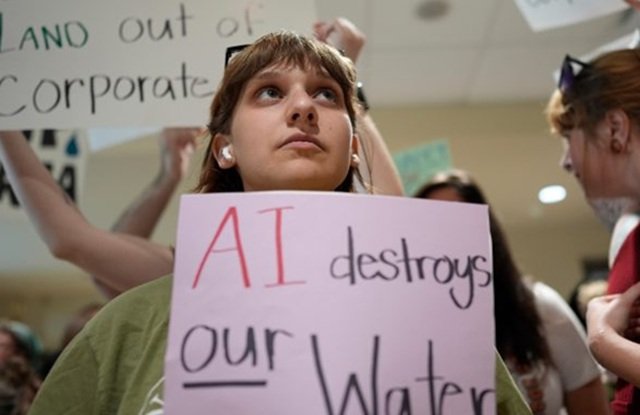
The report notes that political action has followed a marked shift in public opinion. A recent Gallup survey found that seven in ten Americans oppose the construction of AI data centres in their local communities. According to The Soufan Center, opposition has become a bipartisan issue, with demonstrations taking place in both traditionally Republican and Democratic states. Researchers also point to increasingly visible public campaigns, including anti-data-centre signs displayed outside homes across the country.
Alongside peaceful activism, several incidents over the past year have demonstrated a more confrontational dimension to the movement. In the Netherlands, climate activists from Extinction Rebellion threw balloons containing hydrogen peroxide and acetic acid at a Microsoft data centre, citing concerns over electricity consumption and the concentration of technological power. In Michigan, the treasurer of Saline Township resigned after receiving death threats linked to a disputed data-centre development. Researchers also note that a disrupted plot targeting senior U.S. government officials during the UFC Freedom 250 event at the White House included grievances relating to the water consumption of data centres among its stated motivations.
To understand how these developments were reflected online, The Soufan Center monitored discussions on X and Reddit between July 2025 and July 2026 through automated data collection and manual analysis. The research focused specifically on discourse surrounding data centres rather than broader conversations about artificial intelligence.
Researchers identified consistently high levels of discussion throughout the monitoring period, with activity increasing sharply from April 2026 onwards. According to the report, much of the online engagement has been driven by individual news events that trigger wider public reaction. Once a story gains momentum, researchers found, it increasingly generates secondary waves of commentary that amplify public anger and extend the lifespan of individual controversies.
The dominant themes remained remarkably consistent throughout the observation period. Electricity demand, pressure on power grids and concerns over higher household energy bills formed one of the largest categories of opposition. Water consumption and fears of water pollution represented another major area of discussion, while disputes involving zoning laws, eminent domain, property acquisition, noise and visual impacts also featured prominently, particularly among communities located near proposed developments.
Although the research concentrated on data-centre discourse, broader concerns about artificial intelligence frequently overlapped with these conversations. Participants regularly linked infrastructure expansion to fears over employment, economic disruption, environmental degradation, privacy and surveillance.
Several individual events generated particularly large spikes in online engagement. One of the most significant occurred in May 2026 after More Perfect Union published a widely shared video featuring U.S. Representative Alexandria Ocasio-Cortez visiting communities in Georgia where residents alleged that construction of a Meta data centre had contaminated local drinking water. Days later, the congresswoman raised the issue during a congressional hearing while displaying a jar of discoloured water, further increasing public attention.
Other widely shared stories included a farming family in Kentucky that rejected a reported US$26 million offer to convert part of its property into a data centre, and a Georgia family facing the loss of its home through eminent domain to accommodate a new transmission line. According to the report, only a minority of electricity carried by that proposed line would serve residential customers, with most intended to supply data centres.
The Soufan Center found that stories involving drinking water and private property often generated greater public engagement than debates over electricity regulation, despite lawmakers focusing primarily on energy infrastructure and utility costs. Researchers noted that narratives involving environmental damage or the potential loss of homes appeared particularly effective at sustaining online mobilisation.
Despite growing opposition, the report concludes that direct threats of violence continue to account for only a small fraction of anti-data-centre discourse. Researchers identified hundreds of posts containing threatening language during the observation period, but most were directed at infrastructure rather than individuals. Many employed coded language, memes, emojis or deliberate misspellings intended to avoid automated content moderation. More specific threats aimed at elected officials, planning authorities or companies involved in data-centre construction remained comparatively rare.
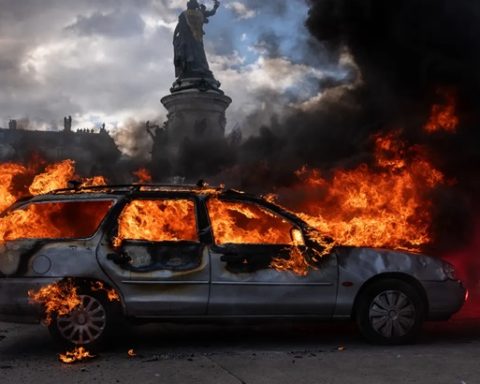
The report also distinguishes between symbolic expressions of anger and threats judged to be more credible. Researchers observed recurring references to arson, bombs and other violent acts directed at general targets such as “a data centre” rather than specific locations or individuals. Images of fire, guillotines and explosions frequently appeared beneath announcements of new projects, though without clear evidence of intent.
According to The Soufan Center, explicit threat rhetoric remains a small proportion of overall opposition to AI infrastructure. Nevertheless, the organisation concludes that anti-data-centre narratives continue to attract sustained engagement across political and social groups, making the issue likely to remain a significant feature of public debate as governments, communities and technology companies continue to confront the expanding demands of artificial intelligence infrastructure.