by Our Political Affairs Editor
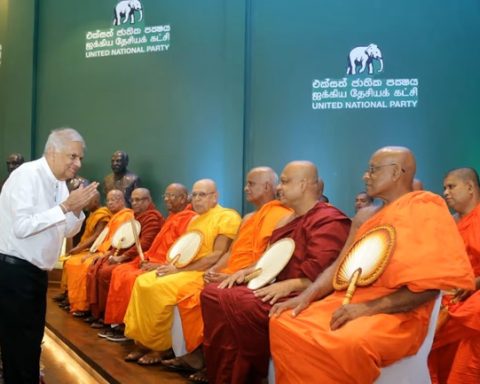
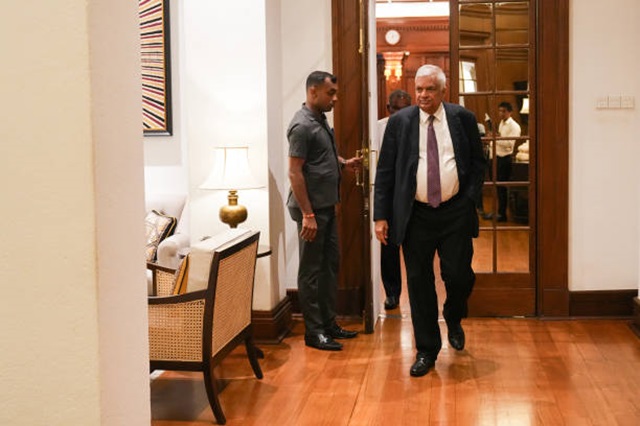
Former President Ranil Wickremesinghe, celebrating his 76th birthday today, is a political figure whose career evokes a complex and often polarising array of responses, as he continues to stir the imagination of those who watch Sri Lankan politics with an almost obsessive fixation. In a nation perennially struggling with contradictions, his leadership is a study in contrasts, a reflection of both erudition and pragmatism in an environment hostile to rational governance. He represents the kind of political paradox that few countries—especially those caught in the crucible of crisis—can produce. A man whose ability to traverse the shifting terrain of power has earned him both scorn and reverence, Wickremesinghe is an evidence to the paradoxes inherent in Sri Lankan politics, as well as a revealing case for political theorists and psychologists alike.
Wickremesinghe is, without a doubt, a product of the nation’s intellectual elite—its so-called “old guard.” Born into privilege, educated at the most prestigious institutions, and shaped by global ideas of governance, he was a figure marked for greatness. However, the very same attributes that could have propelled him to the upper echelons of international statesmanship have also rendered him deeply unpopular in many circles. To understand why this is so, one must first examine the delicate balance between personal ambition, historical context, and the fundamental contradictions of governance in a country like Sri Lanka. It is only by recognising these tensions that we can begin to make sense of Wickremesinghe’s place within the political theatre of Sri Lanka.
This is a man whose political convictions are not built on the anathema of ideology, but rather on the conviction that leadership is about incremental reform, balance, and a judicious selection of policies.
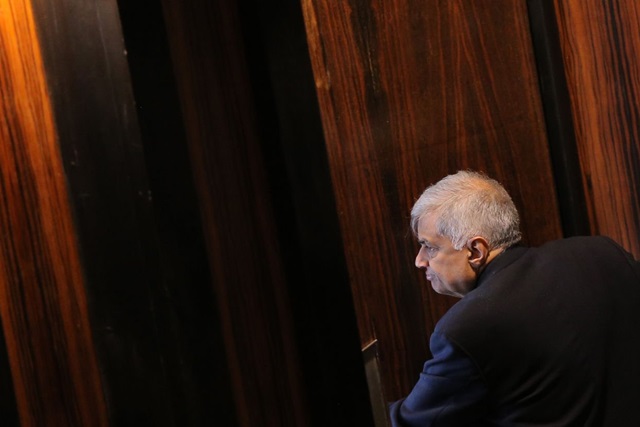
At his core, Wickremesinghe has always been an intellectual, more attuned to the philosophical nuances of governance than to the visceral, emotive demands of populist politics. This is a man whose political convictions are not built on the anathema of ideology, but rather on the conviction that leadership is about incremental reform, balance, and a judicious selection of policies. His decisions have often been based on an intellectual belief in the “greater good”—a belief that seldom resonates in a political arena increasingly dominated by populist rhetoric and immediate gratification. One of the most poignant elements of his leadership has been his apparent commitment to long-term goals over short-term political victories, a trait that has earned him the disdain of many, but which has, in its own way, been a cornerstone of his resilience.
One could argue that Wickremesinghe’s dissonance with the people stems from the inherent conflict between his intellectual nature and the emotional demands of the masses. According to Jacques Lacan, the “Real” in political existence often intersects with the “Imaginary” constructs that shape public perceptions, and this collision creates a psychic wound—one which political figures must navigate with great care. Wickremesinghe’s intellectual nature often places him at odds with the emotional, irrational, and tribal instincts that dominate Sri Lankan politics. His decisions, though rooted in rationality and a desire to stabilise the nation, seem distant, cold, and disconnected from the fiery rhetoric and impassioned calls for change that his opponents so eagerly peddle.
Consider his leadership during Sri Lanka’s worst economic crisis in 2022. At a time when the nation was in the throes of social and economic disintegration, Wickremesinghe’s ascent to the presidency was as much an act of necessity as it was of leadership. Faced with an economy spiralling into chaos, depleted foreign reserves, and widespread public outrage, he stepped into the breach with a cool-headed determination that many dismissed as political aloofness. His actions, such as implementing the IMF-backed austerity measures and negotiating Sri Lanka’s external debt restructuring, were viewed by some as acts of supreme political courage, and by others as symbols of his neoliberal tendencies. These measures, while controversial, were necessary for a country that had battered the boundaries of bankruptcy.
Wickremesinghe’s intellectual nature often places him at odds with the emotional, irrational, and tribal instincts that dominate Sri Lankan politics.
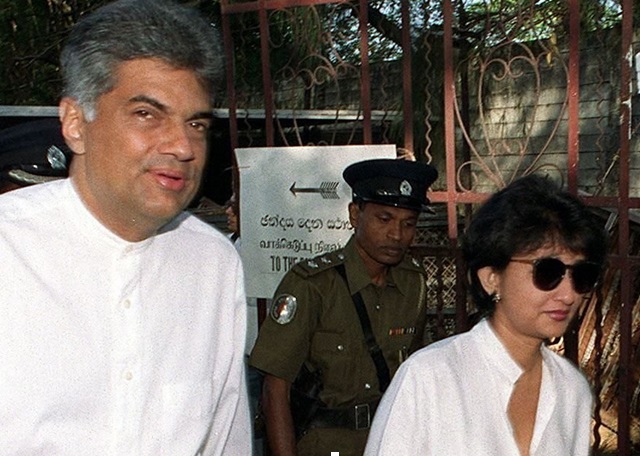
Wickremesinghe’s economic policies, however, have often been framed as aligning with a neoliberal agenda, championing market-driven solutions over state-controlled welfare. In many ways, these policies reflect the “Rockefeller Republicanism” model—a form of centrist economic conservatism that has dominated the politics of many Western democracies. Yet, critics have consistently labelled him as a “neoliberal”, too willing to sacrifice the welfare of the poor in service of the business elite. This critique, while valid to an extent, overlooks the complexity of his economic thinking. As John Stuart Mill once suggested, the economist must balance the public good and private freedom, understanding that a flourishing economy requires more than just the pursuit of wealth—it requires careful attention to social welfare and institutional stability.
His commitment to socio-economic reform, however, did not end with his presidency. As prime minister in the early 2000s, his “Regaining Sri Lanka” plan sought to modernise the country’s economy and provide a comprehensive framework for economic growth, one that recognised the importance of infrastructure and private sector investment while also addressing the structural issues that had plagued the country’s development. His policies during this period were largely progressive, although his ability to push them through was constantly undermined by political rivalries and national divisions. In particular, his proposals for structural reforms and privatisation were highly contentious and viewed by many as the antithesis of the kind of social welfare model that has long been cherished in Sri Lanka.
Yet, there is an undeniable tragic element to Wickremesinghe’s career. In the words of Machiavelli, a ruler must be prepared to “become a lion and a fox”—able to demonstrate both force and cunning when necessary. Wickremesinghe’s ability to engage in political pragmatism and diplomatic niceties is beyond reproach; however, his inability or unwillingness to truly connect with the masses has left him perpetually struggling against the tide. While his leadership in times of crisis demonstrated remarkable foresight, the populist rhetoric of his opponents, often laced with nationalism and hollow anti-corruption fervour, has successfully overshadowed his more technocratic approach to governance.
The critique of neoliberalism is a fair one, but it is also a reflection of the broader failure to engage with the deeper psychological currents at play within Sri Lanka’s polity. For Sri Lankans, the act of nation-building has often been marred by an intense, almost primal sense of betrayal, especially among the working class. This group, historically neglected, sees in Wickremesinghe a man who has always stood on the side of the elite, while offering little to alleviate the economic inequalities that have marred their lives. However, the accusation of elitism fails to recognise the mature idealism that runs through Wickremesinghe’s political philosophy—a belief that long-term stability and structural change are the only means through which Sri Lanka can transcend the cycles of economic disaster and social breakdown.
His legacy is undeniably a complex one, but it is one that ought to be seen not through the lens of simple dichotomies—“good” or “bad”, “progressive” or “regressive”—but through the more nuanced and sophisticated framework that acknowledges his role as a man who has sought to steer Sri Lanka’s ship through turbulent waters, however perilous the journey may have been. Like Jean-Jacques Rousseau’s ideal of the social contract, where the sovereign must act in the interests of the general will, Wickremesinghe’s policies have often been crafted with this broader vision in mind—yet the very nature of the Sri Lankan polity has made the pursuit of this ideal a Sisyphean task.
The maddening crowd may never truly understand him, but history may yet show that he was the rare politician who, amid the storm of human emotions and political expediency, understood the long arc of history and, in the end, helped to steer Sri Lanka back from the brink.
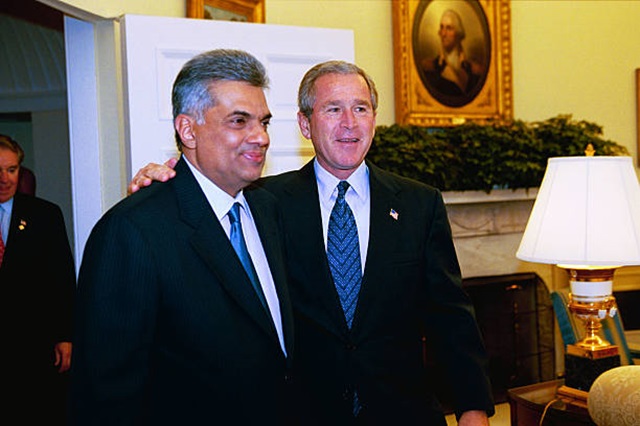
The psychological clash between visionary governance and immediate populist demands has been at the heart of Wickremesinghe’s political struggle. Yet, as Thomas Hobbes once observed, “the condition of man… is a condition of war of everyone against everyone”. In this context, Wickremesinghe’s pragmatism—though unsuited to the chaos of populist demands—may be the only solution to navigating the political anarchy that periodically engulfs Sri Lanka. His adherence to pragmatic reform is not a rejection of the people’s will, but rather a recognition that leadership is not always about democratic expedience, but often about protecting the future from the pitfalls of demagogic populism.
Ranil Wickremesinghe stands as a monument to the intellectual loneliness of leadership. For all his flaws, he remains a man who has pursued an agenda not defined by the crowds, but by a broader conception of what Sri Lanka could be. The maddening crowd may never truly understand him, but history may yet show that he was the rare politician who, amid the storm of human emotions and political expediency, understood the long arc of history and, in the end, helped to steer Sri Lanka back from the brink.
Mr. Wickremesinghe, your political path, at times a fine line between power and principle, echoes the words from House of Cards: ‘Power is a lot like real estate. The more you have, the more you want,’ and perhaps you, too, see the truth in Squid Game‘s line, ‘You don’t know what’s real until you’re in the game.’ Happy birthday, Mr Wickremesinghe, may you continue to confront the challenges of leadership with the clarity and intellect that have defined your way.