Could AI soon enable humans to talk with dolphins, monkeys, or even birds? That’s the bold vision behind the Coller Dolittle Challenge, a global competition offering a $500,000 grand prize for a breakthrough in interspecies communication — specifically, for AI-driven systems that can facilitate two-way, context-rich dialogue using animals’ own signals.
The challenge, now in its second year, is funded by the Jeremy Coller Foundation in partnership with Tel Aviv University and was inspired by the legendary zoologist and author John C. Lilly, who famously attempted to converse with dolphins. The project aims to harness the power of artificial intelligence not just to catalog animal sounds, but to uncover the rules of communication that govern them — and perhaps, one day, talk back.
Dolphins Lead the Pack
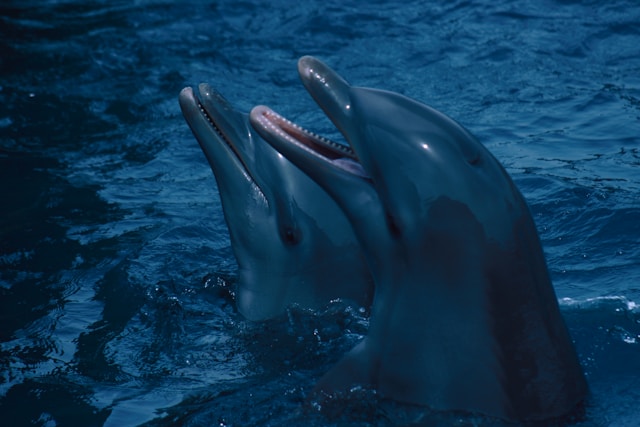
The first annual $100,000 prize was awarded to a team studying bottlenose dolphins (Tursiops truncatus) in Sarasota Bay, Florida. Led by Laela Sayigh of the Woods Hole Oceanographic Institution, the group has accumulated decades of dolphin audio recordings using suction-cup microphones placed directly on the animals. These data have revealed a repertoire of over 20 distinct, non-signature whistles — previously overlooked sounds that may convey information beyond personal identification.
About half of dolphin whistles are already known to function like names, helping dolphins recognize individuals. The rest, Sayigh’s team believes, might signal things like alarms or social invitations. By replaying the recorded whistles and observing dolphins’ reactions — whether they approach, swim away, or ignore the sound — the team is beginning to piece together a richer understanding of dolphin language.
“We really hope that this prize can push the use of AI in order to reveal even more impressive future results using this immense data set,” says Yossi Yovel, neuroecologist at Tel Aviv University and chair of the award’s scientific committee, in remarks to Nature.
Beyond Dolphins: Cuttlefish, Nightingales, and Monkeys
The contest drew three additional finalists, all using AI in innovative ways to decipher animal communication.
- Cuttlefish Communication: Researchers analyzing two cuttlefish species (Sepia officinalis and Sepia bandensis) used AI to identify four specific arm gestures — up, side, roll, and crown — which function as visual signals to peers. Cuttlefish responded to these signs by mimicking them, whether seen on video or heard as sound waves translated from arm movements.
- Nightingale Song Syntax: A second team trained AI to dissect the elaborate songs of common nightingales (Luscinia megarhynchos) into discrete syllables. The goal is to decode the underlying structure and meaning of these songs and eventually generate “responses” in the birds’ own vocal language.
- Marmoset Naming System: The fourth finalist uncovered evidence that common marmosets (Callithrix jacchus) use distinct vocalizations to refer to one another by name — a trait previously observed only in humans, elephants, and dolphins. AI helped distinguish these vocal patterns and identify naming behavior among individuals.
Big Promises, Bigger Challenges
Although AI has revolutionized the analysis of massive datasets — from dolphin whistles to wolf howls — scientists caution that we are far from fully automated animal communication systems. “There’s been a lot of hype,” says Arik Kershenbaum, a zoologist at the University of Cambridge. “But you still need a lot of zoological know-how.”
Indeed, as Nature reports, researchers stress that decoding an animal’s communication isn’t just about data processing — it also requires deep biological understanding, context, and careful behavioral observation.
Still, optimism remains high. The Coller Dolittle Challenge will continue to offer $100,000 annually to projects pushing the boundaries of AI-powered animal language research until the ultimate milestone is reached: a validated two-way communication system between humans and another species.
With $500,000 (or potentially $10 million in investment) on the line, the race is on — and the future of interspecies dialogue might be closer than we think.