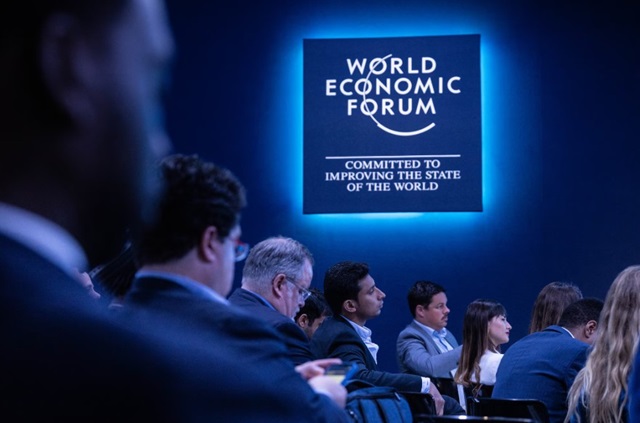
The world’s billionaires amassed a record-breaking fortune in 2025, Oxfam reported Monday, just days before the World Economic Forum gathers in Davos. The charity’s annual wealth analysis paints a stark picture of widening inequality, arguing that the surge in ultra-rich wealth is not only an economic issue but also a looming political crisis as the global elite convenes under the banner of dialogue and cooperation.
Oxfam said the collective wealth of the planet’s billionaires rose 16.2% during the first year of Donald Trump’s second term, reaching $18.3 trillion. The NGO highlighted Trump’s policies—particularly deregulation and the weakening of international agreements on corporate taxation—as key drivers of the wealth surge, benefiting the richest individuals and corporations worldwide. Oxfam’s report, released ahead of the Davos summit, suggests that the president’s economic agenda has directly contributed to the concentration of wealth at the very top.
The organization also noted that the world now has more than 3,000 billionaires for the first time in history. It underscored the stark disparity between the ultra-rich and the majority of the planet, pointing out that the 12 wealthiest individuals, led by Tesla and SpaceX chief Elon Musk, now hold more wealth than the poorest half of humanity—more than 4 billion people combined.
Oxfam warned that this concentration of wealth is translating into political influence. The report cited billionaire ownership of media outlets as a clear example, including Musk’s takeover of X and Amazon founder Jeff Bezos’s acquisition of The Washington Post. The charity argued that the growing power of the super-rich threatens democratic processes, allowing the wealthy to shape public opinion and policy to protect and expand their fortunes.
“The widening gap between the rich and the rest is at the same time creating a political deficit that is highly dangerous and unsustainable,” said Amitabh Behar, Oxfam’s executive director. His comments reflect the organization’s broader concern that wealth inequality is fueling a crisis of political legitimacy, as ordinary citizens lose influence over the rules that govern their lives.
Trump’s presence in Davos is expected to dominate the forum’s agenda, which is officially themed “A Spirit of Dialogue.” He will arrive with one of the largest U.S. delegations in the event’s history, underscoring the political significance of the gathering. The U.S. president’s participation has also drawn protests: about 300 demonstrators arrived in Davos on Sunday, many wearing masks of Musk or U.S. Vice President JD Vance and holding euro notes.
Nathalie Ruoss of the Swiss Young Socialists criticized the WEF’s invitation to Trump, arguing that decisions made in Davos affect people worldwide despite the forum’s lack of democratic legitimacy. “The most powerful people in the world make decisions at Davos that impact everyone,” she said, calling it “unacceptable” that the WEF welcomed “fascists like Donald Trump.”
Oxfam singled out Washington’s decision to exempt U.S. multinationals from an internationally agreed minimum tax rate of 15% as a striking example of policy that deepens inequality. The charity argued that the super-rich not only accumulate wealth beyond what could ever be spent, but also use that wealth to secure political power and shape the rules governing economies and nations.
“In country after country, the super-rich have not only accumulated more wealth than could ever be spent, but have also used this wealth to secure the political power to shape the rules that define our economies and govern nations,” Oxfam said. The organization warned that this concentration of economic and political power undermines political freedom and erodes the rights of the many, giving billionaires “a grasp over all our futures.”