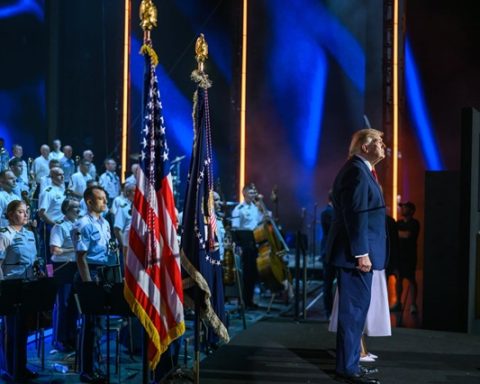
U.S. President Donald Trump said on Saturday that he believes Washington will ultimately “work a deal” with Cuba, even as his administration ramps up economic pressure on the island by targeting its access to oil. Speaking to reporters aboard Air Force One while traveling to Florida, Trump said Cuba’s deteriorating financial and energy situation could push its leaders toward negotiations with the United States, according to Reuters.
Trump’s comments came just days after he threatened tariffs on any country that supplies oil to Cuba, a move that has intensified fears of a deeper humanitarian crisis on the island. While reiterating his call for Cuba to negotiate, Trump argued that the situation does not have to spiral further if Havana chooses engagement over confrontation. “It doesn’t have to be a humanitarian crisis,” he said, adding that Cuba’s leaders may soon seek talks given the severity of their predicament.
The president painted a bleak picture of Cuba’s economy, saying the country has “no money” and “no oil” after years of relying on Venezuelan support. In 2025, Venezuela was Cuba’s largest oil supplier, providing roughly one-third of the island’s daily needs. That supply dropped sharply following U.S. actions aimed at blocking shipments, even before the capture of Venezuelan President Nicolás Maduro, Reuters reported.
With Venezuelan oil largely cut off, Cuba turned to other suppliers to meet its energy needs. Reuters reported earlier that Mexico became Cuba’s top oil supplier after Venezuela halted shipments in December. However, Mexican officials have since been reviewing whether to continue sending oil to the island, amid concerns they could face retaliation from Washington under the new U.S. policy.
Trump’s remarks suggest a dual-track strategy that combines heavy economic pressure with the prospect of negotiation. While he expressed confidence that a deal could be reached, he made clear that the United States is prepared to keep tightening the screws if Cuba does not come to the table.
The comments add to uncertainty across the region, as allies weigh the risks of continuing trade with Cuba against the threat of U.S. tariffs. For Havana, the combination of shrinking oil supplies, financial strain and renewed pressure from Washington leaves little room to maneuver, raising questions about whether Cuba will seek dialogue or brace for further hardship as U.S.–Cuba relations enter another tense phase.