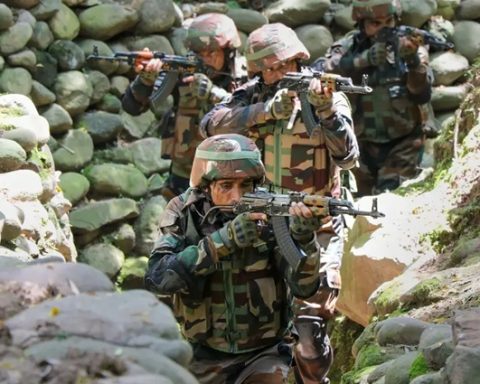
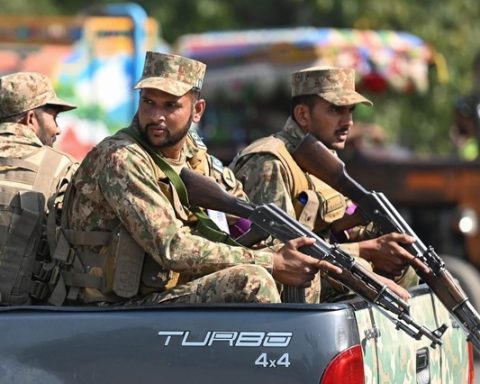
The United States has expressed concern over China’s expanding influence in South Asia and is preparing to offer Bangladesh’s next government defence equipment from the U.S. and its allies as alternatives to Chinese systems, according to U.S. Ambassador to Dhaka Brent T. Christensen. Speaking in an interview with Reuters, the envoy said Washington aims to work closely with Bangladesh to outline what it sees as risks associated with certain engagements with Beijing.
Bangladesh is holding a general election following a dramatic political shift in August 2024, when a youth-led uprising forced out Prime Minister Sheikh Hasina, long regarded as aligned with India. Hasina later took refuge in New Delhi, creating space for China to deepen ties with Dhaka as India’s influence has declined. The changing political landscape has drawn heightened global attention to Bangladesh’s strategic orientation in a region increasingly shaped by U.S.-China rivalry.
China recently signed a defence agreement with Bangladesh to establish a drone manufacturing facility near the Indian border, a move that has raised concerns among foreign diplomats. Bangladesh has also been in discussions with Pakistan to acquire JF-17 Thunder fighter jets, a multi-role combat aircraft jointly developed by Pakistan and China, further signaling a potential shift in defence partnerships.
Christensen said the United States can provide a range of military capabilities, including American-made systems and equipment from partner nations, to help Bangladesh meet its security needs while offering alternatives to Chinese hardware. He added that the U.S. would prefer to see stable relations between Bangladesh and India to support broader regional balance.
China’s foreign ministry responded by emphasizing that Beijing and Dhaka are comprehensive strategic partners whose cooperation across political, economic, and security fields benefits both nations. The ministry stated that their collaboration is not directed at any third party and would not tolerate outside interference.
Relations between New Delhi and Dhaka have deteriorated since Hasina’s departure, affecting areas such as visa services and even sporting ties, illustrating the wider diplomatic ripple effects of Bangladesh’s internal political transformation.
Beyond security concerns, the U.S. is also prioritizing commercial engagement with Bangladesh. Christensen said American companies are interested in investing but are waiting for clear signals from the incoming government that it is open to business. He highlighted commercial diplomacy as a central focus, particularly in strengthening trade, economic cooperation, and security relationships. Despite Bangladesh’s population of roughly 175 million, relatively few U.S. companies operate there, with businesses citing high taxes and difficulties repatriating profits as barriers. Longtime energy investor Chevron remains one of the most visible American firms in the country.
The ambassador stressed that Washington is prepared to work with whichever government emerges from the election, which is being contested primarily by coalitions led by the Bangladesh Nationalist Party and Jamaat-e-Islami, with opinion polls suggesting the BNP holds an advantage.
On the humanitarian front, Christensen reaffirmed that the United States remains the largest donor supporting the estimated 1.2 million Rohingya refugees living in Bangladesh. He pointed to ongoing U.S.-funded health and relief programs and referenced a recently signed $2 billion global framework with the United Nations aimed at improving aid delivery, including assistance to Bangladesh.
However, he warned that the United States cannot shoulder the burden alone and called on other international partners to increase contributions. In recent years, funding shortages faced by U.N. agencies have resulted in reduced food rations and the closure of some educational facilities for Rohingya refugees, underscoring the continuing strain on humanitarian operations.