The war initiated by joint U.S.-Israeli attacks on Iran has rapidly expanded beyond its initial borders, affecting countries from Cyprus to Sri Lanka, Turkey, and Azerbaijan, and risks drawing even more nations into the conflict. The campaign began with strikes that killed Iran’s Supreme Leader Ali Khamenei on Saturday, but analysts warn that the conflict has morphed into a high-intensity, multi-domain war with no immediate end in sight, according to the U.S.-based Soufan Center.
The Soufan Center noted that the conflict now involves leadership decapitation strikes, internal destabilization efforts, attacks on maritime chokepoints, threats to energy infrastructure, and economic coercion. Reuters reports that U.S. President Donald Trump dismissed the possibility of Khamenei’s son, Mojtaba, taking over, calling him a “lightweight” and insisting that Washington must influence Iran’s leadership to ensure “harmony and peace,” while warning that further war could follow if no suitable alternative emerges.
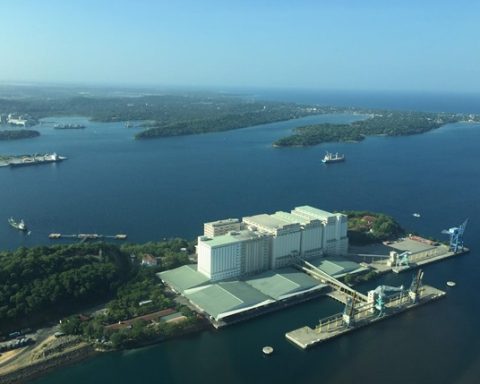
On the military front, a U.S. submarine sank the Iranian warship IRIS Dena off Sri Lanka, killing at least 84 sailors. Iran condemned the strike as “an atrocity at sea” and warned of repercussions. Meanwhile, Iranian forces struck a British military base in Cyprus with a drone, launched a ballistic missile intercepted over Turkey, and sent drones targeting Azerbaijan’s Nakhichevan exclave. Hezbollah also entered the conflict, attacking Israel, which retaliated with strikes on Lebanon, reportedly killing 72 people.
Military analysts describe the strategy as “horizontal escalation,” aimed at widening the battlefield and pressuring Israel and the U.S. from multiple fronts. Iran has additionally threatened critical maritime routes such as the Strait of Hormuz, through which a fifth of the world’s crude oil passes. Several European countries, including Britain, Greece, France, and Spain, have sent military support to Cyprus, while France deployed the aircraft carrier Charles de Gaulle to the Mediterranean after attacks on Abu Dhabi naval facilities impacted French forces.
U.S. officials have exerted pressure on allies to cooperate with the war effort. Reuters reports that Trump criticized British Prime Minister Keir Starmer for initially refusing participation and threatened trade consequences for Spain over opposition to U.S. base usage. France has allowed U.S. jets to operate from its southeastern airbase while maintaining a “strictly defensive” stance. Analysts warn that further escalation could involve Iran-backed Houthis in Yemen, who might disrupt navigation in the Bab-el-Mandeb Strait or target other countries.
The conflict’s rapid geographic spread underscores the danger of a broader regional war, with multiple nations already drawn in either directly or indirectly, raising concerns about global economic and security repercussions.