George Friedman’s latest podcast presents a meticulous account of the evolution of the war with Iran, exposing critical miscalculations and unanticipated outcomes. Friedman begins by stating, “All wars evolve. The fundamental purpose of this war was to neutralize the nuclear program of Iran, and also to have regime change. Now, the fundamental problem with war is that it’s unpredictable.” From the outset, he emphasizes that while U.S. intentions may have been clear, the unfolding reality diverged sharply from expectations. He compares geopolitics to macroeconomics, observing that “the broad outline of the economy can be seen to some extent. The details, the engineering process of economics is much more difficult to predict.” The same holds true for conflict: the strategic goal of preventing Iran from acquiring nuclear capabilities was predictable, but how the war would proceed in practice was far less so.
George Friedman’s latest podcast presents a meticulous account of the evolution of the war with Iran, exposing critical miscalculations and unanticipated outcomes. Friedman begins by stating, “All wars evolve. The fundamental purpose of this war was to neutralize the nuclear program of Iran, and also to have regime change. Now, the fundamental problem with war is that it’s unpredictable.” From the outset, he emphasizes that while U.S. intentions may have been clear, the unfolding reality diverged sharply from expectations. He compares geopolitics to macroeconomics, observing that “the broad outline of the economy can be seen to some extent. The details, the engineering process of economics is much more difficult to predict.” The same holds true for conflict: the strategic goal of preventing Iran from acquiring nuclear capabilities was predictable, but how the war would proceed in practice was far less so.
Friedman recounts that the initial strikes destroyed the civilian regime, “The regime, as they understood it, was destroyed. But they did not understand that that was not the full nature of the regime. Something else was in place. And that was the IRGC, this Islamist force that not only had the power over the military, but had massive economic and other power in the country.” The misjudgment was assuming that the removal of the visible government would produce collapse or an uprising. Instead, the IRGC persisted as a decentralized, resilient force, what Friedman calls “a mosaic force, a force in which different areas are able to operate outside the command of the center.” In other words, while the formal government structures were dismantled, the real controlling force remained intact.
Friedman underscores the intelligence failure in underestimating Iran’s internal structure: “The intelligence community misunderstood it. That is, the intelligence community misunderstood it. That is, the military had many people involved in this mistake.” He emphasizes that the problem was systemic rather than solely presidential. While Trump bears responsibility as commander-in-chief, Friedman notes, “I’m not sure that he alone arrived at this strategy or this intelligence analysis.” The core miscalculation lay in the belief that air power alone could compel Iran to capitulate. “By air power, I mean drones, missiles, and aircraft. And there was never a time when air power alone was able to force a government into capitulation, save in Japan, where the air power was used as atomic bombs, and that Japan had already lost that war, that it was over.” The expectation that precision strikes could achieve regime change without engaging on the ground proved overly optimistic.
As the war progressed, the U.S. faced the reality of confronting the IRGC directly. Friedman explains, “What they must do is destroy the IRGC. And the IRGC is in such a situation that, while it has a central command structure, it is also structured so that the regional commanders continue to take force. And we have to remember that it’s not just a military force, but it’s very powerful in terms of internal security. And in a certain, very real way, this was the real regime in place.” Air strikes alone could not dismantle the IRGC because of its decentralization and the ability to operate independently in multiple regions. The IRGC also retained drones and missiles, meaning that any escalation risked significant retaliation.
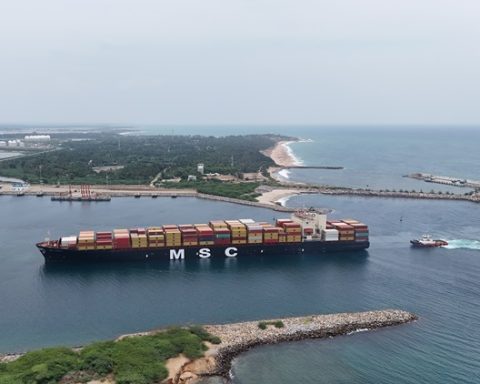
Friedman highlights the unintended consequences emerging from these dynamics, particularly regarding the Straits of Hormuz and global energy markets. He states, “The Straits of Hormuz blocks the Persian Gulf. The Persian Gulf is one of the main producers of oil in the world, therefore. And at the moment, the question is, is it safe to get through the Straits of Hormuz? Can the IRGC close the Straits of Hormuz by standing off with drones and destroying ships? This is now the fundamental question for the moment.” The war was no longer solely about Iran’s nuclear program or regime change; it now involved control of critical energy chokepoints. Friedman notes that the oil situation adds another layer of complexity: “The first goal may remain intact about the uranium. But there’s now another issue at this point that it would seem to me that the administration, Trump and beyond, did not anticipate.”
The unpredictability of war extends to the execution of military strategy. Friedman explains, “Air power has only so much effect. If the Iranians run out of drones, run out of missiles, they are then vulnerable and can be treated. If that happens, or we can destroy all their capabilities, but they’re so vastly distributed, it’s going to be very hard to achieve this, but not impossible.” He emphasizes the dual challenges: the IRGC’s distributed force and the potential economic consequences if the Straits of Hormuz are blocked. Without ground forces, the U.S. may struggle to maintain control over the critical oil route, a reality at odds with Trump’s initial desire to avoid prolonged ground engagements.
Friedman also brings attention to the overlooked potential of Iran’s Artesh, the secular army originating from the Shah’s era. “Now, there’s also a point to be remembered, which is there’s another army, the Artesh, which is the army that emerged from the Shah of Iran. It is not ideological in nature. It is fairly large and is said to be hostile to the IRGC, which is a different form.” He notes that the Artesh has not been engaged in the conflict and could serve as a potential instrument to counterbalance the IRGC, provided it chooses to intervene and is properly incentivized. Friedman emphasizes the chaotic nature of this opportunity, “Beneath that is the application of geopolitical reality, which can, and in this case, has turned out to be quite unstable and chaotic and not at all anticipated by the United States.” He highlights the uncertainty surrounding this option, indicating that relying on the Artesh introduces further unpredictability.
The nuclear dimension remains central, but its complexity has grown. Friedman observes, “The nuclear thing was the trigger for the war. It was assumed that it could be carried out in a surgical operation. First, it failed to do so completely. But in this one that we would damage the government so badly that it couldn’t function and carry that out. That proved to be not fully the case.” Even if the formal government had been neutralized, the IRGC retained the capability to advance Iran’s nuclear ambitions. Friedman emphasizes that the IRGC’s ability to act independently complicates U.S. goals: “So if you say that the nuclear program was not in the hands of the formal government, but in the hands of IRGC, crippling in a few weeks, the IRGC, a mass and vastly dispersed force, would seem to be more difficult.”
Friedman also addresses the broader economic implications of the conflict. He notes that while immediate global catastrophe is unlikely, long-term effects depend on maintaining the Straits of Hormuz open: “So long as a solution is found to the Straits of Hormuz, and therefore to the oil flowing from it. So I don’t think we are in imminent danger. If by imminent, you mean days or weeks away from a catastrophe.” The persistence of the IRGC and the closure of the straits could create sustained energy crises. He states, “Keeping the straits opened requires, it seems to me, an extended presence of troops on the ground, possibly engaging the IRGC. And we find that the IRGC is very difficult to defeat.” Friedman underscores the uniqueness of this war: while global oil shortages have affected the world in the past, the combination of Iran’s geographic leverage and the dispersed nature of the IRGC makes this a particularly delicate challenge.
Throughout the podcast, Friedman emphasizes the structural misunderstandings that have driven U.S. miscalculations. “We didn’t understand the IRGC either. So I’m not going to claim that I understood the IRGC, and they were stupid. But the IRGC, the structure of the IRGC was misinterpreted by myself as well as others.” The United States assumed that removing the civilian government equated to neutralizing Iran’s power, a misjudgment compounded by the decentralization and resilience of the IRGC. Friedman repeatedly stresses that this war cannot be treated as a model for future conflicts, given the specific structural and regional conditions of Iran: “Now, this particular war is not a model for future wars, because they’ll be in different places elsewhere.”
On the question of immediate strategy, Friedman outlines the critical challenges ahead: “The next question on the table is twofold. One, do the Iranians have the number of weapons they need or can they produce them, which I don’t think they can? Secondly, can we open the Straits of Hormuz before we run into a massive economic crisis globally? So these two things have to be answered and linked together, but it’s not clear.” He frames the war as a dual problem of military capability and economic security, emphasizing that tactical progress is inseparable from broader geopolitical realities.
Friedman’s analysis also highlights the internal complexity of Iran, including ethnic divisions and multiple centers of military power. “Iran is a large, large country. It is a very complex country. It is divided into ethnic groups. For example, most of Northern Iran is settled by Azeris, people who are in Azerbaijan, a smaller country to its north. And they’re a different community than other communities. It is divided into many of these ethnic groups. It is also divided between this army of the nation and the IRGC, the army of ideology.” He suggests that this structural heterogeneity could be exploited strategically, but any such engagement carries substantial uncertainty and risk.
Friedman concludes by framing the war as one defined by unforeseen realities, systemic misjudgments, and operational unpredictability. He stresses that the U.S. faces a profound dilemma: confronting a decentralized, politically embedded military force while protecting a critical economic lifeline in oil. He states, “If my fears are correct, and they’re just fears, they’re not stating a fact, that the IRGC is capable of providing both a fundamental defensive capability at the same time as being able to, for some period of time, block the Straits of Hormuz. It would seem to me that the only thing that we could do is make peace, which is going to be a very difficult thing to do, for all sorts of reasons. And secondly, to figure out a way to defeat them, the IRGC, if not everywhere, at least on the Straits of Hormuz and the Persian Gulf region, forcing them elsewhere.”
Friedman’s account is blunt and unvarnished: the war has evolved beyond initial U.S. intentions, the IRGC represents the true power in Iran, air power alone is insufficient, and the Straits of Hormuz pose a critical vulnerability to global energy markets. His analysis presents a stark reminder that in geopolitics, as in war, the reality on the ground often defies predictions, and that misjudging the structure and resilience of adversaries can produce far-reaching consequences, militarily, politically, and economically.
The overall message is clear: the U.S. faces a complex, multidimensional conflict where conventional assumptions about regime collapse, air power, and strategic control no longer hold. Friedman’s insights trace a direct line from initial miscalculations to present-day challenges, emphasizing that the IRGC, not the civilian government, is the central actor, and that maintaining the Straits of Hormuz open may necessitate ground engagement despite previous political commitments. The war’s unpredictability, the dispersed nature of Iran’s military-industrial structures, and the global economic stakes make this a confrontation that cannot be resolved through simplistic strategic formulas, a reality Friedman articulates without rhetorical embellishment, grounded strictly in the observed facts and outcomes he recounts.
This column, grounded entirely in Friedman’s own words, demonstrates a consistent theme: U.S. expectations underestimated Iran’s internal resilience, misread its military structures, and failed to anticipate the operational and economic ramifications of the IRGC’s endurance. The nuclear program, while the initial trigger, has been overshadowed by the broader strategic reality that any attempt to neutralize Iran now requires reckoning with the IRGC and the geopolitical leverage it wields, particularly over the Persian Gulf and global energy supply. In Friedman’s assessment, resolving these issues is no simple task, and the challenge is compounded by the structural unpredictabilities and the dispersed, decentralized nature of Iran’s actual governing force.
The war has evolved, and according to Friedman, this evolution underscores the limits of intelligence, the challenges of strategic prediction, and the critical importance of understanding an adversary’s internal structure. “We didn’t understand the IRGC either. So I’m not going to claim that I understood the IRGC, and they were stupid. But the IRGC, the structure of the IRGC was misinterpreted by myself as well as others.” These insights reveal the gap between the intended objectives and the actual trajectory of conflict, emphasizing the deep operational and geopolitical uncertainties that now define the U.S. engagement in Iran.
Friedman’s analysis leaves no ambiguity about the present reality: the war is now about managing the IRGC, maintaining energy flows through the Straits of Hormuz, and confronting a resilient, decentralized military-political entity that was never fully understood before hostilities began. As he repeatedly emphasizes, these factors were largely unanticipated, creating a scenario where tactical and strategic assumptions must be reconsidered continuously. The United States, in his account, faces a complex, multifaceted conflict with no simple path to resolution.
The unfolding situation in Iran, as described by Friedman, serves as a case study in the unpredictable nature of modern warfare, especially when economic and military dimensions intersect. The persistence of the IRGC, the uncertain status of nuclear materials, the potential role of the Artesh, and the strategic importance of the Persian Gulf collectively illustrate the intricate interplay of military, political, and economic forces. Friedman’s commentary presents these issues with clarity and directness, leaving the reader with a detailed understanding of why the war has evolved in the way it has and the substantial obstacles that now define U.S. strategy in the region.