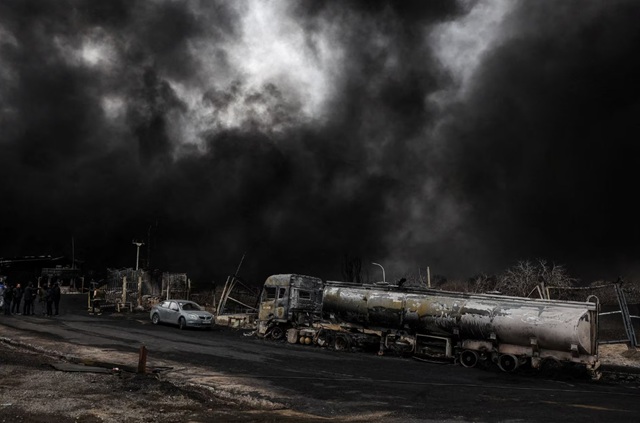
A short SMS traveled halfway across the world, reaching the phone of a brother desperate for news from his sister trapped in a war zone. The message was simple, yet heartbreaking: “My dear, my heart is very heavy because of the war. Even though I take sedatives, thank God Maryam is here, or I would succumb to loneliness. I worry greatly about the future. Writing to you calms me somewhat, even though I know you cannot respond. I kiss you.” He typed a reply immediately: “We are always thinking of you. Not just us, but your family and all our friends,” listing them one by one. He pressed send, but the message never reached her. Not on the 10th day of war, not via WhatsApp, not via Telegram. It was as if he were writing into the void.
This story, reported by Die Zeit and documented by award-winning journalist Isabel Schayani, reveals the daily reality for Iranians under both internal repression and external conflict. Schayani, born in 1967, is a prominent ARD editor and team leader of WDRforyou, a media outlet for refugees in three languages. She has spent years connecting with people in Iran despite enormous challenges, trying to understand life under the shadow of war and total information control. Her reporting highlights how citizens cling to hope while navigating almost unimaginable risks.
Contacting ordinary people in Iran today is not straightforward. Schayani describes a country where the government has severely restricted internet access, effectively cutting off Iranians from the outside world. Only domestic calls are reliable, and international communication requires expensive landline connections or high-risk VPN tunnels. Even the latter can be dangerous: regime forces conduct checkpoints, inspect travelers’ phones, and punish anyone found using encrypted networks at their discretion. Despite this, Schayani managed to speak briefly with a young woman in a small Iranian town, someone working remotely for a foreign company. With the internet shutdown, she could no longer earn money, and her neighbors stayed home for safety while armed regime forces patrolled the streets.
“Wir befinden uns in einer absoluten Nachrichtensperre,” she told Schayani. “We are in a total news blackout. We don’t know which reports are true.” State-controlled media spread contradictory stories daily—claims that Israeli Prime Minister Netanyahu had been killed, that Iran had already been liberated, that the people had won. On top of the internal confusion, she said, banks were closed, online services had failed, schools were shut, and basic goods were prohibitively expensive. “We are constantly exhausted. We fear the war ending and being left alone, while the Islamic Republic becomes even more brutal.” Many have already agreed among friends that they might rather die than survive a future dominated by the same regime.
The despair is rooted in real events. In January, protests over surging inflation, food prices, and water shortages were met with brutal force. Tens of thousands were arrested or shot. Human rights groups estimate at least 20,000 deaths, though the true number is likely higher. Then, on February 28, attacks from Israel and the United States opened a second front. Iranians now face a dual threat: airstrikes from abroad and violent repression at home. According to HRANA, nearly 4,800 civilians were killed in foreign attacks, including over 200 children.
Initial reactions in Iran reflected a complex mix of hope and fear. At first, some citizens welcomed U.S. and Israeli strikes, seeing them as potential ends to the regime’s rule. Yet as the war dragged on and objectives remained unclear, anxiety spread. The combination of foreign bombing and domestic suppression has blurred the distinction between combatants and civilians. Military targets are often located in residential areas, leaving families exposed to indiscriminate danger. Trust in the Islamic Republic is collapsing, yet the prospect of regime collapse also terrifies many.
When asked what would happen if the regime survives, the young woman paused. “It would be impossible to call it life,” she said. Friends were already planning to flee the country, while few dared hope for any meaningful change. Yet, as she added, “in the end, we are damned to hope—otherwise we wouldn’t get out of bed in the morning.” The contrast with Germany, where debates over gasoline prices seem mundane, only sharpened her bewilderment. In Iran, any public dissent can be lethal. Armed Basij fighters roam neighborhoods, threatening citizens on sight. Hundreds of thousands of such paramilitaries reportedly operate autonomously, acting with impunity. In her eyes, they constitute the real frontline: regime versus people.
State media fuels fear, warning that even minor acts of protest will be punished more severely than during the demonstrations of January. SMS messages from the Revolutionary Guard threaten that those who dissent will be hunted down wherever they are, abroad or at home. Tens of thousands remain imprisoned for protests, their fate uncertain. In this jungle-like environment, survival is dictated by the regime’s willingness to enforce its power at any cost.
Even amid terror, Iranians cling to rituals and small acts of resistance. On the 15th day of the war, the brother received another SMS from his sister: “Hello little one, today nothing bad happened. We are fine. The city center was bombed, but our neighborhood is calm.” Again, his reply vanished into emptiness. With the Persian New Year, Nouruz, approaching, traditional celebrations such as jumping over fire and cleaning homes hold special significance. They symbolize hope and preparation for change, even when the streets remain dangerous.
Schayani recounts speaking with a woman who had survived multiple imprisonments and torture under the Islamic Republic. Despite the horrors she endured, she keeps her hope alive through preparation. “This year I decorate nothing,” she said. “Too many of us have been killed. They can no longer take the celebration from us. But I clean the apartment and organize it, so I am ready for when everything changes.” Her actions are small, private acts of resistance, ways to preserve dignity and sanity in the face of constant threat. As Die Zeit reports, such hope is almost a lifeline. For many Iranians, it is the fragile thread that prevents them from succumbing to despair while waiting for a future that might finally allow them to live freely.
In a country where internet access is blocked, bombs fall unpredictably, and armed militias enforce obedience, the Iranian people are holding on. They hope to keep their sanity, to preserve their humanity, and to prepare for a day when the regime no longer dictates their every moment. In the midst of war and repression, these small acts—cleaning a home, sending a message that may never arrive, maintaining hope—become profound forms of resistance.