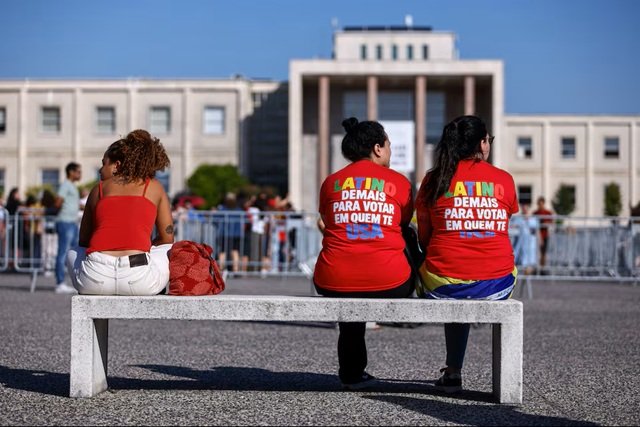
Brazil’s presidential election is heading for a second round on October 25, with Senator Flávio Bolsonaro holding an early lead over President Luiz Inácio Lula da Silva but falling short of the majority needed to win outright, according to projections and partial results.
With nearly 85% of votes reported, Bolsonaro had 48.47% compared with Lula’s 43.49%, while earlier counting had placed the senator more than seven percentage points ahead. Pollster Datafolha projected that the two leading candidates would proceed to a runoff, with surveys showing them roughly level ahead of the October 25 vote.
Bolsonaro, 45, is the son of former president Jair Bolsonaro and is seeking to return his father’s right-wing political movement to power. Lula, 80, is seeking a fourth presidential term. The campaign was dominated by corruption scandals, economic concerns and allegations of foreign interference, while both leading candidates skipped major television debates.
The Bolsonaro lead narrowed steadily as counting progressed. Early results came more quickly from southern states that tend to favour Bolsonaro, while votes from Lula’s northeastern stronghold were counted more slowly. Analysts told Reuters that some of Bolsonaro’s early support appeared to be “protest votes” from people opposed to Lula who might otherwise have waited until a second round to vote for the right-wing candidate.
Private surveys before the election had predicted that Lula would lead the first round by about three percentage points. Bolsonaro had nevertheless expressed confidence that voter frustration with Lula could carry him to victory without a runoff. “I hope it’s enough to secure a victory in the first round,” he said, referring to what he described as a protest vote.
The result is being closely watched beyond Brazil. A Bolsonaro victory would extend a series of electoral gains by right-wing candidates in Latin America aligned with US President Donald Trump, while a Lula victory could complicate relations with Washington, which has clashed with his government over trade and security. Trump has not formally endorsed a candidate, although he hosted Bolsonaro at the White House and praised him publicly.
Lula’s allies have warned that the Trump administration could refuse to recognise the result if Lula wins, citing an earlier aborted effort to send US officials to Brazil to question the country’s electoral system. Brazil’s electoral court chief, Kassio Nunes Marques, said on Sunday that the election was proceeding normally and that teams monitoring international risks had “not identified any risks whatsoever”. Brazilian intelligence officials had previously briefed French and German representatives about alleged US and Russian interference, allegations the United States has rejected.
Economic pressures have also shaped the contest. Although inequality and unemployment have fallen, Lula has struggled to persuade voters facing high living costs, heavy household debt, street crime and growing gang activity. Bolsonaro has sought to capitalise on those concerns, while Lula has expanded welfare measures, proposed new debt relief for families and moved to ban online gambling.
Public spending and debt exceeding 82% of gross domestic product have added to concerns over Brazil’s finances. The government has reduced its economic growth forecasts for 2026 and 2027 to 2.0% and 2.3% respectively.
A scandal involving the now-defunct Banco Master has further complicated the campaign. Its former head, Daniel Vorcaro, was arrested and accused of a multibillion-dollar fraud scheme. Federal police are investigating Bolsonaro over alleged money laundering connected to the case. He has denied wrongdoing but acknowledged receiving millions of dollars from Vorcaro to produce a film about his father. The investigation has also drawn Supreme Court Justice Alexandre de Moraes into a dispute that has intensified political tensions before the runoff.