SoftBank Group chief Masayoshi Son, one of the technology industry’s strongest advocates for artificial intelligence, has warned that increasingly powerful AI systems could become “super dangerous” if placed in the wrong hands, calling for greater international cooperation to manage the technology.
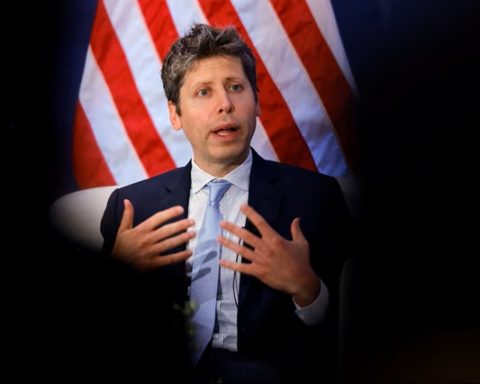
Speaking on Sunday at an event on the sidelines of the Science and Technology in Society forum in Kyoto, Son said the exponential growth of AI capabilities made it essential for countries to build trust and develop ways to use the technology together. He appeared alongside Michael Kratsios, the White House science and technology policy adviser.
“We don’t have any more luxury of having human fight against human,” Son said, arguing that countries should cooperate to control what he described as a far greater threat from powerful AI models. He warned that superintelligence in the wrong hands could become “super dangerous”.
Son’s remarks represented a notably cautious assessment from a major investor in the technology. The 69-year-old Japanese billionaire has directed nearly $65 billion of SoftBank funds into OpenAI, the creator of ChatGPT, and has for years highlighted AI’s potential to generate investment returns and assist humanity.
Kratsios was in Kyoto to announce a US-led initiative involving 17 countries aimed at using AI to accelerate scientific research. Representatives from Japan, South Korea, the UK, Germany, Singapore and the United Arab Emirates joined him on stage to mark the initiative. China was not among the countries that initially endorsed the White House statement.
Kratsios described a future in which AI and robotics could substantially accelerate scientific experimentation. “In automated cloud laboratories operating at industrial scale, robotic systems will conduct hundreds of parallel experiments, generating data that feeds back for real-time analysis and hypothesis refinement,” he said.
He said machines could synthesise thousands of research papers and compress years of scientific work into “tens of hours of work by armies of digital agents assisting human researchers”.
Son said AI capabilities would continue to expand exponentially. Technology initially developed for chatbots is now being used by AI services to browse websites and write computer code, while such systems are increasingly using general-purpose computer chips.
According to Son, the technology is approaching a third phase in which AI systems will be capable of helping robots and other machines interact with the physical world, beginning next year. He did not provide further details of how those systems would be deployed.
Son also repeated his long-term prediction that AI and machines with learning capabilities would account for at least 20% of global gross domestic product by 2040. He put the potential economic value of that share at $46 trillion.
“This is just the beginning,” Son said.