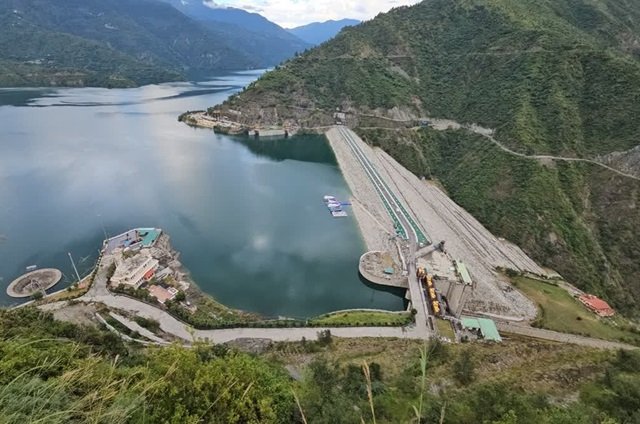
Several Indian states are seeking additional electricity allocations from the federal government to prevent power outages after weak hydropower generation and maintenance at power plants have reduced supplies during the night, according to two federal government officials.
Rajasthan and Gujarat, two of India’s leading renewable-energy states, are among those seeking additional supplies, alongside Maharashtra, Tamil Nadu, Andhra Pradesh, West Bengal, Uttar Pradesh, Chhattisgarh and the Union Territory of Delhi. The federal government normally has access to about 14 to 15 gigawatts (GW) of electricity from coal and hydropower plants that can be redistributed to states when shortages emerge.
That reserve has been reduced by weaker hydropower generation following an El Niño-related decline in rainfall, the officials said. The federal government has already provided additional electricity to Punjab after some areas of the state experienced outages lasting as long as 14 hours a day in September.
The officials spoke on condition of anonymity because they were not authorised to speak to the media. India’s Ministry of Power did not respond to a request for comment.
The supply squeeze highlights the difficulty of meeting electricity demand after sunset despite India’s rapid expansion of renewable-energy capacity. Solar generation can produce large amounts of electricity during daylight hours, but insufficient battery storage limits the ability to retain surplus power and shift it to the evening and night, when demand remains high.
India’s power shortages rose sharply in September, reaching 560 million kilowatt-hours, the highest monthly level since August 2023. The increase came even as coal-fired power plants raised output to meet strong demand. Coal-fired generation increased 13.3% from a year earlier, while hydropower generation fell 20%, according to government data.
The federal government is also facing constraints in responding to requests from states because much of the electricity available for redistribution has already been allocated. Providing additional supplies to one state could therefore require electricity to be withdrawn from another, one of the officials said.
Several coal-fired power plants are undergoing maintenance, while weaker hydropower and wind generation have added to the shortfall during a period of high industrial demand, said Rupesh Sankhe, a research analyst at Elara Securities. Grid India data showed that nearly 41 GW of generating capacity was offline.
Fuel availability is another constraint. About 47% of coal-fired power plants had critical fuel stocks, equivalent to less than a quarter of the supplies they are required to maintain, according to the data.
Sankhe also said states had not adequately planned their electricity purchases for the year because they had not expected the summer to last as long as it has. Electricity purchased through power exchanges has consequently become expensive, he said.
The power ministry has been pressing renewable-energy producers to accelerate the integration of battery storage systems, according to the officials. The systems are intended to capture solar electricity that would otherwise go unused during the day and make it available when demand rises after sunset.