Plans to open Sri Lanka’s Adam’s Bridge Marine National Park to tourism on October 15 have drawn strong objections from an environmental lawyer and a former senior wildlife official, who warn that the initiative could breach wildlife protection legislation and threaten fragile habitats used by migratory and seabirds. Provincial tourism officials, however, say the project has received the necessary clearances from the relevant authorities.
The dispute centres on whether tourists can legally enter and remain on the park’s sandy islands under Sri Lanka’s Fauna and Flora Protection Ordinance (FFPO), and whether the Department of Wildlife Conservation (DWC) has the resources to protect the area from environmental damage. Environmental lawyer Jagath Gunawardena argues that the legislation does not authorise the proposed activities, while former DWC Director General Dr Sumith Pilapitiya has questioned whether the department could effectively enforce any regulations introduced for the project.
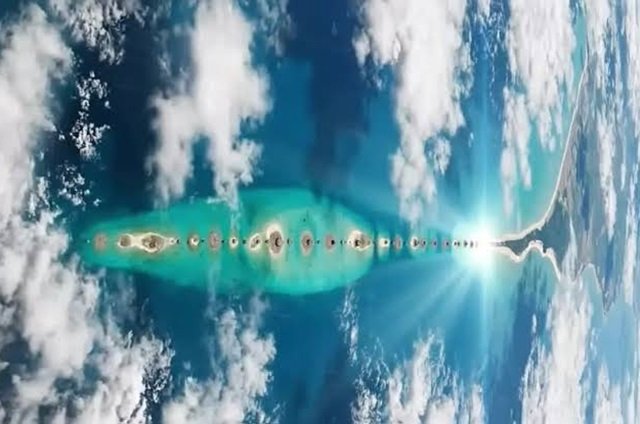
The Adam’s Bridge Marine National Park covers 18,990 hectares and was declared by the Sri Lankan government on June 22, 2015. Its 16 sand dunes and sandy islands lie around 30km north-west of Mannar, stretching along the Gulf of Mannar towards Dhanushkodi in India. Eight islands belong to Sri Lanka and eight to India. The area’s designation as a marine national park reflects its ecological importance, particularly as a habitat and breeding ground for birds.
Gunawardena said the FFPO distinguishes between terrestrial national parks and marine national parks, which fall under separate provisions within the category of national reserves. Marine national parks were introduced through a 2009 amendment to the ordinance. While Section 5 allows people to visit national parks to observe wildlife and plants or enjoy their natural beauty, he said, neither that provision nor any other part of the law authorises tourists to enter and remain in a marine national park.
“The proposed tourism activities in the Adam’s Bridge MNP are in violation of the FFPO and are, therefore, illegal,” Gunawardena said, arguing that the distinction between the two categories of protected areas was explicit in the legislation.
Pilapitiya expressed concern that even if tourism guidelines were formally gazetted, the DWC might not have sufficient personnel and facilities to enforce them. Citing repeated violations in terrestrial national parks, including Yala, Wilpattu and Uda Walawe, he said he had “little confidence” that the department could adequately manage tourism on the sensitive islands. The DWC is responsible for implementing the FFPO and overseeing protected areas, including national and marine national parks.
The Northern Province Tourism Bureau, chaired by Dr Jaganathan Vivekananthan, recently announced plans to facilitate tourism to Sri Lanka’s Adam’s Bridge islands, with the formal launch scheduled for Thursday, October 15. Vivekananthan told the Sunday Times, Colombo, that the initiative was being conducted in coordination with the Talaimannar Pradeshiya Sabha under the guidance of Mannar District Secretary K. Kanakeshwaran.
“Everything has been cleared by the DWC and the environmental authorities,” Vivekananthan said. Kanakeshwaran also maintained that all approvals, including those from the DWC and the Defence Ministry, had been granted. The Sunday Times reported that attempts to obtain a response from the DWC’s Director General and Additional Director General, including calls, emails and WhatsApp messages, had elicited no reply.
Bird Club activist Uditha Hettige, who has visited the islands for scientific studies since 2001, warned that tourism could disrupt a habitat shaped by shifting sands, changing tides and the movement of the Indian Ocean. The islands provide resting places for migratory birds travelling from northern regions towards warmer southern areas. Hettige said he had observed small songbirds resting on the islands after long flights, while shrubs on the third island supported gatherings of birds from different species.
The islands also serve as breeding grounds for seabirds that spend much of their lives over the open ocean. A Bird Club study recorded Bridled Terns, Sooty Terns and Lesser Noddies nesting on the second and third islands, while Dr Sampath Seneviratne of the University of Colombo had observed Brown Noddies nesting there. Hettige said Saunders’s Terns had been recorded nesting on the fourth island after a gap of 65 years. Greater-crested Terns and Caspian Terns also use the islands, while other birds may wait for existing nesting sites to become available.
Hettige warned that disturbance could force birds to move to the less stable fifth or sixth islands. He recalled that visitors had previously landed on the second island, after which fishermen reported seeing eggs washed away. The Bird Club subsequently recorded no bird nests there. Migratory birds generally converge on the area in October, November and December and depart around April, while other species use the islands for nesting in June, July and August.
The fragile terrain presents additional risks. Visitors may have to leave their boats and help push them towards the islands when low tides expose shifting sandbars, potentially bringing them into contact with toxic stonefish. Hettige also warned of plastic and chemical pollution from tourism and said increased disturbance could undermine the islands’ ecological value.