by Nil
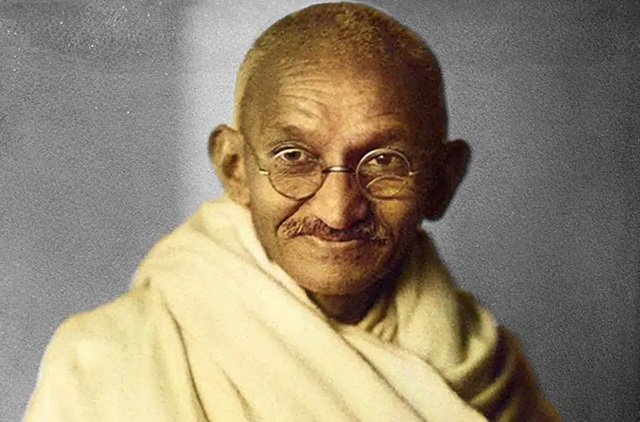
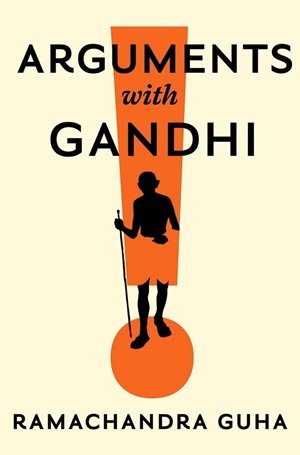
Ramachandra Guha’s Arguments with Gandhi takes on a deceptively difficult task: to examine a man whose moral authority has become so extensive that even his failures are often treated as inconveniences to be explained away. Gandhi is celebrated as the apostle of nonviolence, the liberator of India and an inspiration to movements for justice across the world. Yet he is also accused of racial prejudice, paternalism, conservatism on caste, troubling attitudes towards women and an unwillingness to accept political arguments that challenged his own convictions. Guha’s central proposition, as reflected in the selected passages, is that Gandhi should neither be protected from these criticisms nor dismissed because of them. He must be argued with. The strength of this approach lies in its refusal to make admiration a substitute for scrutiny. Its difficulty is that a sustained defence of Gandhi’s continuing relevance can sometimes pull against the critical independence that such an undertaking demands.
The book’s most important intervention may be its insistence that Gandhi’s nonviolence was neither an abstract doctrine nor a convenient instrument of political moderation. Guha traces its articulation to the September 1906 meeting in Johannesburg, where approximately 3,000 Indians assembled to oppose a discriminatory law imposed by the Transvaal government. The significance of this episode lies in the alternatives Gandhi rejected. Petition-writing, with its cautious incrementalism, had proved inadequate; revolutionary violence, meanwhile, offered a different but equally troubling route to political change. Gandhi proposed a method that required protesters to accept physical suffering without inflicting it upon their opponents. More importantly, he insisted on announcing their intentions and maintaining communication with the authorities they challenged. This was not the secrecy of an insurgency but the public confrontation of an unjust power.
Guha’s distinction between Gandhi and Henry David Thoreau is particularly revealing. Gandhi rejected the claim that his method originated in Thoreau’s essay on civil disobedience, arguing that resistance in South Africa was already developing before he encountered the American writer’s work. The distinction is not merely a dispute about intellectual ownership. Thoreau’s resistance was fundamentally individual, whereas Gandhi’s political method depended upon collective organisation. Thoreau refused to pay taxes and accepted imprisonment; Gandhi sought to mobilise communities, coordinate action and transform individual refusal into a public movement. Guha also draws attention to indigenous Indian traditions of nonviolent protest, including hartal, suggesting that satyagraha emerged through a combination of local political practices and wider intellectual encounters. This complicates the familiar tendency to explain Gandhi through a succession of Western influences. His originality, in this account, was not that he invented resistance without violence, but that he converted it into an organised political force.
The comparison with Lenin exposes the ideological depth of the disagreement. For Lenin, nonviolence represented weakness and an obstacle to revolutionary class struggle. Gandhi, conversely, regarded Bolshevism as a doctrine capable of replacing one form of tyranny with another. Their disagreement concerned more than the practical effectiveness of different methods. It raised the question of whether political liberation could be achieved through instruments that reproduced the violence of the system being overthrown. Gandhi’s insistence that violent means would produce violent ends remains one of his most challenging propositions. Yet it is also a proposition that invites difficult questions. Can nonviolence succeed against every form of power? What happens when an oppressor has no interest in moral persuasion? The subsequent history of anti-colonial and anti-apartheid struggles suggests that the relationship between nonviolent resistance and armed struggle cannot be reduced to a simple moral hierarchy. Guha’s discussion of Nelson Mandela is therefore important: Mandela initially doubted that Gandhi’s methods could defeat apartheid, before acknowledging their political force. The distinction between moral conviction and strategic necessity remains unresolved.
Indeed, the book is at its most intellectually uncomfortable when it turns from Gandhi’s admirers to those whom his legacy has injured or excluded. The African chapters confront a serious contradiction between Gandhi’s universal language of human dignity and his early racial attitudes in South Africa. His references to black Africans through derogatory terminology and his complaints about their supposed habits cannot be dismissed as harmless products of an earlier age. Nor is it sufficient to point out that racial prejudice was widespread in the nineteenth century. Gandhi was not merely a private individual expressing inherited assumptions; he was a political campaigner seeking rights for one community while failing, at that stage of his life, to extend the same solidarity consistently to another. His defenders can legitimately point to changes in his later thinking and his expressions of sympathy for black Americans. But intellectual development does not erase the historical consequences of earlier prejudice. The question is not whether Gandhi changed, but how fully he confronted the limitations of his earlier political imagination.
This tension becomes even more consequential in the discussion of caste and the confrontation between Gandhi and B. R. Ambedkar. Guha identifies their disagreement as one of the defining political arguments of modern India, and rightly so. Ambedkar understood caste not simply as a social practice requiring reform but as a deeply embedded structure of inequality sustained by attitudes, religious authority and social arrangements. Gandhi, despite his campaigns against untouchability, retained for a significant period a belief in a reformed form of the fourfold division of society. The difference was fundamental. Ambedkar wanted to dismantle the system; Gandhi sought to transform it from within.
The confrontation over separate electorates brought this disagreement into sharp relief. Ambedkar regarded independent political representation as essential to the emancipation of the oppressed. Gandhi opposed separate electorates because he feared the political separation of untouchables from Hindu society, and his fast placed Ambedkar under extraordinary moral and political pressure. The resulting compromise cannot be understood simply as a victory for national unity. It also raises the disturbing question of whether Gandhi’s moral authority constrained the political freedom of those whose interests he claimed to defend. Ambedkar’s position was not merely another opinion in a debate between two great men. It represented the demand of an oppressed community to speak for itself. Gandhi’s concern for social reconciliation, however sincere, could not substitute for that demand. Guha’s treatment of this dispute is especially valuable because it prevents the familiar image of Gandhi as an uncomplicated champion of the marginalised from surviving unchallenged.
The chapter on gender introduces another contradiction: Gandhi was a patriarch who attempted to reform himself, but his personal transformation never entirely escaped the assumptions of the society in which he lived. His encouragement of women’s participation in the independence movement was politically significant. He challenged the confinement of women to domestic roles and recognised their capacity for sacrifice, organisation and public action. Yet his views on sexuality, contraception and female virtue remained restrictive. Most troubling are his experiments in celibacy, which involved sleeping beside young women, sometimes naked, as tests of his self-control. To describe these practices solely as spiritual exercises is to overlook the unequal relationship between a revered male leader and the women expected to participate in his experiments. Even if Gandhi understood them as tests of personal discipline, the question of consent cannot be separated from the authority he exercised. His defenders may insist upon his sincerity, but sincerity alone does not resolve the ethical problem. Guha’s framing of Gandhi as a man attempting to unmake his own patriarchal assumptions is persuasive precisely because it acknowledges that the attempt was incomplete.
The arguments over religion and political pluralism bring the discussion into the present with particular force. Gandhi’s conviction that the great religions contained fundamental truths challenged exclusive religious nationalism. His declaration that he was Hindu, Christian, Muslim, Jew and Buddhist expressed an understanding of religious identity that refused to reduce political belonging to a single faith. This position made him vulnerable to attacks from competing communal movements. His opposition to Partition and his insistence upon protecting Indian Muslims ultimately contributed to the hostility of Hindu nationalists who regarded his pluralism as a betrayal. His assassination by a Hindu nationalist was the most brutal expression of that antagonism.
Guha’s account of the Hindu Right’s repudiation of Gandhi is therefore more than a dispute over historical reputation. It concerns competing definitions of India itself. Gandhi’s vision rested upon a political community in which religious difference did not determine citizenship. The Hindu nationalist conception of a Hindu Rashtra challenges that principle at its foundation. The appropriation of figures such as Savarkar, Bhagat Singh and Subhas Chandra Bose as alternatives to Gandhi further illustrates how historical memory becomes an instrument of contemporary political competition. Yet the argument should not be reduced to a contest between Gandhi and every other nationalist figure. Their disagreements over nationalism, socialism and political strategy were real, and the significance of those figures does not depend upon their rejection of Gandhi. A democratic historical memory should be capable of accommodating multiple traditions of resistance without turning them into weapons against one another.
The discussion of Tagore and Nehru extends this questioning to the meaning of progress. Gandhi’s suspicion of intellectuals was not a rejection of learning; it was a challenge to knowledge detached from social responsibility. His disagreements with Tagore over nationalism and nonviolence, and with Nehru over industrialisation and technology, reveal the limitations as well as the enduring importance of his thought. Gandhi’s critique of consumerism and unlimited material accumulation appears remarkably prescient in an age of ecological degradation. His insistence that the earth can satisfy human need but not unlimited greed offers a powerful ethical challenge to economic systems organised around perpetual consumption. Nevertheless, his preference for village-centred development and his distrust of industrial machinery raise difficult questions about poverty, productivity and technological advancement. A country emerging from colonial impoverishment could hardly rely on moral restraint alone to provide employment, infrastructure and material security. Gandhi’s environmental thinking is valuable, but it should not be converted into an unquestionable development programme.
There is, however, a question about the book’s wider architecture. The selected arguments range across race, caste, gender, religion, revolutionary politics and environmental thought, giving the impression of a sustained encounter with almost every major controversy surrounding Gandhi. Such breadth is intellectually productive, but it also risks placing fundamentally different disputes within a single framework of moral contradiction. Gandhi’s racial prejudice, his position on separate electorates and his experiments in celibacy are not interchangeable failures. Each requires its own historical context, evidence and ethical assessment. The language of a continuing argument is useful only if it preserves these distinctions rather than allowing the sheer accumulation of controversy to become an argument in itself. Moreover, the selected passages offer a thematic outline rather than the complete evidentiary record of the book; the strength of individual historical claims and the balance of Guha’s treatment would require examination of the full text.
The most compelling proposition to emerge is that Gandhi’s importance does not depend upon his innocence. To defend him by concealing his prejudices would be to diminish the very intellectual seriousness that makes his political legacy worth considering. Equally, to dismiss his achievements because he failed to meet every contemporary standard would be to abandon historical judgement for moral convenience. Gandhi was capable of courage and compromise, insight and paternalism, political imagination and serious error. His life does not offer a finished doctrine for modern societies to inherit. It offers a body of arguments that must be tested against experience, including the experiences of those who disagreed with him most forcefully.
That is where Arguments with Gandhi finds its greatest relevance. The book’s subject is ostensibly one extraordinary individual, but its deeper concern is the authority we grant to political heroes, the standards by which we judge them and the uncomfortable relationship between principle and power. Gandhi’s insistence that means and ends are inseparable remains a formidable challenge to politics conducted through hatred and coercion. Ambedkar’s challenge, meanwhile, reminds us that moral appeals to unity can become oppressive when they deny the oppressed an independent voice. These arguments should not be reconciled merely to preserve Gandhi’s reputation. They should remain in tension.
The most productive way to read Gandhi, therefore, is neither to kneel before the Mahatma nor to demolish the man. It is to recognise that his moral achievements and historical limitations belong to the same life. Guha’s central achievement, as the selected material suggests, is to make that recognition possible without surrendering the right to disagree. The arguments with Gandhi are unfinished because the problems he confronted—violence, inequality, religious intolerance, political power and the meaning of progress—are unfinished too. His legacy deserves neither unquestioning reverence nor convenient repudiation, but the more demanding discipline of criticism.