by Our Correspondent in Colombo
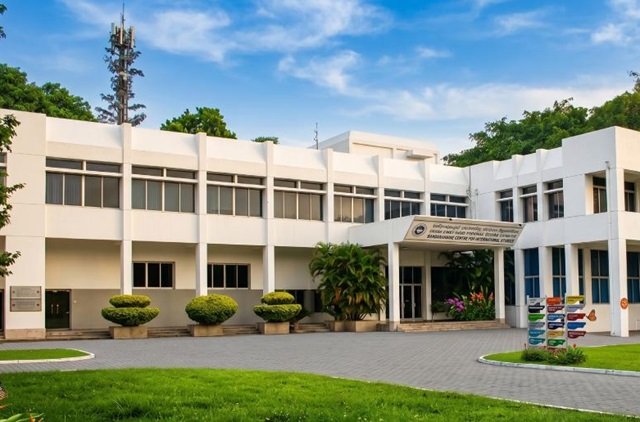
The Bandaranaike Centre for International Studies (BCIS), an institution established to promote international understanding and research, is facing serious questions over the exclusion of an academic contributor from a book discussion because of their perceived political position on Israel.
Sri Lanka Guardian has seen several communications concerning the matter, including at least one that directly confirms the removal of an academic contributor from the event programme. The stated reason was that the individual’s alleged pro-Israel position and professional engagement with Israel were considered incompatible with BCIS’s pro-Palestine stance.
In one particularly revealing message, an organiser explained that concerns had been raised about the contributor’s “perceived affiliations with groups or political positions that they consider inconsistent with BCIS’s stance on international events.” The message specifically referred to “their alleged pro-Israel position and professional engagement with Israel, which they felt would not align with BCIS’s pro-Palestine position.”
The explanation raises serious concerns about political discrimination and the denial of an individual’s right to participate in academic debate. An academic’s professional associations and perceived political sympathies should not determine whether they are entitled to contribute to a discussion about a published work.
Supporting Palestinian rights and criticising Israeli government policies are legitimate political positions. But neither provides justification for excluding individuals who hold different views or have professional associations with Israel. Professional engagement with a country does not automatically constitute endorsement of its government or policies.
The circumstances also raise concerns about antisemitism. Criticism of Israel is not inherently antisemitic. However, treating professional engagement with Israel or perceived pro-Israel sympathies as grounds for exclusion risks normalising discriminatory assumptions about individuals associated with the country. Where such treatment intersects with actual or perceived Jewish identity, the implications become particularly serious. The communications do not independently establish antisemitic intent, but the stated grounds for exclusion warrant a clear explanation from BCIS.
The controversy is particularly difficult to reconcile with BCIS’s institutional identity. Established in 1974 under the vision of former Prime Minister Sirimavo Bandaranaike, the institution emerged during a significant period of Sri Lankan engagement with the Non-Aligned Movement. Its declared mission includes research, teaching, international cooperation, peace and knowledge dissemination based on Non-Aligned principles.
Yet excluding an academic because their perceived political position does not align with the organisers’ pro-Palestine stance raises fundamental questions about intellectual independence. Non-alignment cannot credibly be invoked as an institutional principle while political conformity becomes an apparent condition for academic participation.
The correspondence further indicates that the person communicating the decision had argued against the exclusion, maintaining that the discussion concerned the book and the academic contribution made to it. They described the contributor’s chapter as “one of the strongest contributions to the volume.” Nevertheless, the organisers maintained their decision, citing their authority as hosts.
If the academic contribution was considered valuable, why should the author’s perceived political sympathies determine whether it could be discussed? Was the event intended to examine a book or to accommodate only contributors whose political positions met the organisers’ approval?
BCIS must explain who authorised the exclusion, whether it has a formal policy governing the political positions of invited contributors and whether professional engagement with particular countries can constitute grounds for denying academic participation.
The issue is not whether BCIS supports Palestine or whether its representatives are entitled to criticise Israel. They are entitled to express those views. The issue is whether that political position can be used to deny another individual the right to speak.
An institution established to promote international understanding should not practise political exclusion in the name of international solidarity. Supporting Palestinian rights cannot justify discrimination against someone perceived to support Israel. If BCIS cannot accommodate intellectual disagreement, its claims to academic openness, intellectual independence and Non-Aligned principles demand serious scrutiny.