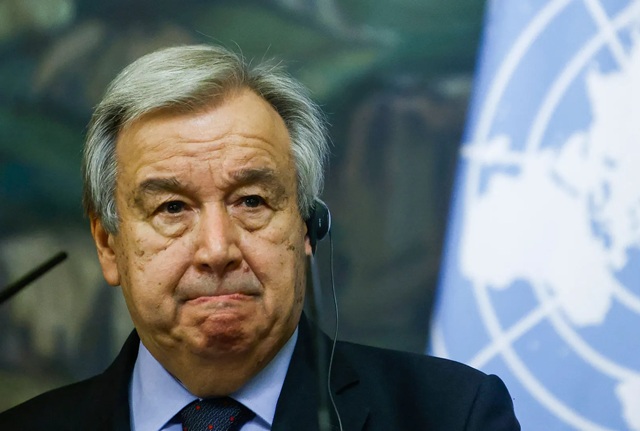
The United Nations is facing an unprecedented leadership vacuum as the Security Council struggles to agree on a successor to Secretary-General António Guterres, whose term expires on 31 December. With fewer than two months remaining and eight rounds of voting already completed without consensus among the council’s five permanent members, officials are preparing contingency arrangements for the possibility that the organisation could begin the new year without a formally appointed leader.
The deadlock has exposed divisions among the major powers and renewed criticism of a selection system dominated by confidential negotiations and secret ballots. The Security Council is expected to conduct another round of voting this week, but the five countries holding veto powers — Britain, China, France, Russia and the United States — have yet to reach agreement. The previous selection process, which resulted in Guterres’ appointment in 2016, required six rounds of voting.
Shamala Kandiah Thompson, executive director of Security Council Report, a think tank monitoring the council, said the delay was particularly concerning given how early the selection process had begun. She warned that the failure to identify a successor at this stage would complicate preparations for the incoming secretary-general’s administration, particularly the formation of a new leadership team.
The candidates include several experienced United Nations figures, although their international profiles and political acceptability vary. Rebeca Grynspan has emerged as a leading contender, while senior Emirati diplomat Lana Nusseibeh faces questions over allegations that the United Arab Emirates has supported the paramilitary Rapid Support Forces in Sudan’s civil war. The UAE denies the allegations.
The leadership impasse comes as the organisation faces mounting institutional and financial pressures. Its next secretary-general will inherit ongoing conflicts that the UN has struggled to influence, reductions in American financial contributions, and declining political relevance as Washington withdraws from dozens of UN agencies. There is also increasing pressure to make the organisation more efficient, responsive and accountable.
Richard Gowan, a UN specialist at the International Crisis Group, said entering 2027 without an agreed successor would be deeply embarrassing for the permanent members and strengthen criticism from countries questioning whether the five powers retain the legitimacy to control the organisation’s leadership arrangements.
The permanent members acquired their privileged positions as victors of the Second World War in 1945. The remaining ten Security Council members are elected regionally for two-year terms. Despite repeated demands from other UN members for reforms reflecting contemporary geopolitical realities, the permanent five have resisted changes to the existing structure.
The UN Charter does not specify how a leadership vacancy should be managed, and no secretary-general has previously completed a term without a successor being selected. A September briefing by the 1 for 8 Billion campaign, which advocates a more transparent appointment process, outlined possible alternatives, including appointing an acting secretary-general through the Security Council or extending Guterres’ term through a General Assembly decision. Both options face institutional and political obstacles.
The selection procedure itself has attracted criticism for its secrecy. Candidates lobby Security Council members and subsequently face confidential straw polls in which countries indicate whether they encourage, discourage or have no opinion about individual contenders. In some rounds, permanent members use differently coloured ballots, allowing their positions to be distinguished. The council eventually recommends a candidate through a resolution requiring at least nine votes and no veto from any permanent member. The 193-member General Assembly then formally appoints the nominee.
Gowan questioned whether such an opaque arrangement was appropriate for selecting the world’s chief diplomat, although he acknowledged that securing the support of major powers remained important for an effective secretary-general.
Russia has publicly acknowledged the uncertainty surrounding the transition. Senior Foreign Ministry official Kirill Logvinov told the state news agency TASS that it remained unclear what would happen after 31 December, identifying a possible extension of Guterres’ term or the appointment of another official as options.
Former UN official Daniel Safran-Hon warned that the organisation could continue holding Security Council and General Assembly meetings without a secretary-general, but essential executive functions would be constrained. He compared the situation to a supertanker whose captain had died, explaining that an acting official could maintain certain operations but would lack authority over major appointments and budgetary decisions.