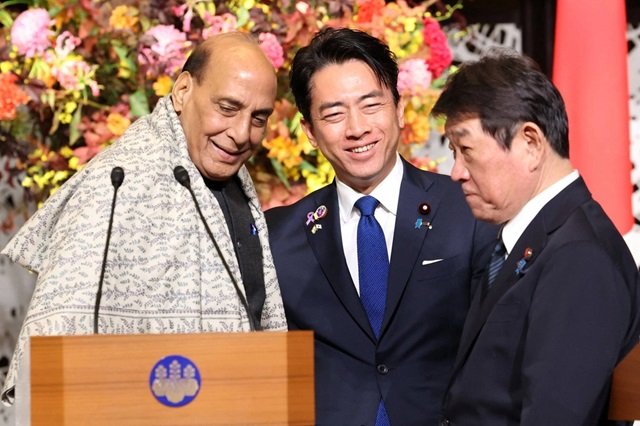
Japan and India have agreed to expand military cooperation by allowing Japan’s Self-Defense Forces (SDF) to use Indian firing ranges for live-fire missile training, including exercises involving surface-to-ship missiles, in a significant development for security cooperation across the Indo-Pacific. The agreement was reached on Thursday in Tokyo during a high-level meeting between the two countries’ foreign and defence ministers, which also addressed defence technology, arms exports and concerns over economic pressure from China.
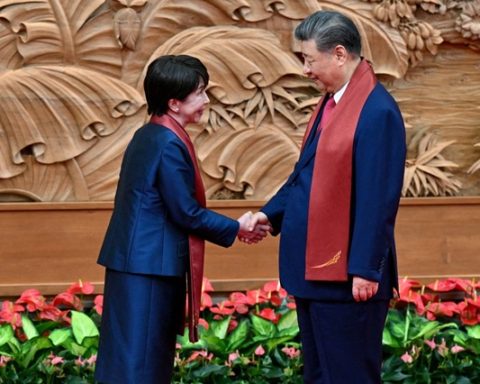
Japanese Defence Minister Shinjiro Koizumi and Foreign Minister Toshimitsu Motegi met their Indian counterparts, Rajnath Singh and S. Jaishankar, for the latest two-plus-two ministerial dialogue. The four ministers agreed to strengthen cooperation in defence equipment and technology while accelerating negotiations over the possible export of Japan’s UNICORN naval radio antenna system to India.
The decision to open Indian military ranges to Japanese forces was among the most consequential outcomes of the meeting. It would provide Japan with additional opportunities to conduct weapons testing and military training beyond its own limited facilities. Koizumi described the arrangement as more than an expansion of training capabilities, calling it a practical demonstration of a new phase in bilateral defence relations.
Japan has been examining the possibility of using Indian facilities for testing longer-range weapons. Last month, Tokyo disclosed that it had dispatched officials to India to assess the suitability of its missile ranges for weapons testing, including the Type-25 anti-ship missile and smaller attack drones.
Ground Self-Defense Force Chief of Staff General Masayoshi Arai said the assessment formed part of efforts to determine how Japan could conduct training that fully utilises the Type-25 missile’s estimated range of approximately 1,000 kilometres. He described achieving such training capabilities as a major challenge, given the restrictions imposed by Japan’s relatively small missile-launch facilities.
The proposed use of Indian ranges also reflects Japan’s broader military modernisation strategy. Tokyo is developing a multilayered coastal defence system incorporating large numbers of relatively inexpensive unmanned aerial, surface and underwater vehicles for reconnaissance and attack, alongside missiles capable of striking targets from outside an adversary’s weapons range. Japanese officials have therefore discussed the possibility of testing smaller attack drones in India as well as longer-range missiles.
Japan is also seeking access to testing facilities elsewhere in the region. In August, Koizumi and Australian Defence Minister Richard Marles announced that the two countries were working towards improving Japanese access to Australia’s missile-testing ranges. Together with the discussions involving India, the arrangements could provide Tokyo with additional facilities as it develops weapons intended to strengthen deterrence against Chinese military activity near Japanese territory and North Korea’s increasingly advanced missile capabilities.
The ministerial discussions also reflected growing concerns about China’s economic and strategic policies. In their joint statement, Japan and India expressed serious concern over economic coercion, arbitrary export restrictions and non-market practices. Although China was not explicitly named, the remarks came amid worsening relations between Tokyo and Beijing.
China has placed dozens of Japanese companies on an export blacklist, restricted shipments of dual-use goods and halted exports of rare earth materials critical to Japanese industries. The measures followed a diplomatic dispute triggered by Japanese Prime Minister Sanae Takaichi’s remarks last November concerning the possibility of Japanese military intervention in the event of a Taiwan crisis. Leaders of the four-country Quad grouping, comprising Japan, India, Australia and the United States, had expressed similar concerns about economic coercion earlier this week.
Motegi said the two countries hoped their cooperation would serve as an anchor for stability in the Indo-Pacific.
Separately, Koizumi and Singh agreed to continue examining opportunities for joint development in naval shipbuilding and design. Japan is seeking international buyers for its upgraded Mogami-class frigates, with India among the potential customers. Tokyo has already secured an agreement to supply the vessels to Australia’s navy, marking the largest defence export contract in Japan’s post-war history.