Iraq is attempting a difficult political realignment: restoring its position within the Arab world, strengthening relations with Washington and its Gulf neighbours, and reducing the influence of armed groups aligned with Iran. But the effort is confronting a fundamental obstacle. Some of the most powerful militias operating inside the country remain beyond the effective control of the government, and an attempt to bring them under state authority could trigger an armed confrontation with serious consequences for Iraq’s political stability.
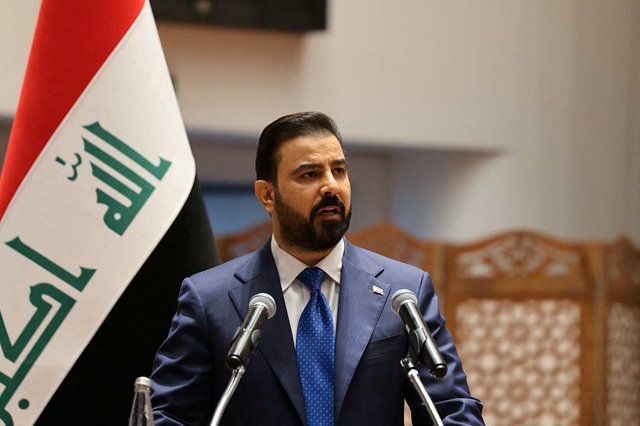
Prime Minister Ali al-Zaidi has made the dismantling of Iran-aligned armed groups a central element of his government’s policy. His latest move, targeting Kata’ib Hezbollah (KH) and its longstanding control over Jurf al-Sakhar, a strategically significant town 37 miles south-west of Baghdad, represents a direct challenge to one of the most powerful organisations associated with Iran’s Islamic Revolutionary Guard Corps (IRGC). The confrontation is also a test of whether Iraq can establish a monopoly over the use of force within its own territory.
The shift reflects Baghdad’s broader ambition to reintegrate into the Arab political mainstream, with support from the United States and financially influential regional governments, including Saudi Arabia, the United Arab Emirates, Qatar and Kuwait. Although Iraq is governed predominantly by Shia political leaders and shares religious ties with Iran, its leadership increasingly recognises the economic and diplomatic advantages of strengthening relations with neighbouring Arab states rather than remaining closely aligned with Tehran.
That recalibration is already visible in Iraq’s engagement with Syria. In late October, Zaidi travelled to Damascus for the first visit by an Iraqi prime minister since the fall of Bashar al-Assad, meeting interim President Ahmed al-Sharaa. The visit marked an important step towards rebuilding relations with a government whose Sunni Islamist orientation has generated suspicion among sections of Iraq’s political establishment.
According to the Iraqi News Agency, discussions focused on expanding bilateral trade, agricultural cooperation and the export of Iraqi oil through Syria’s Baniyas line. The two countries had signed agreements in July to revive the Haditha-Baniyas pipeline, alongside a memorandum of understanding with a consortium of three companies, including the American oil major Chevron. Iraq has also begun exporting limited quantities of oil through Syria, partly to circumvent Iranian attacks on shipping in the Strait of Hormuz. The developing relationship illustrates how economic considerations are contributing to Baghdad’s efforts to diversify its regional partnerships.
However, closer relations with Washington and the Gulf states require Baghdad to address a security problem that has repeatedly undermined its regional credibility. Iran-aligned militias have launched drones and short-range missiles against energy infrastructure in Saudi Arabia and Kuwait. These attacks were not authorised by the Iraqi government, but they have complicated its declared neutrality in the conflict between the United States and Iran.
Washington has responded with increasingly explicit warnings. US officials have threatened to impose severe penalties if Baghdad fails to bring all armed groups under central government command by 30 June 2027. Reports in November indicated that Iraq could face treatment as a state sponsor of terrorism if it failed to meet the deadline. Such a designation could severely damage the country’s economic prospects, restricting access to American technology with potential military applications and potentially excluding Iraqi banks from the international financial system.
Zaidi has maintained that the June 2027 deadline is firm, although it already represents a postponement from the original target of 30 September 2026. His government has argued that dismantling the militias requires a cautious approach because these organisations retain substantial support among sections of Iraq’s Shia population. Many Iraqi Shias regard Iran as the victim of an unjust American and Israeli military campaign and see independent armed groups as a potential safeguard against abuses by state institutions. The political difficulty is therefore not simply the removal of weapons, but the challenge of confronting organisations that possess both military capabilities and a domestic constituency.
The dispute over Jurf al-Sakhar demonstrates the scale of that challenge. Kata’ib Hezbollah captured the town from Islamic State in October 2014 and subsequently renamed it Jurf al-Nasr. Since then, the militia has maintained control while excluding government security forces and preventing displaced Sunni Arab residents from returning.
Zaidi’s latest intervention followed an investigation into an alleged oil-smuggling operation in the area. A government committee concluded that KH had been diverting oil from government pipelines and storage facilities to finance its activities, costing the state hundreds of millions of dollars since 2021. Nine senior security officials were dismissed after being found complicit in, or negligent over, the operation. The government subsequently ordered security forces to enter the town, investigate the allegations and remove KH’s forces.
The initial operation was postponed after a senior military commander reportedly leaked details of the plan to leaders of the ruling Coordination Framework, a coalition of Shia political parties that nominated Zaidi and dominates parliament. Some influential figures within the coalition opposed a forcible intervention, fearing that an armed clash could escalate into a wider confrontation between government forces and Iran-aligned militias. KH permitted a limited number of lower-ranking government officials to enter the town, but retained its control.
The standoff intensified after KH rejected a government ultimatum to withdraw by Friday. A senior security official from the militia warned Zaidi that he would bear full responsibility for any attack on its positions. On Monday, the prime minister ordered the military to prepare for an intervention, but Tehran moved quickly to prevent a direct confrontation. IRGC Quds Force commander Esmail Qaani travelled to Baghdad to mediate, seeking to preserve unity among Shia factions and protect Iran’s influence. Subsequent reports suggested that his intervention had persuaded the Iraqi government to postpone its military operation once again. Zaidi nevertheless maintained the withdrawal deadline and postponed a planned visit to Lebanon amid rising tensions.
The dispute also exposes divisions within the broader militia network. Kata’ib Hezbollah and Harakat Hezbollah al-Nujaba have rejected government disarmament orders, accusing Zaidi of serving Washington’s interests. Other groups, including Asa’ib Ahl al-Haq and the Salaam Brigades associated with cleric Moqtada al-Sadr, have agreed to integrate their forces into the national command structure. The government insists that all heavy weapons must be placed under official state authority and that integrated groups must sever their organisational and political ties to external non-governmental bodies.
The Soufan Center’s assessment identifies the central calculation facing Washington: the success of Iraq’s disarmament policy will ultimately be measured less by whether Kata’ib Hezbollah is expelled from Jurf al-Sakhar than by whether Baghdad can prevent armed groups from attacking neighbouring countries. American policymakers have welcomed Zaidi’s apparent determination but remain concerned about the government’s acceptance of Iranian mediation and repeated postponements.
For Iraq, the stakes extend beyond one town or one militia. The government is attempting to reconcile its domestic political realities with the demands of regional diplomacy, economic integration and national sovereignty. Whether it can do so without provoking an internal armed conflict will determine how far Baghdad can move away from Tehran’s influence while retaining the political stability necessary to pursue a broader Arab and international role.