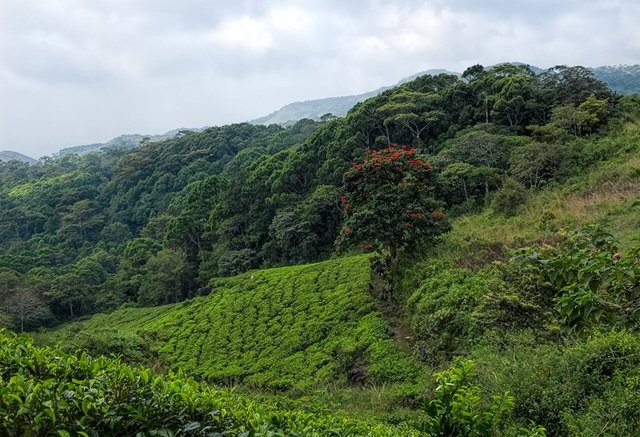
Sri Lanka, renowned for its breathtaking landscapes, rich biodiversity, and lush rainforests, is currently facing a severe environmental crisis in the form of deforestation. According to data from the Food and Agriculture Organization (FAO) of the United Nations, the country’s forest cover—which stood at 44 percent of total land area in 1956—had fallen to 29 percent by 2020. Official records obtained from the Forest Department under the Right to Information (RTI) Act reveal a serious gap between the targets set out in national policy documents and actual implementation on the ground.
Statistical Discrepancies and Shrinking Green Land
According to information report RTI/15/2024 issued by the Forest Department on May 29, 2024, forest land under the department’s forest cover zone decreased from 2,081,006 hectares in 2015 to 1,364,099.61 hectares (approximately 1,364,100 hectares) in 2024—a reduction of 716,906.39 hectares over nine years. An analysis of the 2024 data shows that of the total forest land under the Forest Department, 171,210.58 hectares are classified as conservation forests (130 forests) and 1,192,889.03 hectares as reserve forests (760 forests).
| Forest Type (as per 2024 Report) | Number of Forests | Area (Hectares) |
| Reserve Forests | 760 | 1,192,889.03 |
| Conservation Forests | 130 | 171,210.58 |
| Total Forest Area | 890 | 1,364,099.61 |
When analyzing these figures and records, a critical question arises regarding what programme will increase the country’s forest cover from 29% to the 32% target by 2030, given that forest conservation must be the primary task and forest land is declining so rapidly.
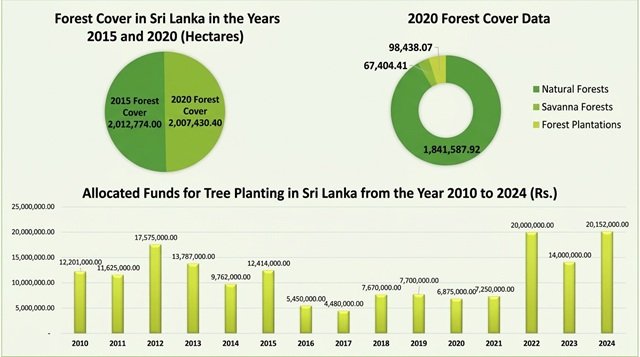
However, an officer from the Forest Department stated that 2,012,774 hectares of forest land were recorded in the 2015 forest census and 2,007,430.40 hectares in 2020, indicating that only 5,343.6 hectares (5,346.3 hectares as shown in the report) of forest land were lost between 2015 and 2020. The fact that the comprehensive report of the 2020 forest census had still not been officially published as of March 2024 also highlights a notable transparency issue.
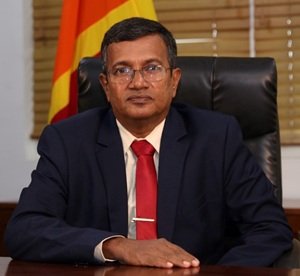
Commenting in response to our inquiry, Deputy Minister of Environment Anton Jayakody said: “The first initiative we are currently carrying out is preventing forest damage and converting remaining forests into reserves. At the same time, there are shortcomings in the gazettes issued in the Northern and Eastern provinces—even some people’s lands and schools have been included within forests and gazetted. That issue needs to be resolved, and unprotected forests in other areas also need to be gazetted. We are carrying out that work, and since 2024 we have gazetted 114 forests, covering an area of nearly 180,000 square kilometers.”
Forest Definition and Ecosystem Breakdown
Under the definition of the Food and Agriculture Organization of the United Nations, non-agricultural land of more than 0.5 hectares with tree cover exceeding 10 percent and tree height over 5 meters is considered a forest. According to 2020 data, the country’s forest system comprises 1,841,587.92 hectares of natural forests, 67,404.41 hectares of savanna forests, and 98,438.07 hectares of forest plantations. Illegal logging, commercial agricultural expansion, infrastructure development, and wildfires exacerbated by climate change are rapidly destroying this forest system.
The 2030 Target and National and International Strategies
In 1900, Sri Lanka’s forest cover was 70%. It declined to 48% in 1952 and fell to 24% by 1992. Building construction, chena (shifting) cultivation, irrigation and agricultural projects, and other development schemes were major drivers of forest loss in the Dry Zone after independence, whereas deforestation during the colonial period was reported primarily in the Wet Zone.
The National Environmental Action Plan (NEAP 2022–2030) and the Nationally Determined Contributions (NDC 3.0) for climate change mitigation commit in policy terms to increasing Sri Lanka’s forest cover to 32 percent by 2030. Document RTI 1897/2025, issued on September 3, 2025, confirms that the Forest Department is implementing several domestic and international collaborative projects to achieve this goal.
Sri Lanka also pledged to the international community when signing the Paris Agreement on climate change in 2016—during the administration of President Maithripala Sirisena—to work toward raising forest cover from 29% to 32% by 2030.
Key initiatives include the ‘GCF Knuckles Project’ implemented from 2023 to 2028 with support from the Green Climate Fund (GCF); the ‘Integrated Watershed and Water Resources Management Project (IWWRMP)’, which restores Upper Mahaweli catchment areas with World Bank funding (revised estimate Rs. 20,292.64 million); the ‘SARP Project’, restoring 562.91 hectares of forest in the Anuradhapura, Kurunegala, and Puttalam districts; and the ‘Managing Together’ project, establishing mangrove and mixed forest plantations in Mannar District. In addition, the department carried out general forest and mangrove restoration programmes between 2020 and 2025.
| Year | Forest Restoration (Hectares) | Mangrove Restoration (Hectares) | Allocated Funds (Rs. Million) |
| 2020 | 1,060.00 | 217.60 | 33.242 |
| 2021 | 1,552.02 | 119.50 | 127.805 |
| 2022 | 235.00 | 100.00 | 23.5401 |
| 2023 | 82.50 | – | 3.139 |
| 2025 | 100.00 (Progress: 55 ha) | – | 45.770 |
The EU Green Agenda and Market Challenges
Sri Lanka’s forest conservation targets are not merely an environmental necessity; they also directly affect the country’s economic survival. Under the European Union Green Deal and the EU Deforestation Regulation (EUDR), exports to the European market of commodities such as rubber, tea, coffee, timber, and spices produced on deforested land face strict restrictions. Likewise, continuing to access the EU’s GSP+ tariff concession and green financing such as ‘Global Gateway’ makes it essential for Sri Lanka to protect its forest cover and ensure environmental transparency.
Furthermore, increasing forest cover by 1% requires 65,000 hectares of new afforestation or restoration of degraded/barren land. Achieving a 3% increase (from 29% to 32%) requires converting 65,000 × 3 = 195,000 hectares into new forest. At the same time, roughly 3,000 hectares of forest land lost each year—especially due to human activities—must additionally be restored to offset ongoing degradation. Thus, to reach the 32% target while maintaining the current 29% forest cover baseline, Sri Lanka must achieve a net forest gain of another 195,000 hectares by 2030 on top of replacing the 3,000 hectares lost annually.
The Planting and Follow-Up Crisis
By rough estimates, raising forest cover by 1 percentage point requires 65,000 hectares of new forest planting or allowing an equivalent area of degraded land to regenerate as forest. Meeting the 2030 target therefore means turning 195,000 hectares into forest, in addition to restoring the roughly 3,000 hectares of forest lost annually to human activity.
According to a report provided by the Forest Department under the Right to Information Act, Rs. 170,941,000 (over Rs. 170 million / Rs. 17 crore) of public funds was spent on islandwide tree-planting programmes over the 15-year period from 2010 to 2024. Despite substantial allocations—such as Rs. 20 million in 2022 and Rs. 20,152,000 in 2024—the loss of planted saplings due to a lack of proper maintenance and follow-up remains a serious problem.
Against this backdrop, Deputy Minister of Environment Anton Jayakody stated that the current government has also allocated substantial funds for forest plantations: “More than one billion rupees was deployed for forest plantations last year (2025). This is how we plan to reach the 32% figure by 2030 in line with global criteria.” He added that a significant proportion of planted saplings die while another portion survives, but noted that since coming into office, they are putting in place a mechanism to monitor the condition of the forests they create and protect them.
Forest-Edge Communities, Women’s Labour, and a Just Transition
Another critical challenge on the path to forest conservation targets is the plight of communities living along the buffer zones of reserve forests, including Sinharaja. For decades, these residents have settled beyond forest boundaries, with crops such as pepper, cinnamon, and rambutan forming their main livelihood. Rural women bear a heavy share of the workload in harvesting, processing, and maintaining these crops.
If authorities move to evict these communities or ban cultivation plots without a proper plan when expanding forest conservation zones, the collapse of family livelihoods will subject women to severe economic and social pressure. Women also face acute hardships when collecting firewood and water around forests. Yet a major shortcoming is that the Forest Department does not collect gender-disaggregated data when designing restoration projects.
The Way Forward and Just Transition Solutions
Protecting forests is no longer merely an environmentally friendly act; it has become a direct economic imperative to safeguard export earnings and foreign exchange. Managing forest boundaries and buffer zones—and ensuring that crops grown near forests, such as cinnamon, pepper, and rambutan, do not expand by encroaching on forest land—requires clear boundary demarcation and agroforestry approaches. Achieving the 32 percent forest cover target by 2030 demands a structured programme that goes beyond ceremonial tree-planting events, through the following measures:
- Accountability and Auditing: Conducting independent environmental and financial audits on the progress of multi-million-rupee restoration funds and the survival of planted saplings.
- Just Transition: Rather than forcibly evicting people living in buffer zones, transitioning them toward alternative livelihoods such as eco-friendly agroforestry, ecotourism, and beekeeping.
- Women’s Empowerment and Community Participation: Providing technical and financial support for value-added products for women engaged in cinnamon and pepper cultivation, carrying out plantation maintenance through local women’s societies with fair payment, and actively involving them in decision-making processes.
Deputy Minister of Environment Anton Jayakody also stated: “What we have said so far is to look into long-standing cases—especially those held for 50 or 60 years where some have permits—as well as lands enjoyed by other people, while cases of just a year or two will have to be reclaimed.” He added that residents facing any issues within currently gazetted areas have been given the opportunity to raise them through Divisional Coordinating Committees.
Protecting Sri Lanka’s forests means securing the nation’s water security, international market opportunities, and the survival of future generations. Targets in policy documents become reality only through a transparent governance mechanism that is accountable for public funds and protects the livelihoods of local communities.