For years, Pakistan’s international image was defined by crisis. Economic instability and political uncertainty often dominated headlines about the country. But Pakistan is gradually changing the conversation. It is engaging major powers and opening diplomatic channels between rivals, and its partnerships now extend beyond traditional security. This week, it takes one of its most symbolic steps yet by sending an astronaut into space.
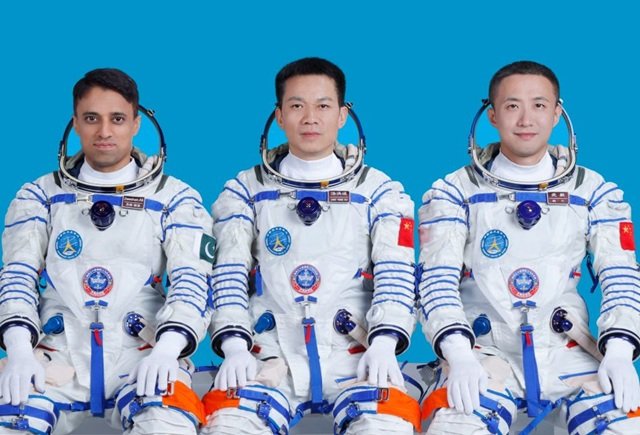
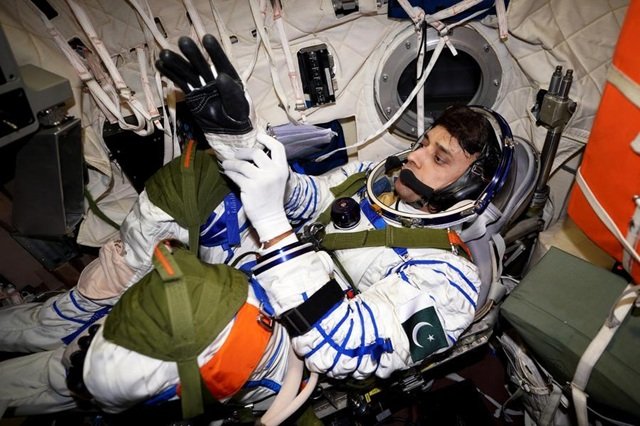
China on 24th November, 2026, named Muhammad Zeeshan Ali, 40, to the crew of Shenzhou-24. The spacecraft is scheduled to lift off at 8:18 a.m. local time 25th November, 2026, aboard a Long March-2F rocket from the Jiuquan Satellite Launch Center. Ali will fly with Chinese astronauts Tang Hongbo and Wu Yi and become the first foreign astronaut to visit China’s Tiangong space station. He will serve as a payload specialist, conduct scientific experiments and return to Earth aboard Shenzhou-23 after a stay of about a week.
Ali and Khurram Daud, the two Pakistani candidates, spent months training in Beijing before China announced its choice. The significance of the mission goes beyond who was selected. Pakistan is moving from a country that takes part in space programmes from the ground to one that will have a human presence in orbit.
That achievement is particularly meaningful given Pakistan’s own space history. The country established SUPARCO in 1961, placing it among the early nations to develop a national space programme. A year later, it launched a sounding rocket from Sonmiani. But the momentum faded. Satellite projects faced delays, international launch arrangements fell through, and Pakistan often relied on foreign partners to put its satellites into space. China launched Badr-1 in 1990, beginning a partnership that would gradually become central to Pakistan’s space ambitions.
The relationship has since moved beyond satellite launches. Pakistan has developed its own Earth-observation satellites, and Chinese rockets launched one in July 2025 and another in April 2026. The February 2025 agreement on astronaut selection and training marked another step forward. China’s space agency described it as the first time Beijing would select and train astronauts for another country. A SUPARCO official said the mission was conceived in 2019, which points to years of planning rather than a sudden diplomatic gesture. Pakistan is also preparing to send a lunar rover aboard China’s Chang’e-8 mission in 2028.
Space, however, is not simply a matter of technology. Human spaceflight requires confidence in the partner that shares the spacecraft and the responsibility for the mission. China’s decision to include Pakistan in its crewed programme reflects a relationship that has developed over decades. For Islamabad, the mission offers more than prestige. It provides access to scientific research and technical expertise that could strengthen its future space programme. It also gives Pakistani students and young scientists something tangible to aspire to.
That growing international engagement is taking place alongside efforts to stabilize the economy. State Bank of Pakistan reserves reached $18.4 billion by June 2026, compared with $6.7 billion in December 2022. Its credit ratings have also improved, with S&P Global and Moody’s both upgrading the country this summer, while the economy grew 3.65 percent in the year ending June 2026. Support from the IMF and friendly countries has helped restore financial confidence. These gains do not mean Pakistan has overcome its economic difficulties. But economic stability matters to diplomacy. A country struggling to meet immediate financial obligations has fewer choices, while a steadier economy allows it to negotiate and invest with a longer-term outlook.
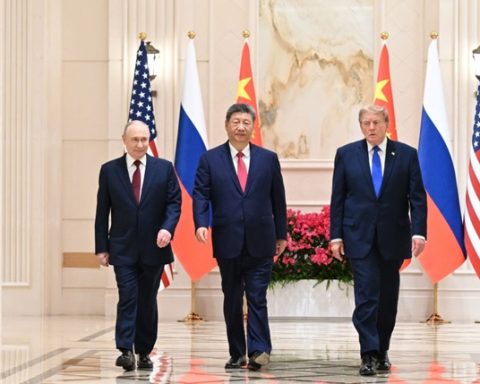
The shift is also visible in Pakistan’s diplomatic role. In April, Islamabad hosted historic face-to-face talks between the U.S. and Iran. They followed weeks of frantic diplomacy, and Pakistan offered a channel of communication when direct engagement was difficult. The negotiations have faced setbacks, and the conflict remains unresolved. Yet Pakistan’s continued involvement matters. Iranian Foreign Ministry spokesman Esmaeil Baghaei said in August that Pakistan remained the main mediator. Keeping a diplomatic channel open between adversaries is not the same as achieving peace, but it gives both sides a reason to engage with Islamabad.
Pakistan’s strategic importance also shapes its partnerships beyond mediation. Its nuclear capability remains central to its security posture, and its defense ties with Saudi Arabia and Turkey have deepened. The Makkah Defense Agreement, signed by the three countries in August, treats an armed attack on any one of them as an attack on all. Pakistan’s diplomatic influence therefore rests on more than dialogue. Its military capacity, geographic position and ties to important regional actors carry weight too.
These developments do not make Pakistan a global power overnight, nor do they erase the problems that have constrained it for years. Diplomatic influence is not measured by announcements or symbolic achievements alone. It depends on whether a country can sustain its commitments, turn partnerships into lasting benefits and keep its credibility when circumstances become difficult.
The space mission, however, offers a vivid image of the direction Pakistan wants to take. For decades, its space programme relied on the capabilities of others. Now a Pakistani astronaut is preparing to cross that boundary. When the spacecraft lifts off from the Gobi Desert, it will carry a payload specialist and, with him, a country trying to move beyond the crises that once defined it. Pakistan wants a hand in shaping international conversations rather than merely appearing in them.