
Steve Pratt’s Earn It is a tour de force in rethinking contemporary marketing and content strategy, a book that bridges the worlds of creative bravery and audience-centric commitment with striking clarity and depth. Through an insightful lens, Pratt dismantles the entrenched paradigms of traditional advertising and invites readers to embrace an audacious philosophy of “earning attention.” This work is not merely a guide but a manifesto for those seeking to transform their approach to content creation, brand loyalty, and long-term trust-building.
The Premise: Attention as a Commodity
At the heart of Pratt’s argument is a strikingly simple yet profound premise: attention is the most valuable commodity of the modern era. This assertion becomes the backbone of his critique of status quo marketing, which he describes as dominated by interruptive and transactional approaches. The book opens with a dramatic recounting of Felix Baumgartner’s record-breaking Red Bull Stratos jump, using it as a metaphor for the exhilarating heights that brands can achieve when they earn, rather than demand, consumer engagement.
Pratt’s insistence on earning attention—rather than buying or hijacking it—sets a high bar for marketers and creators alike. He establishes the moral and practical superiority of content that provides genuine value to audiences, contrasting this with the ephemeral gains of interruptive advertising. Through meticulous examples, he demonstrates how brands such as Red Bull, Patagonia, and LEGO have successfully embraced this ethos, achieving cultural resonance and long-term loyalty.
Doing the Opposite: A Radical Mindset Shift
A core theme in Earn It is the concept of “Doing the Opposite,” a principle that urges marketers to challenge their instincts and embrace unconventional strategies. Drawing inspiration from dialectical behaviour therapy and pop culture references like Seinfeld’s George Costanza, Pratt offers a compelling case for why counterintuitive approaches often yield the most impactful results.
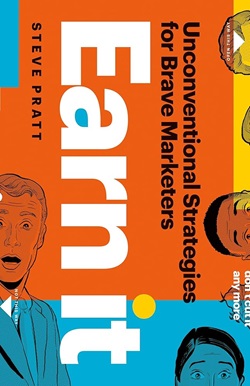
This mindset is not merely theoretical but deeply practical, as Pratt presents a four-stage framework for earning attention: Mindset, Strategy, Creation, and Audience Development. Each stage is explored with actionable insights and compelling anecdotes, providing readers with a clear pathway to reinvent their marketing strategies. The emphasis on aligning audience value with business outcomes—what Pratt terms “The Job and The Gift”—is particularly thought-provoking, urging marketers to view their work as a balance between serving their brand’s goals and their audience’s needs.
A Blueprint for Creative Bravery
Pratt’s notion of “Creative Bravery” forms another cornerstone of the book. He challenges readers to eschew mediocrity and embrace bold, differentiated storytelling that “blows audiences’ minds.” This call to action is underpinned by his memorable graph, which maps success at the intersection of high creative bravery and high commitment. Through vivid case studies, Pratt demonstrates how brands can elevate their content from merely acceptable to truly remarkable.
The author’s passion for quality and originality is infectious. His argument that “boring earns zero attention” is both a challenge and an inspiration, urging marketers to rise above the sea of mediocrity and create experiences that captivate, engage, and inspire. Pratt’s vivid storytelling and engaging tone make these principles feel attainable, even for those wary of stepping outside their comfort zones.
The Long Game: Building Trust and Relationships
One of Pratt’s most compelling insights is his emphasis on the long-term nature of earning attention. Drawing parallels to the Stanford Marshmallow Test, he posits that the patience to build trust over time is a rare but essential trait in successful marketing. Pratt’s call for “being awesome over time” is not merely aspirational but grounded in a clear strategy: consistently delivering value to audiences and avoiding the lure of short-term hacks.
This perspective is bolstered by examples of brands and individuals who have mastered the art of sustained excellence, such as Seth Godin’s daily blogging and the innovative content strategies of companies like Slack and Airbnb. Pratt’s insistence that “trust must be earned, not assumed” resonates deeply, particularly in an era where consumer scepticism towards brands is at an all-time high.
Critique: A High Bar to Clear
While Earn It is undoubtedly inspiring, it does set an exceptionally high bar for its readers. Pratt’s emphasis on creative bravery and sustained commitment may feel daunting to smaller brands or individuals with limited resources. Additionally, his disdain for traditional advertising methods could come across as overly dismissive, ignoring scenarios where such tactics might still be effective when combined with audience-first principles.
However, these critiques do little to undermine the overall value of the book. Instead, they highlight the ambition and audacity of Pratt’s vision—a vision that demands a recalibration of how brands perceive and pursue their audiences.
Conclusion: A Call to Courage
Earn It is more than a book; it is a call to courage for marketers, creators, and business leaders. Pratt’s work stands as a beacon for those willing to challenge the status quo, embrace bold ideas, and commit to earning the trust and loyalty of their audiences. The book’s blend of strategic insight, practical frameworks, and compelling storytelling makes it a must-read for anyone seeking to navigate the complexities of modern marketing.
For those who heed its lessons, Earn It offers not just the promise of better marketing outcomes but also the opportunity to make a meaningful impact in the lives of their audiences. Pratt’s rallying cry to “Do the Opposite” is as much a challenge as it is an invitation—to step off the well-trodden path, embrace creative bravery, and earn the attention that truly matters.