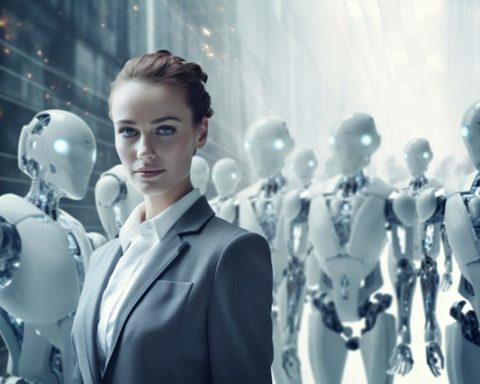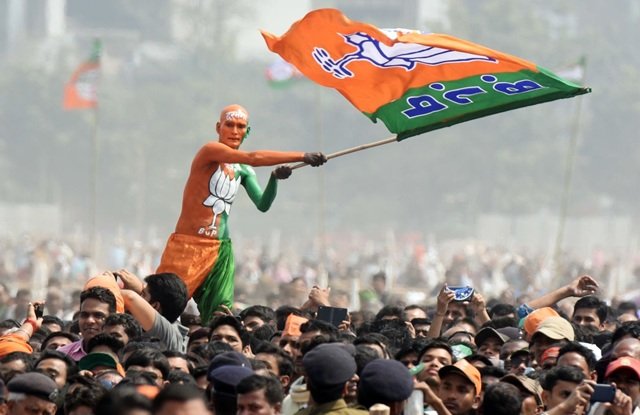
In India’s volatile electoral landscape, a new and troubling weapon has emerged: artificial intelligence deployed not merely for persuasion, but for polarisation. An investigation by Bellingcat has found that social media accounts linked to the ruling Bharatiya Janata Party (BJP) in border states near Bangladesh have used AI-generated imagery to amplify anti-Muslim and anti-Bangladeshi rhetoric ahead of crucial state elections, raising fresh concerns about the intersection of technology, politics and hate speech.
One of the most striking examples came in February, when a now-deleted video posted by BJP’s Assam unit depicted the state’s chief minister, Himanta Biswa Sarma, shooting at two men wearing Muslim skull caps. Among them was an AI-altered image of Gaurav Gogoi, a senior leader of the opposition Indian National Congress. The video was accompanied by slogans such as “Foreigner-free Assam” and “Why did you not go to Pakistan?”, framing Muslims and political opponents as outsiders or enemies.
The manipulated imagery stood in stark contrast to reality. Gogoi, who has publicly identified as Hindu, has often been photographed visiting religious sites of different faiths. Yet in the BJP video, his appearance was digitally altered to include a skull cap, beard and religious text, transforming him into a visual symbol of the very identity the messaging sought to vilify. According to Bellingcat, such distortions are not isolated incidents but part of a broader campaign.
Analysing nearly 500 social media posts shared by BJP accounts in Assam and West Bengal during December, Bellingcat identified 194 that appeared to meet the United Nations’ definition of hate speech. Of these, 31 included clear signs of AI-generated imagery. The findings suggest a systematic use of generative AI to reinforce narratives portraying Muslims and Bengali-origin communities as “foreigners” or “infiltrators” in states where elections are imminent.
The political context is critical. Both Assam and West Bengal share borders with Bangladesh, and tensions between the two countries have intensified since the ousting of Bangladeshi Prime Minister Sheikh Hasina in 2024. Against this backdrop, rhetoric around illegal migration and national identity has become a central theme in political discourse. Experts say this messaging is having cross-border consequences.
Mohammed Zeeshan, an international affairs analyst, told Bellingcat that the “dehumanising and debasing” language used by Indian politicians has fuelled resentment in Bangladesh. The impact is not merely rhetorical. Viral content originating in India, particularly videos targeting Muslims, spreads rapidly across Bangladeshi social media, often triggering nationalist backlash and anti-India sentiment.
In December, such tensions took a deadly turn when a Hindu garment worker in Bangladesh was beaten to death during an anti-India protest. Analysts argue that inflammatory online narratives, including those amplified through AI-generated content, contribute to an environment where violence becomes more likely.
Within India, the messaging appears carefully calibrated. Bellingcat’s analysis found that while all major political parties used AI-generated visuals to some extent, BJP-linked accounts showed a significantly higher concentration of hateful content. In Assam, 24 out of 28 AI-related posts by BJP contained hate speech, compared to none among similar posts by the Congress party. A similar pattern was observed in West Bengal.
The imagery itself relies heavily on visual stereotypes. Muslim men are frequently depicted wearing skull caps or traditional clothing, while non-Muslim citizens are shown in contrast, often as victims. In one video, AI-generated scenes of protests against “illegal infiltration” are paired with warnings that India could “turn into Bangladesh” if action is not taken. Another blends real footage of past violence with fabricated images of Muslim men, accompanied by music accusing them of taking over local land.
Experts say such visual coding is deliberate. Clothing and physical markers are used as shorthand to signal identity, reinforcing existing prejudices. The result is a simplified narrative in which complex social and historical realities are reduced to binary oppositions: citizen versus outsider, victim versus threat.
Joyojeet Pal, a professor of information studies, told Bellingcat that the effectiveness of such content does not depend on its realism. “It looks bad? It doesn’t matter,” he said, noting that political messaging increasingly prioritises emotional resonance over factual accuracy. Generative AI, he added, accelerates this process by enabling rapid production of content tailored to existing biases. “AI is helping cement polarised opinions by giving you the kind of content you have already decided you want to engage with.”
The strategy appears to extend beyond targeting communities to attacking political opponents. Opposition figures, particularly Gogoi, are repeatedly depicted in AI-generated images that associate them with Muslim identity or alleged support for “foreigners”. The intent, analysts suggest, is to blur the line between political rivalry and communal suspicion.
BJP representatives have denied wrongdoing. A spokesperson for the party’s Assam unit told Bellingcat that they had not created AI-generated images of Gogoi and insisted that the party “does not stoop so low”. However, when pressed on the broader messaging, the spokesperson stated that “Bangladeshis need to be completely suppressed”, reflecting the hardline rhetoric seen in many of the posts.
The use of AI in political campaigns is not unique to India. Similar tactics have been observed globally, from the United States to Europe, where political actors have used generative tools to create misleading or inflammatory content. But the scale and intensity of its use in India’s border states, combined with deep-rooted communal tensions, make the situation particularly volatile.
Human rights groups warn that such content risks normalising discrimination and justifying exclusionary policies. Bengali-origin Muslims, many of whom have lived in India for generations, are frequently labelled as illegal immigrants. In recent years, thousands have been deported to Bangladesh, sometimes without clear evidence of foreign citizenship, prompting criticism from international observers.
AI-generated imagery reinforces these narratives by visually linking Muslim identity with illegality. A report by the Center for the Study of Organized Hate, cited by Bellingcat, found that such images play a powerful role in shaping public perception, embedding associations that are difficult to challenge.
The role of technology platforms has also come under scrutiny. While companies like Meta and X have policies against hate speech and have introduced tools to label AI-generated content, enforcement appears inconsistent. Bellingcat found that only a handful of AI-generated posts by opposition parties carried disclaimers, while none of the BJP posts analysed included such labels.
Disinformation researcher Bharat Nayak argues that this reflects a broader failure of accountability. Unlike traditional misinformation, which can often be traced or debunked, AI-generated content can be detached from context entirely. “The ‘when, where, how’ questions vanish,” he said, making it easier for such material to spread unchecked.
As India approaches key elections, the implications are profound. What is unfolding is not just a contest for votes, but a transformation in how political narratives are constructed and disseminated. AI, once seen as a tool for innovation, is increasingly being used to deepen divisions, exploit fears and reshape perceptions of reality.
For voters in Assam and West Bengal, the line between fact and fabrication is becoming harder to discern. For policymakers and platforms, the challenge is to respond before such tactics become entrenched. And for observers, the findings from Bellingcat serve as a warning: in the age of artificial intelligence, the battle for truth may be as consequential as the elections themselves.