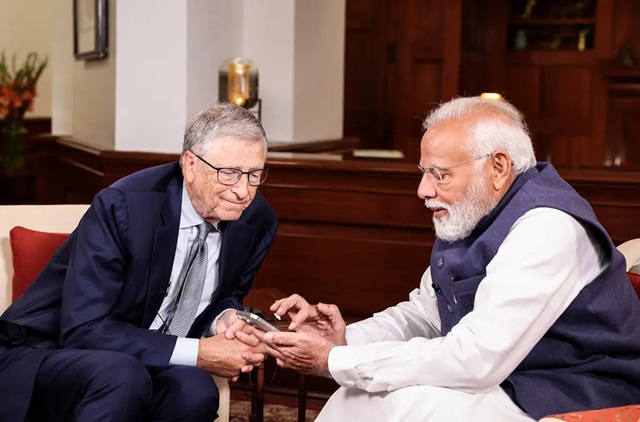
Bill Gates abruptly pulled out of India’s AI Impact Summit on Thursday, hours before he was scheduled to deliver a keynote address, citing a desire to avoid distractions after the recent release of Jeffrey Epstein’s files reignited scrutiny over his past associations with the disgraced financier. The withdrawal of the Microsoft co-founder, along with Nvidia CEO Jensen Huang’s earlier cancellation, left organizers scrambling and cast a shadow over an event that India had positioned as a milestone in the Global South’s AI leadership.
The Gates Foundation confirmed the decision, stating that Gates would step aside “to ensure the focus remains on the AI Summit’s key priorities.” Just days earlier, the foundation had insisted that Gates was attending and scheduled to speak. The timing of the withdrawal coincided with intense media attention on the newly released Epstein emails, which showed correspondence between the late financier and Gates’ staff. Gates has repeatedly said that his interactions with Epstein were limited to philanthropy and expressed regret for ever meeting him. “Every minute I spent with him, I regret,” Gates told Australian news outlet 9News earlier this month.
The summit, held in Delhi, was already facing organizational challenges that drew criticism from attendees and opposition political figures alike. Roads were repeatedly closed for VIP movements, leaving thousands of delegates stranded in India’s congested capital. Social media footage showed summit participants walking long distances across the city due to a lack of shuttle services and taxis. Police interventions intended to manage traffic for dignitaries, including Prime Minister Narendra Modi and French President Emmanuel Macron, created additional disruption in a city of 20 million people.
The summit also faced embarrassment over its exhibition halls, which were unexpectedly closed to the public on Thursday, leaving corporate stalls deserted after three days of heavy crowds. One of the more controversial moments involved Galgotias University being asked to vacate its stall after presenting a commercially available robotic dog made in China as its own creation. The incident sparked public outcry and raised questions about the event’s oversight.
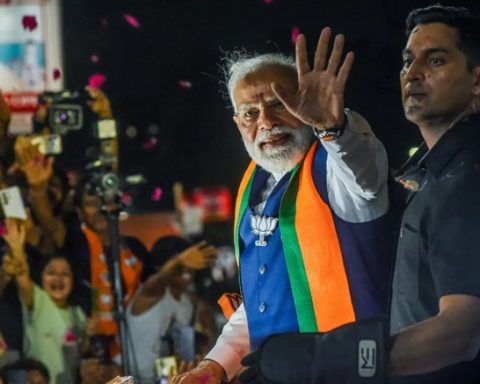
Despite the setbacks, Prime Minister Modi used the summit as a platform to highlight AI safety, particularly for children. Speaking alongside Macron, as well as tech CEOs including Sundar Pichai of Google, Sam Altman of OpenAI, and Dario Amodei of Anthropic, Modi stressed the need for “child- and family-guided” AI regulation. “We must be even more vigilant about children’s safety. Just as a school syllabus is curated, the AI space should also be carefully guided,” Modi said. The stage photo-op that followed, featuring arms raised in solidarity, produced an awkward moment when Altman and Amodei, heads of rival AI companies, did not join hands while other executives did.
While political leaders and tech executives took the stage, criticism mounted over the government’s handling of the summit. Opposition spokesperson Pawan Khera of the Congress Party questioned how India could expect to retain talent if attendees were forced to navigate miles of closed roads. “How can you expect your engineers, AI experts, and entrepreneurs to walk such distances… And then we complain that entrepreneurs are leaving India,” Khera said.
Adding to the summit’s tension, Gates’ withdrawal followed public scrutiny from the U.S. Department of Justice’s release of Epstein-related emails. Epstein, who died by suicide in New York’s Metropolitan Correctional Center in 2019 while awaiting trial on sexual abuse trafficking charges, had pleaded guilty in Florida in 2008 to solicitation of prostitution and solicitation with a minor, serving 13 months of an 18-month sentence. Gates’ recent statements have sought to distance himself, emphasizing that interactions were philanthropic and expressing regret over any association. Melinda French Gates, his ex-wife, said the release of the files revived “very, very painful times” in their marriage.
Beyond Gates’ absence, the summit featured other high-profile speakers from around the world. Sam Altman of OpenAI, Sundar Pichai of Google, and White House AI adviser Sriram Krishnan addressed attendees, alongside representatives from the United Kingdom, including former Chancellor George Osborne, who warned nations that fail to embrace advanced AI risk being “left weaker and poorer.” Former UK Prime Minister Rishi Sunak, now advising Anthropic, urged governments to take more proactive roles in shaping AI policy. United Nations Secretary-General António Guterres also addressed the summit, emphasizing that AI’s future cannot be left to “the whims of a few billionaires” and calling for support for a $3 billion global fund to ensure equitable access to AI technologies.
Despite the turmoil, significant investment pledges were announced at the summit. Over $100 billion has already been committed to Indian AI projects by major corporations, including Microsoft, the Adani Group, and data center firm Yotta. The Indian government expects total pledges to surpass $200 billion in the next two years, though analysts have warned that rapid expansion could strain infrastructure, particularly power and water supplies.
The summit was intended to demonstrate India’s growing influence in AI governance and attract global attention to the country’s technological capabilities. However, the combination of high-profile cancellations, logistical failures, and public missteps has left questions about whether India is prepared to host a forum of this scale. For many attendees, the experience was a mix of opportunity and frustration, with the promise of international collaboration tempered by scenes of chaos outside the exhibition halls and the abrupt absence of one of the world’s most prominent tech figures.
Bill Gates’ withdrawal, linked explicitly to the resurfacing of Epstein files, served as a stark reminder of how personal controversies can intersect with global policy platforms. While the summit continued without him, the incident underscored the delicate balance that governments and organizations must strike when hosting international forums, especially in sectors as high-profile and scrutinized as artificial intelligence. As India looks to cement its role in global AI leadership, the lessons from this first summit may prove as important as the investment commitments made within its halls.